
Royal Blue is one of the best-known colour names in the sapphire trade. It can sound like a grade, or even a promise that one blue sapphire must be better than another. In practice, the term is more specific—and more limited—than that.
Royal Blue is a trade colour term used for a particular blue appearance in sapphire. It does not describe a separate gemstone variety, and there is no single internationally standardised colourimetric definition that every laboratory and every seller is required to follow.
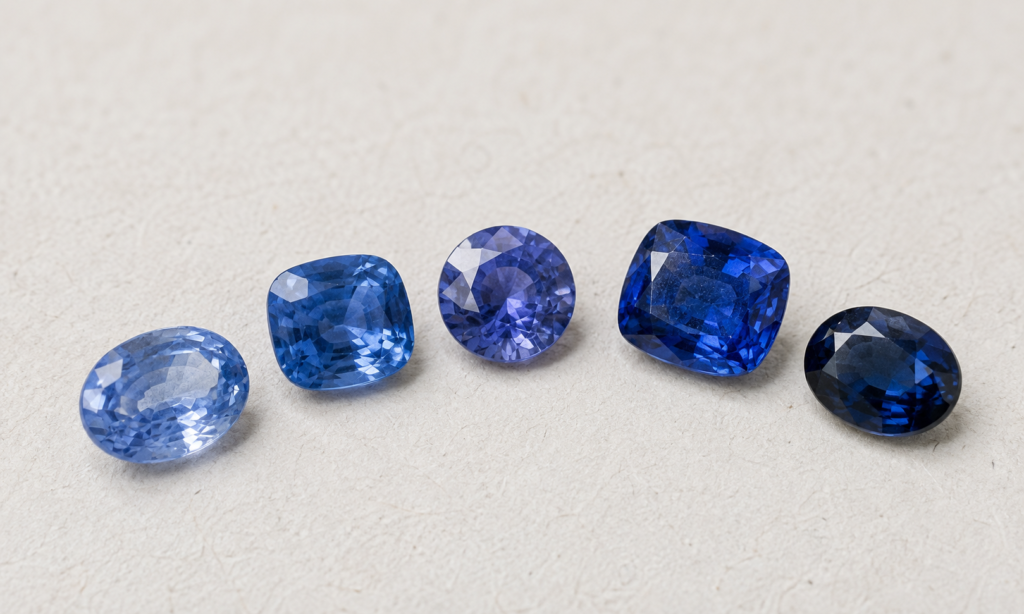
Royal Blue Is a Trade Colour Name
“Blue sapphire” describes the broad colour family; “Royal Blue” is a much narrower trade description applied to selected blue sapphires that satisfy particular criteria. The stone remains corundum: Royal Blue adds descriptive context rather than creating a separate gemstone variety.
What Does Royal Blue Look Like?
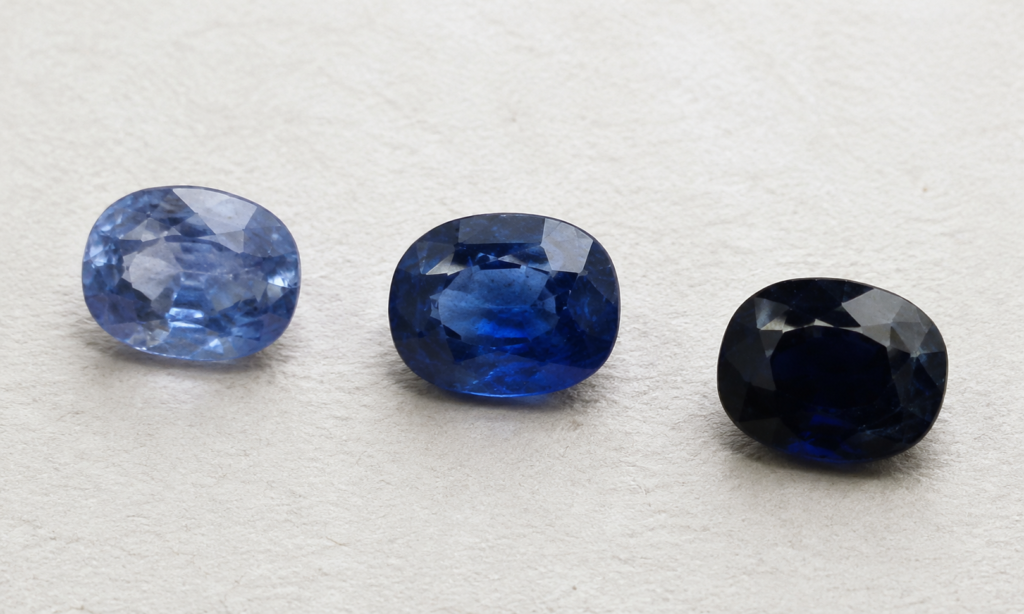
Royal Blue is generally associated with a rich, strongly saturated blue rather than a pale or pastel appearance. But “rich” should not be confused with simply making the stone as dark as possible.
The Swiss Gemmological Institute SSEF describes its Royal Blue range as blue of strong saturation, pure or with only a very slight purplish tint. Its assessment considers hue, saturation and brightness, together with factors including colour homogeneity, transparency, disturbing inclusions and the effect of the cut.
Deep Does Not Automatically Mean Royal
A sapphire does not become Royal Blue simply because it is very dark. If a blue is so deep that much of the face-up stone appears nearly black, darkness itself is not evidence that it belongs within a laboratory’s Royal Blue range. Tone and saturation are related, but they are not the same thing.
Is There One Universal Royal Blue Standard?
No. Royal Blue is a historic trade term, and no single international scientific definition has been established for it. Laboratories that place the term on reports can apply their own protocols, reference stones and eligibility requirements.
SSEF and the Gübelin Gem Lab have worked to harmonise their criteria for Royal Blue sapphires, including comparison of independently developed master sets. Other laboratories may also offer Royal Blue terminology, but the same words on different reports should not automatically be assumed to represent identical boundaries or protocols.
The important question is not only “Is it Royal Blue?” but also “According to whom?”
Laboratory Report vs Seller Description
When Royal Blue appears on a laboratory report, the term reflects that laboratory’s assessment under its own criteria. When the same words appear only in a product title, social post or seller description, they may simply be a trade description chosen by the seller.
If Royal Blue terminology materially affects the price or your decision to buy, check whether the colour term is actually stated on an independent laboratory report and which laboratory issued it.
Does Royal Blue Mean Unheated?
This depends on whose Royal Blue terminology is being discussed, which is another reason the laboratory name matters.
Under the published criteria of SSEF and the Gübelin Gem Lab, Royal Blue is reserved for sapphires that show no indications of treatment and satisfy additional colour, quality, chemical and spectroscopic requirements. A heated sapphire therefore would not qualify for Royal Blue terminology under that specific standard.
It would be unsafe to turn that into a universal rule for every use of “Royal Blue” in the international trade. Treatment status should be read directly from the relevant report rather than inferred from the colour name alone.
Does Royal Blue Belong to One Origin?
Historically, Royal Blue has strong associations with fine sapphires from the Mogok region of Myanmar. Today, the term is not necessarily restricted to Burmese origin.
SSEF, for example, can apply its Royal Blue terminology to qualifying sapphires from other metamorphic deposits, including Sri Lanka, Madagascar and Kashmir. Origin and colour terminology are therefore separate pieces of information.
Why Can the Name Matter to Price?
Historic colour terms have strong recognition in the gemstone market. When a sapphire combines a sought-after appearance with rarity and documentation from a respected laboratory, Royal Blue terminology can contribute to its commercial significance.
The words do not price the sapphire by themselves. Size, treatment, origin, transparency, cut, overall appearance, laboratory documentation and market demand can all affect value. Two sapphires carrying similar colour language can still be very different stones.
What If You Prefer Another Blue?
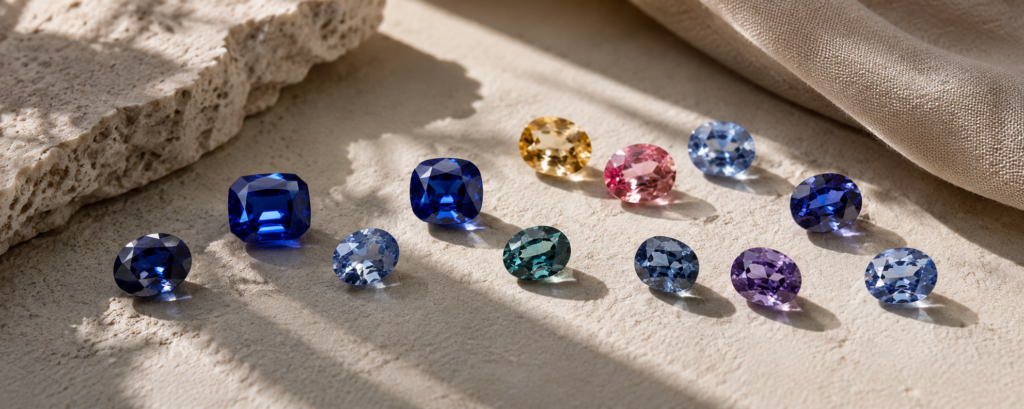
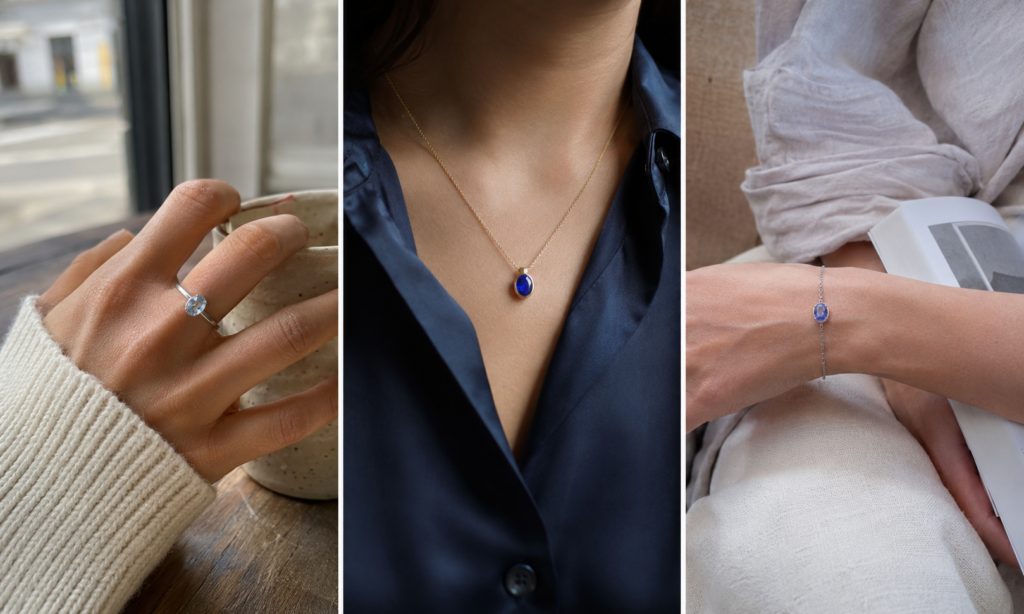
Royal Blue can be important without becoming a rule for personal taste. A lighter blue may feel quieter and more relaxed. A violetish blue can feel softer. A slightly greenish blue may feel more contemporary. A deeper blue can bring a restrained, architectural character to jewelry.
None of those preferences needs to be corrected simply because another colour has a recognised trade name. Market terminology helps describe and contextualise gemstones; it does not need to decide which blue you want to wear.
How to Read “Royal Blue” When You See It
Rather than treating the name as a complete verdict on the stone, use it as the beginning of a few useful questions:
- Who is using the term? Is it a seller description or terminology stated on a laboratory report?
- Which laboratory? Its own criteria provide the relevant context.
- What does the sapphire actually look like to you? A recognised colour term does not replace seeing the individual stone.
- What does the rest of the report say? Treatment, origin and other findings are separate information.
This avoids two opposite mistakes: dismissing Royal Blue as meaningless, or treating it as a universal ranking that tells you everything about a sapphire.
Royal Blue can be meaningful without becoming a rule. The name should help us understand a sapphire, not decide our preference for us.