
Padparadscha is one of the most distinctive colour names in the sapphire world. It is often associated with peach, salmon or sunset-like colours, but those comparisons can also create a misunderstanding: not every sapphire that sits somewhere between pink and orange is automatically a padparadscha.
The term has a narrower gemological meaning. It describes a rare pink-and-orange colour range within sapphire, and laboratories that use the name apply their own criteria before placing it on a report.
More Than “Peach Sapphire”
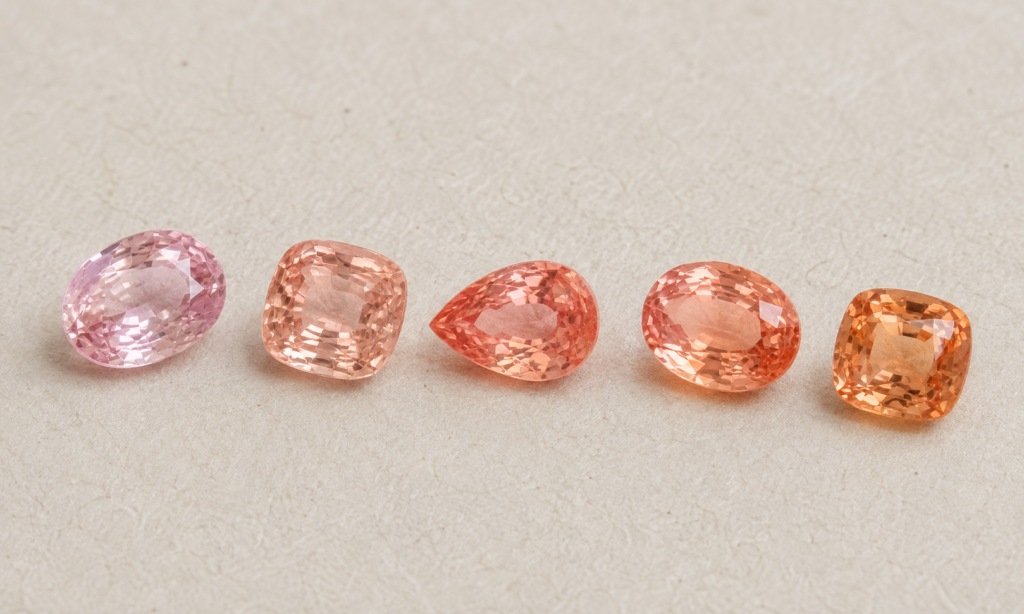
Peach, salmon, pinkish orange and orangy pink can all be useful ways to describe what a sapphire looks like. Padparadscha is different because it is also a recognised trade and laboratory term with boundaries.
GIA describes padparadscha as a rare pinkish-orange sapphire and notes that the definition has long been debated. In the trade, the accepted territory is generally described around light to medium pinkish orange through orange-pink. That still does not create a single colour chip against which every stone can be judged.
Pink and Orange Must Meet
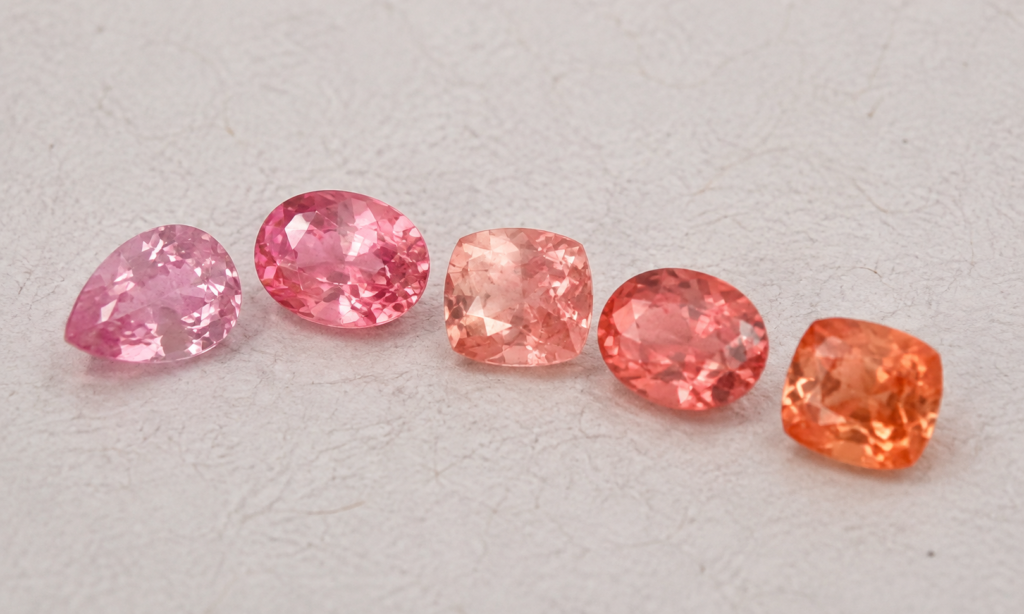
The defining visual idea is the meeting of pink and orange. A sapphire may lean more toward pink or more toward orange while still appearing to occupy the broader pink-orange territory. Once the colour moves too far toward a different family, a laboratory may describe it simply as pink, orange or another fancy-sapphire colour instead.
There is no useful rule such as “50% pink and 50% orange.” Colour is continuous, and the way pink and orange are perceived depends on hue, tone, saturation and their distribution across the face of the stone.
Why Is Padparadscha Difficult to Define?
Human vision sees gradual transitions, while a laboratory term needs boundaries. That makes Padparadscha more complicated than simply asking whether both pink and orange can be seen.
Laboratories consider the overall colour appearance and may also take into account factors such as tone, saturation, modifying colours, colour distribution and treatment. Their exact protocols do not have to be identical, which is why the laboratory named on a report provides important context.
Padparadscha is a colour range with boundaries, not a single colour chip.
Colour Distribution Matters
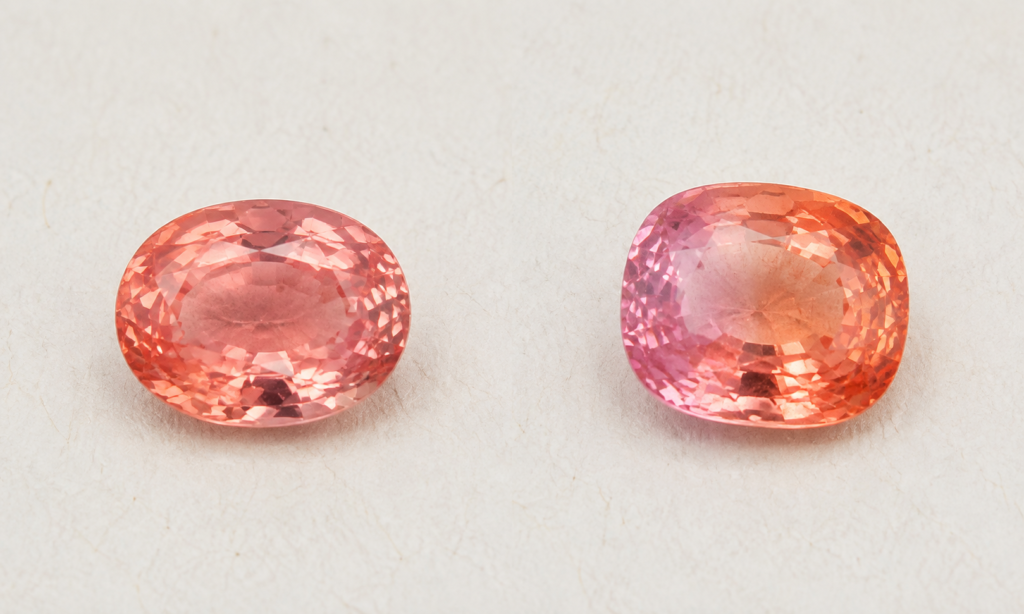
A sapphire containing both pink and orange does not necessarily present those colours in the same way. In one stone they may create a harmonious face-up appearance; in another they may occur as obvious separate zones.
This distinction is one reason photographs and simple colour averages have limitations. The relationship between the colours across the whole gemstone matters, not merely the presence of the right colour ingredients somewhere inside it.
Does Padparadscha Have to Come From Sri Lanka?
The name has a strong historical association with Sri Lanka and is linked to the colour of a lotus blossom. But Padparadscha is used as a colour description rather than as a geographic-origin name.
Sapphires with padparadscha-like colour can occur outside Sri Lanka, including material from Madagascar and Tanzania. Geographic origin and colour terminology are therefore separate questions: a laboratory can assess where a sapphire most likely formed and, separately, whether its colour qualifies for the Padparadscha description under that laboratory’s criteria.
Can Padparadscha Be Heated?
Conventional heating and Padparadscha terminology should not be confused with colour treatments that add colour-causing elements. Heat treatment is common in sapphire, and treatment information should always be read from the laboratory report alongside any colour terminology.
Lattice diffusion is a different treatment. It uses heat together with added chemical elements to change sapphire colour. Beryllium diffusion, for example, can produce orange or pinkish-orange appearances. GIA does not apply the Padparadscha characterization to beryllium-diffused sapphire even when its resulting colour might otherwise appear to fall in the relevant range.
The useful principle is not to infer treatment from the colour name. Read the treatment conclusion and the colour description as separate pieces of information on the report.
Why Colour Stability Matters
Some pink, orange and yellow sapphires can show reversible changes in colour after exposure to different kinds of light. This phenomenon is particularly important around the Padparadscha colour range because a temporary orange component can make a stone appear pinkish orange at one moment and substantially pinker later.
GIA routinely performs colour-stability testing on sapphires that may receive a Padparadscha characterization. Its reported colour is based on the appearance after its stability test, and a temporary unstable pink-orange appearance does not qualify if the stone falls outside the accepted range after testing.
SSEF also carries out fading tests on Padparadscha and Padparadscha-like sapphires to investigate colour stability. The underlying point is simple: for a colour name this specific, laboratories may need to understand not only what the sapphire looks like at one instant, but whether that appearance is stable under their testing protocol.
Laboratory Padparadscha vs Padparadscha-Like
If Padparadscha is stated on a reputable laboratory report, the laboratory has concluded that the sapphire meets its criteria for that terminology. If a stone is described only as peach, salmon, orangy pink or “Padparadscha-like,” those words describe an appearance but do not necessarily represent the same laboratory conclusion.
This distinction becomes especially important when the name contributes materially to rarity or price. The useful question is not only “Does this look like Padparadscha?” but also “Who has made that determination, and what does the report actually say?”
Why Is Padparadscha Rare?
Padparadscha occupies a relatively narrow part of sapphire’s enormous colour spectrum. Stones must combine an appropriate pink-and-orange appearance with the other characteristics required by the laboratory applying the term. When attractive face-up appearance, usable size, transparency and acceptable treatment status are added to that narrow colour range, qualifying material becomes uncommon.
That rarity helps explain why fine Padparadscha sapphires can command significant market premiums. It does not mean that every Padparadscha is automatically more beautiful than every peach, pink or orange sapphire.
The Name Does Not Have to Decide Your Preference
You may encounter a laboratory-confirmed Padparadscha whose particular colour is not the pink-orange balance you personally prefer. You may also find a peach or salmon sapphire that falls outside a laboratory’s Padparadscha criteria but has exactly the colour you were hoping to wear.
Those are not contradictory choices. If rarity, gemological identity and the Padparadscha designation matter to you, laboratory documentation becomes important. If your priority is a particular pink-orange appearance, the individual colour may matter more to you than whether it receives that specific name.
A sapphire does not become less beautiful because its colour has a different name.
How to Read a Padparadscha Claim
When you see the name Padparadscha, a few questions provide useful context:
- Who is using the term? Is it a seller description or stated on an independent laboratory report?
- Which laboratory issued the report? The laboratory’s criteria provide the relevant context.
- What treatment information accompanies the colour description? Colour terminology and treatment status should be read together, not assumed from one another.
- Has colour stability been considered? This can matter for sapphires around the pink-orange range.
- Do you actually like the individual colour? A recognised name does not replace personal preference.
Padparadscha is meaningful because the term is specific, not because every sapphire outside its definition is somehow less worthy. Understanding the name lets rarity, laboratory terminology and personal taste remain related—but separate—parts of appreciating the stone.