
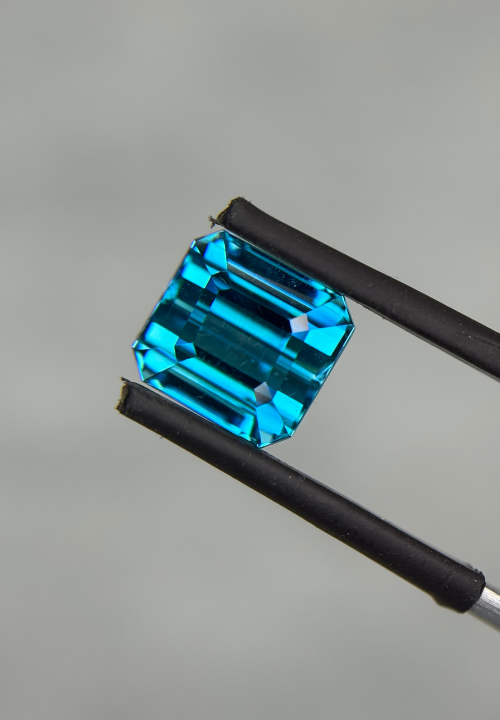
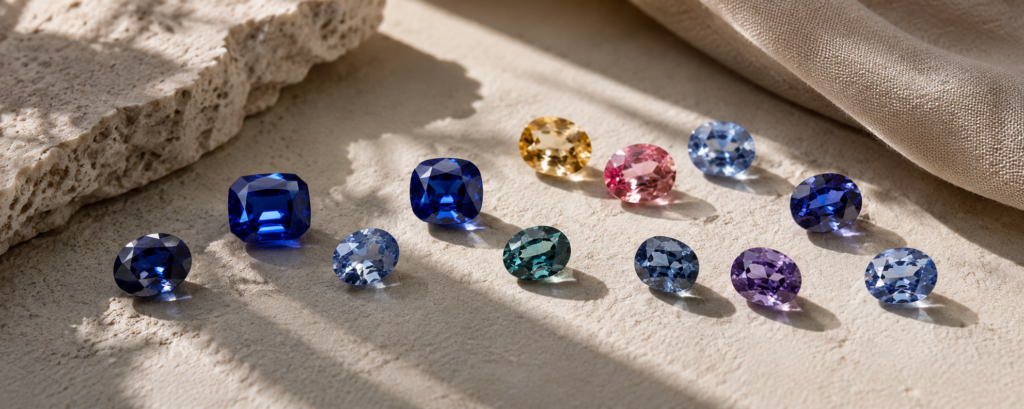
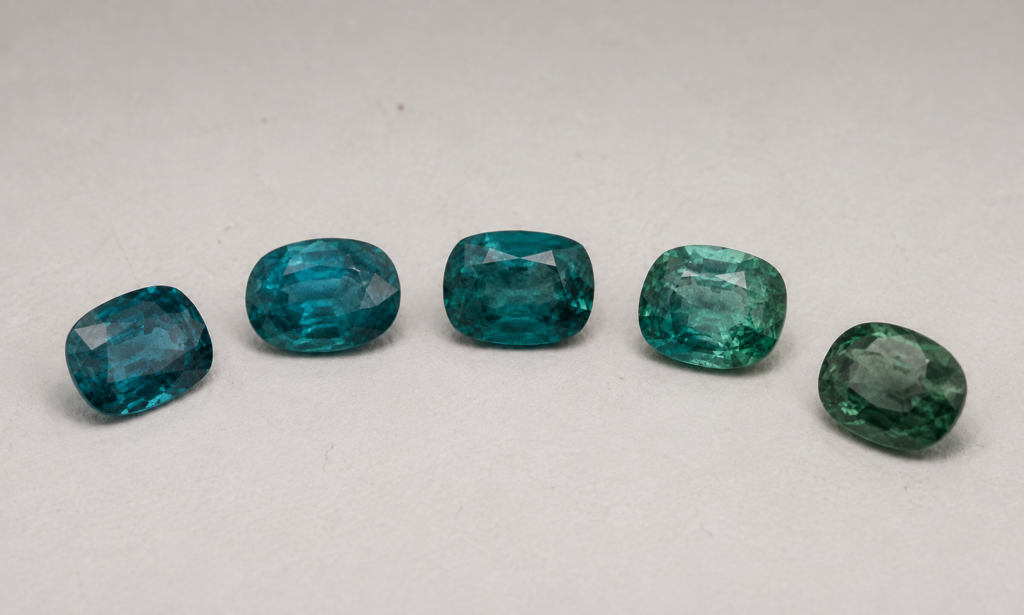
Teal sapphire occupies one of the most fluid parts of sapphire’s colour spectrum. Some stones appear predominantly blue with a green influence. Others lean more strongly toward green. In between are sapphires where the two colours feel closely balanced.
That variation is part of the appeal. “Teal” is useful language for describing a blue-green appearance, but it should not be imagined as one exact colour chip or a universal laboratory grade.
What Is a Teal Sapphire?
A teal sapphire is still sapphire: corundum whose colour falls into a blue-green or green-blue part of the spectrum. The word “teal” describes how the colour looks. It does not create a separate mineral species, identify an origin, or tell us whether the sapphire has been treated.
Unlike highly specific historic trade terms that some laboratories apply according to defined internal criteria, teal is commonly used as descriptive colour language in the gem and jewelry market. Its boundaries are therefore not best understood as a single universally fixed standard.
Teal Is a Spectrum, Not One Colour
The easiest way to understand teal sapphire is to think in terms of direction rather than ranking.
Blue-Dominant Teal
In some sapphires, blue is the first colour the eye notices, with green appearing as a clear secondary influence. These stones can still feel connected to familiar blue sapphire while carrying a cooler, less conventional character.
Balanced Blue-Green
Other stones show blue and green with neither colour feeling overwhelmingly dominant. This balanced appearance is often what people picture when they hear the word teal, but it should not be treated as an “ideal” formula that every teal sapphire needs to match.
Green-Dominant Teal
At the other side of the range, green can become the stronger impression while blue remains clearly present. The result can feel earthier and further removed from traditional blue sapphire without becoming simply a pure green stone.
Why Can One Teal Sapphire Show More Than One Colour?
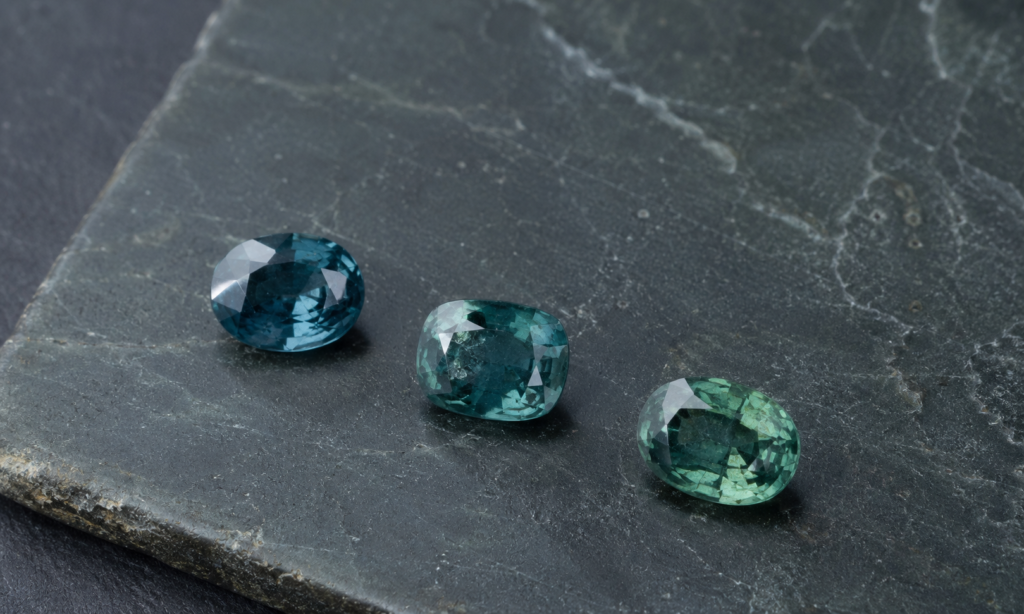
Colour in sapphire is not always distributed evenly through the crystal. Sapphires are well known for colour zoning—areas in which colour differs in concentration or appearance. The way a rough crystal is oriented and cut can influence how those zones contribute to the finished stone when viewed face-up.
GIA notes that some sapphires show visible blue-green zoning, and that green appearances in certain sapphires can result from blue and yellow colour zones. This means two stones that are both casually described as teal may arrive at that overall impression in visually different ways.
Not every teal sapphire is strongly zoned, however. Some appear relatively blended across the face, while others reveal distinct areas of colour. Zoning is therefore a characteristic to observe, not a requirement for calling a sapphire teal.
Teal and Parti Sapphire Are Not the Same Thing
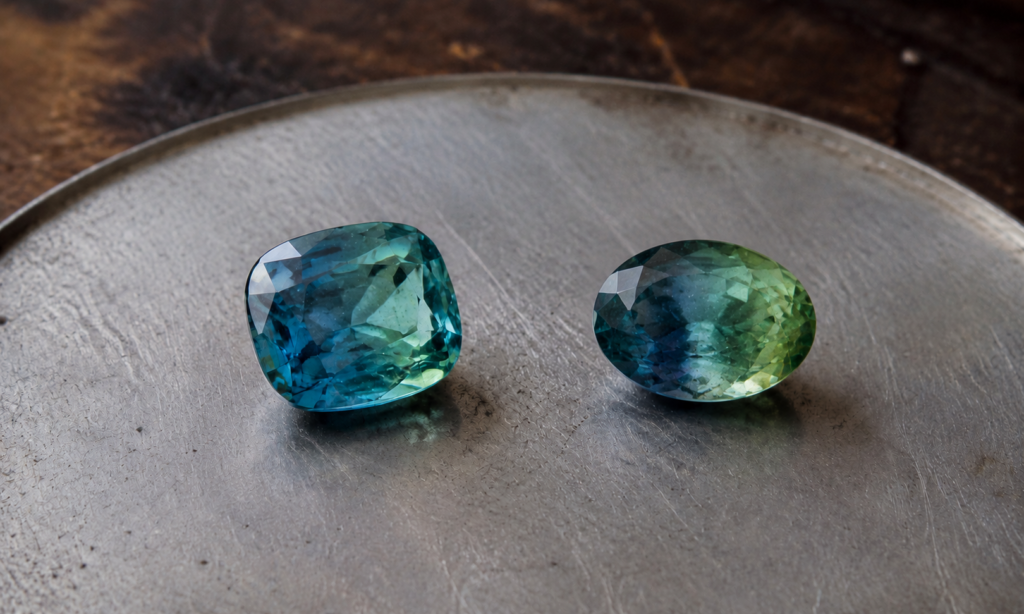
The two terms can overlap, which is why they are sometimes confused. Teal describes an overall blue-green colour character. “Parti-coloured” is commonly used when visibly different colour zones form an important part of the stone’s appearance.
A sapphire can therefore look teal without displaying strongly separated colour zones. A blue-green parti sapphire, by contrast, may show blue and green as visibly distinct areas. Parti sapphires are also not limited to blue and green; other colour combinations can occur.
Lighting Can Change the Balance You See
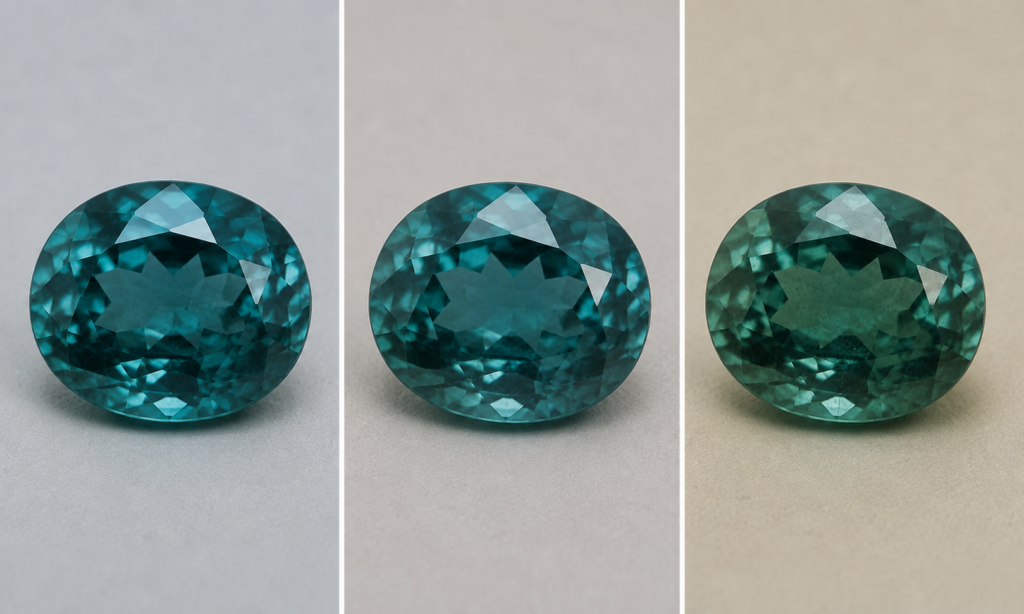
Gemstone colour is experienced through light. A teal sapphire may appear somewhat bluer, greener, lighter or deeper as the illumination changes. Daylight, controlled neutral lighting and warm indoor light do not have identical spectral characteristics, so the balance perceived by the eye can shift.
This should not automatically be described as a colour-change sapphire. A stone looking somewhat different under different everyday lighting is not the same as demonstrating the distinct colour-change phenomenon used as a gemological description.
For someone considering a teal sapphire, seeing the same stone in more than one realistic lighting environment can be more informative than searching for the single photograph in which its colour looks most appealing.
Where Do Teal Sapphires Come From?
Blue-green sapphire is not confined to one geographic source. Two origins strongly associated with this part of the modern sapphire market are Australia and Montana in the United States, although sapphire occurs in many deposits around the world.
Australian sapphire deposits are known for iron-rich blue, green and parti-coloured material. GIA research on Montana sapphire likewise describes pale blue, pale green, blue and teal material among the colours seen from its deposits.
Origin should still be treated as separate information. “Teal” describes colour appearance; it does not mean Australian or Montana by definition, and appearance alone is not a reliable method for determining geographic origin.
Does Teal Mean Heated or Unheated?
Neither. Teal describes colour, while heated and unheated describe treatment history.
Blue-green sapphires can occur with natural colour, and heat treatment can also alter or intensify colour in sapphire. GIA’s research on Montana material, for example, documents both untreated colour and the use of heat treatment to produce or improve colours for the jewelry market.
For that reason, treatment status should come from appropriate gemological examination rather than assumptions based on teal colour, visible zoning or geographic origin.
Teal Sapphire in Jewelry
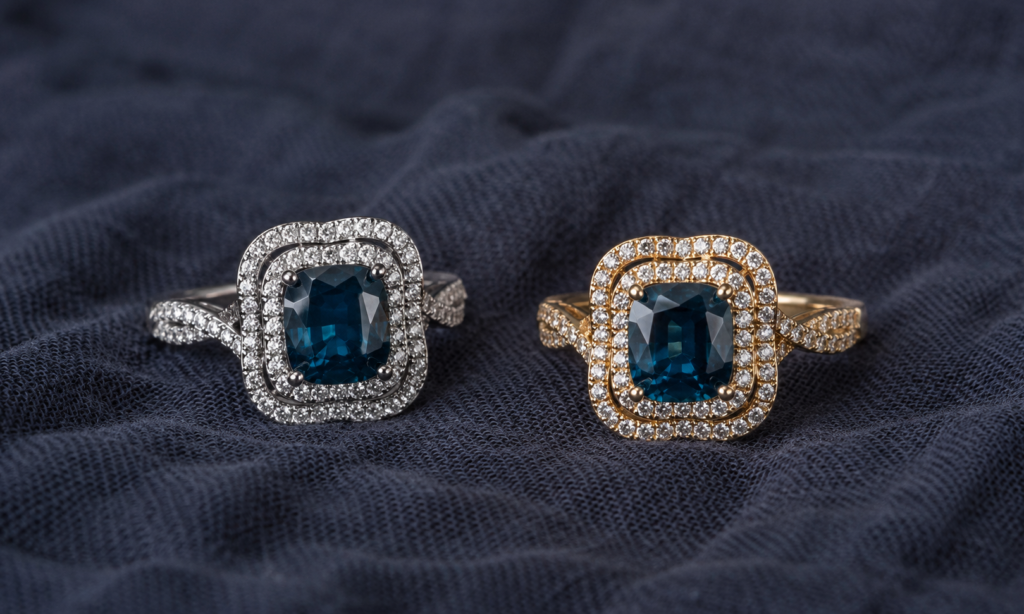
Teal sits between two familiar colour families, and that gives it a character that can move easily between different jewelry directions. A blue-dominant stone can retain some of the cool presence associated with blue sapphire, while a greener stone can feel more organic or earthy.
The surrounding metal changes the context again. White gold or platinum can keep the composition cool and clean. Yellow gold introduces a warm contrast against blue-green. Rose gold creates a softer temperature contrast that can make the same colour feel quite different.
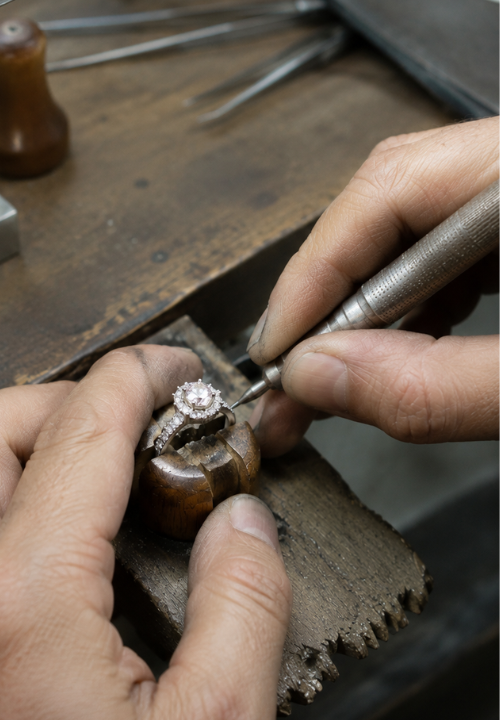
These are design possibilities rather than rules. Teal can work in a minimal solitaire, a bezel, an east-west setting, a geometric piece or a more traditional design depending on the individual stone and the person wearing it.
Choosing a Teal Sapphire
Rather than looking for a prescribed “best” teal, it can be more useful to notice which part of the spectrum you naturally respond to.
- Do you want the stone to feel more blue, more green, or somewhere between?
- Do you enjoy visible colour zoning, or prefer a more blended face-up appearance?
- How does the colour behave in the lighting in which you are likely to wear it?
- How does your preferred metal change the way the blue-green feels?
- Most importantly, do you like this individual sapphire—not simply the word “teal” attached to it?
Teal is useful because it gives a name to the meeting of blue and green without requiring every sapphire in that space to look alike.
Some teal sapphires lean quietly toward blue, some move decisively toward green, and others reveal both colours differently as lighting, orientation and the stone itself change. That range is not something the name needs to eliminate. It is what makes blue-green sapphire worth looking at stone by stone.