
Cornflower Blue is one of the best-known colour names associated with fine blue sapphire. It is sometimes explained simply as a lighter version of Royal Blue, but that misses much of what the term is trying to express.
Cornflower Blue refers to a particular blue character within sapphire’s wider spectrum. Depending on the laboratory or trade context, the description can involve not only hue and saturation, but also the way brightness, transparency and a soft or velvety appearance come together.
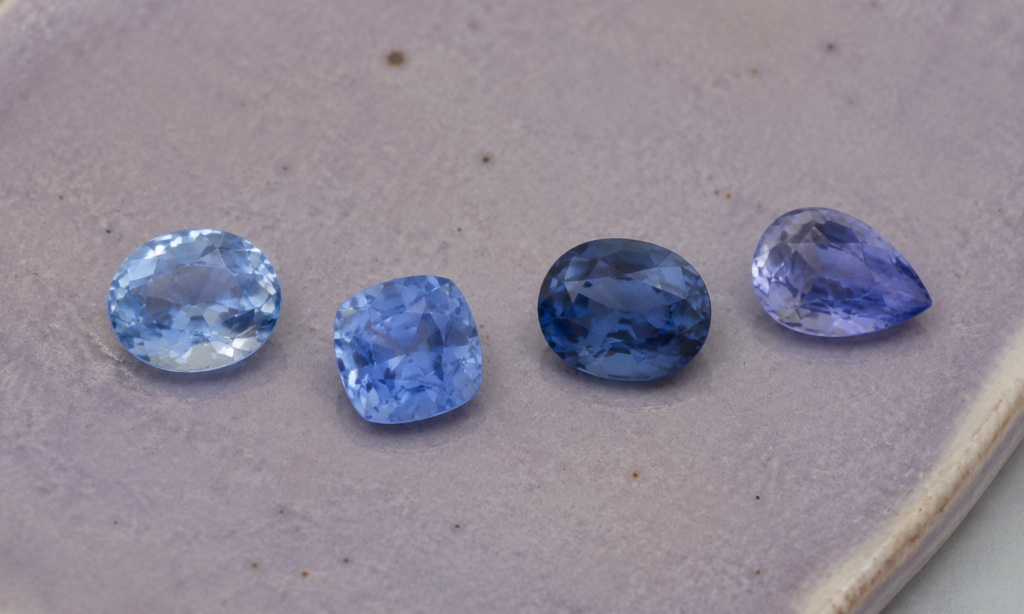
Where Does the Name “Cornflower” Come From?
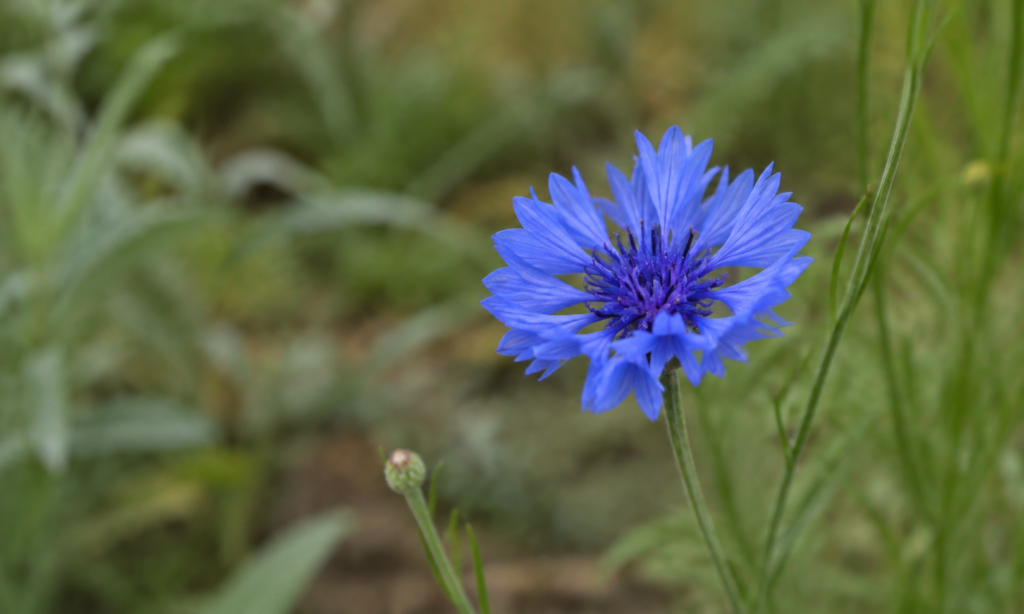
The name comes from the blue cornflower blossom, historically used as a visual comparison for a desirable blue in sapphire. The comparison is evocative rather than a scientific calibration standard.
A real flower can appear different with variety, illumination, photography and display conditions. A photograph of a cornflower—or a digital swatch labelled “cornflower blue”—should therefore not be used as a master reference for grading sapphire.
What Does Cornflower Blue Look Like?
There is no single universal colour chip that defines Cornflower Blue across the entire gemstone trade. A useful general picture is a vivid, clearly blue sapphire that retains an open and lively appearance rather than becoming extremely dark. A slight violetish influence can be accepted under some laboratory systems.
The Gem and Jewelry Institute of Thailand (GIT), for example, describes Cornflower Blue as vivid blue, allowing a slight violetish modifier, and places particular importance on a velvety appearance produced by light scattering from fine internal features. Its criteria consider the overall quality of the stone rather than colour in isolation.
GRS likewise associates its Cornflower terminology with the soft, silky appearance historically linked to fine Kashmir sapphire, explaining that evenly distributed fine needles and small particles can scatter and reflect light through the crystal.
The “Velvety” Character
The word velvety does not mean that the gemstone surface is physically soft. It describes a visual effect in which very fine internal particles or needles scatter light and soften the appearance of the blue.
When this effect is well balanced, a sapphire can look rich in colour without feeling hard or overly dark. But cloudiness is not automatically desirable: obvious haze or inclusions that strongly interfere with transparency are a different matter.
Cornflower Is Not Simply “Light Royal Blue”
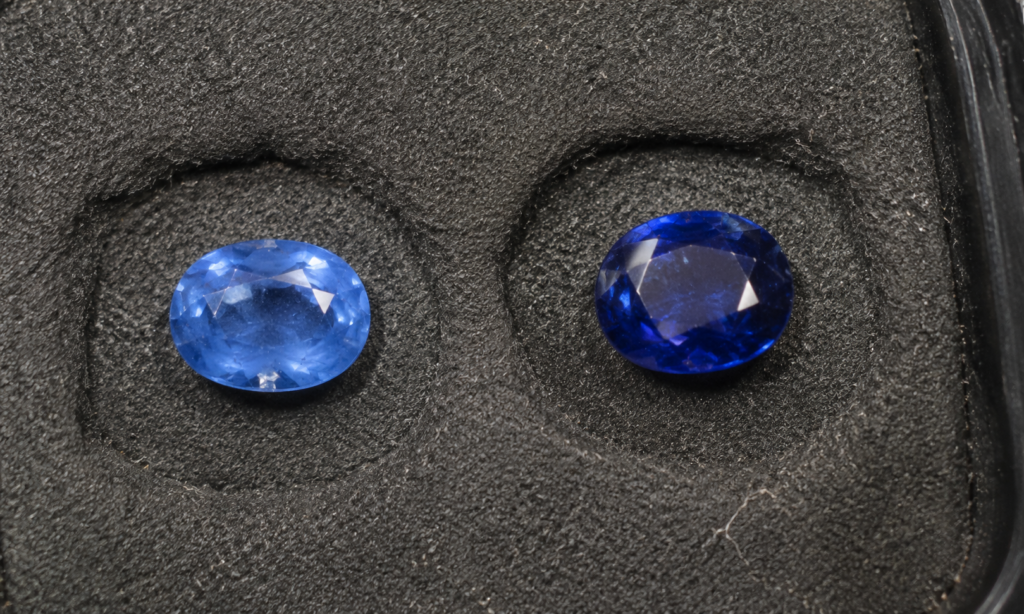
Royal Blue and Cornflower Blue are better understood as different recognised blue characters than as higher and lower positions on one scale. Making a Royal Blue sapphire lighter does not automatically create Cornflower Blue, just as making Cornflower Blue darker does not automatically turn it into Royal Blue.
Hue, saturation, tone, brightness and overall visual character interact. Laboratory systems that use these trade terms may also impose additional quality or treatment requirements. The names cannot be reproduced reliably by moving a slider on a digital colour chart.
Is There One Universal Cornflower Blue Standard?
No. Cornflower Blue began as historic trade language rather than a universal scientific colour grade. Today, some gemological laboratories use the term within their own colour-standard systems, but their exact criteria and boundaries do not have to be identical.
GIT publishes its own criteria for Cornflower Blue sapphire, while GRS uses its own GRS-type Cornflower terminology and eligibility rules. The same phrase therefore carries more precise meaning when the laboratory that issued it is known.
A colour name becomes more useful when its source is clear.
Laboratory Terminology vs Seller Description
If Cornflower Blue appears on a laboratory report, it reflects that laboratory’s assessment under its own system. If the words appear only in a product description, social post or conversation, they may be descriptive trade language chosen by the seller.
That distinction becomes important when the terminology contributes materially to rarity or price. Look at whether an independent report actually states the colour term and which laboratory issued it.
Does Cornflower Blue Mean Unheated?
Colour appearance and treatment history are separate pieces of information, and the answer depends on the standard being used.
GRS, for example, excludes sapphires treated by high-temperature/high-pressure treatment, diffusion or beryllium diffusion from its GRS-type Cornflower label. This should not be turned into a universal statement that the words “Cornflower Blue” always prove a sapphire is unheated under every laboratory or seller’s usage.
If treatment status matters, read the treatment conclusion on the relevant laboratory report directly rather than trying to infer it from the colour name.
Does Cornflower Blue Mean Kashmir?
Cornflower Blue has a strong historical association with the celebrated sapphires of Kashmir. Their combination of blue colour and a characteristic velvety appearance helped shape the language still used in the trade today.
But Cornflower Blue is not another name for Kashmir origin. GIT notes that sapphires with Cornflower Blue character can be found from other sources, and GRS documentation discusses material from Madagascar in connection with colour and visual features associated with its Cornflower standard.
Origin is a separate gemological conclusion. A sapphire should not be called Kashmir simply because its colour looks Cornflower-like.
Why Can Two Cornflower Blue Sapphires Look Different?
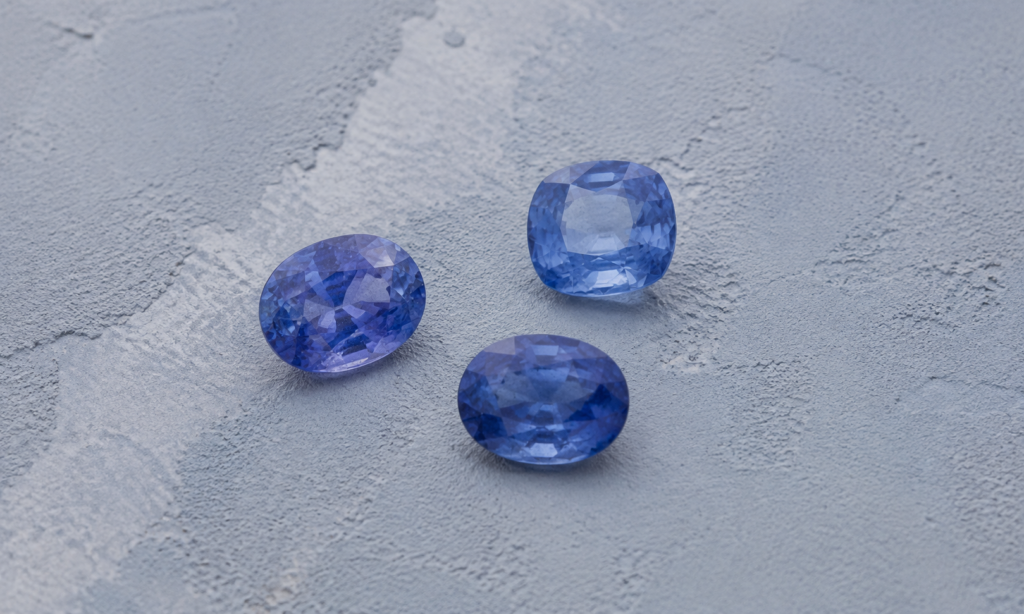
A named colour range still contains variation. Two sapphires carrying Cornflower Blue terminology do not need to look like duplicates of one another.
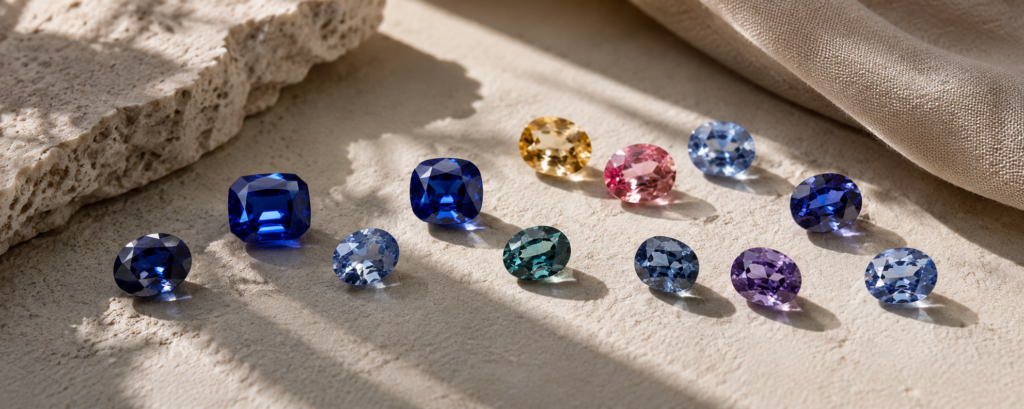
One may lean slightly more violet, another may feel more purely blue. Brightness, transparency, colour distribution, cut, size and internal light scattering can all influence what the eye sees while both remain within the range accepted by the laboratory that assessed them.
What If You Prefer a Different Blue?
Cornflower Blue has historical and commercial significance, but it does not need to become a rule for personal taste. Some people prefer a lighter, quieter blue; others enjoy a deeper and more saturated blue, a violetish character, or a blue that moves toward teal.
A recognised colour name can help describe and contextualise a gemstone. It cannot decide which sapphire you will enjoy seeing and wearing most.
How to Read “Cornflower Blue”
When you encounter the term, four questions give it useful context:
- Who is using the term? Is it a seller description or stated on a laboratory report?
- Which laboratory issued the report? Its own Cornflower criteria are the relevant reference.
- What do the treatment and origin conclusions say separately? Neither should be assumed from the colour name alone.
- Do you like this particular sapphire? Stones within the same named range can still have individual character.
Cornflower Blue is most useful when it adds context to what we see—not when the name replaces looking at the sapphire itself.