
The name Ceylon Sapphire carries a long history, but it is easy to read more into the name than it actually tells us. In modern gemstone use, Ceylon refers to Sri Lanka: the island known internationally as Ceylon until 1972 and one of the world’s long-established sources of sapphire.
What makes Sri Lankan sapphire distinctive is therefore not one prescribed shade of blue or a promise that every stone will have the same appearance. It is the combination of origin, geological history, colour diversity and a gem trade that has developed around the island over many centuries.
What Does “Ceylon Sapphire” Mean?
Ceylon is the former name by which Sri Lanka was widely known internationally. The country adopted the name Sri Lanka in 1972, but “Ceylon” remains familiar in the gemstone trade.
When used as an origin description, Ceylon Sapphire generally means sapphire from Sri Lanka. It is not a separate mineral species or a colour grade. A sapphire does not become “Ceylon” because it looks light blue, bright blue or any other particular shade; geographic origin and visual appearance are different pieces of information.
A Long Sapphire History
Sri Lanka’s relationship with gemstones reaches far back into recorded history. GIA documents gemstone use on the island extending at least 2,000 years, while Sri Lanka’s National Gem and Jewellery Authority describes an even longer tradition associated with its gem resources.
Ratnapura, in the Sabaragamuwa region, became particularly closely associated with this history and remains one of the island’s best-known gem-producing areas. The long continuity matters because “Ceylon” is not simply a modern marketing name; it belongs to a much older history of mining and trading gemstones from the island.
How Sri Lankan Sapphires Are Found
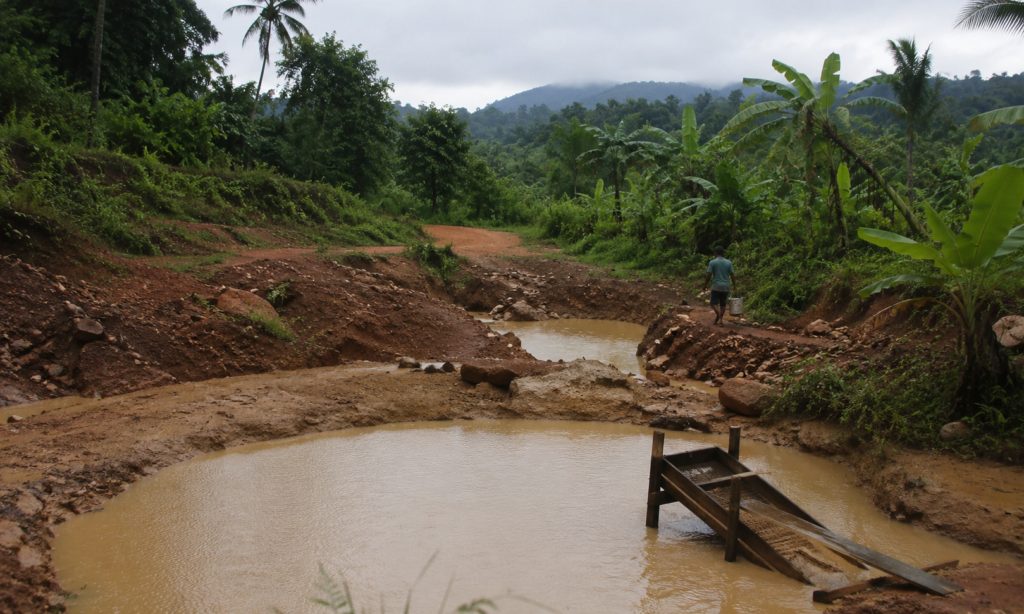
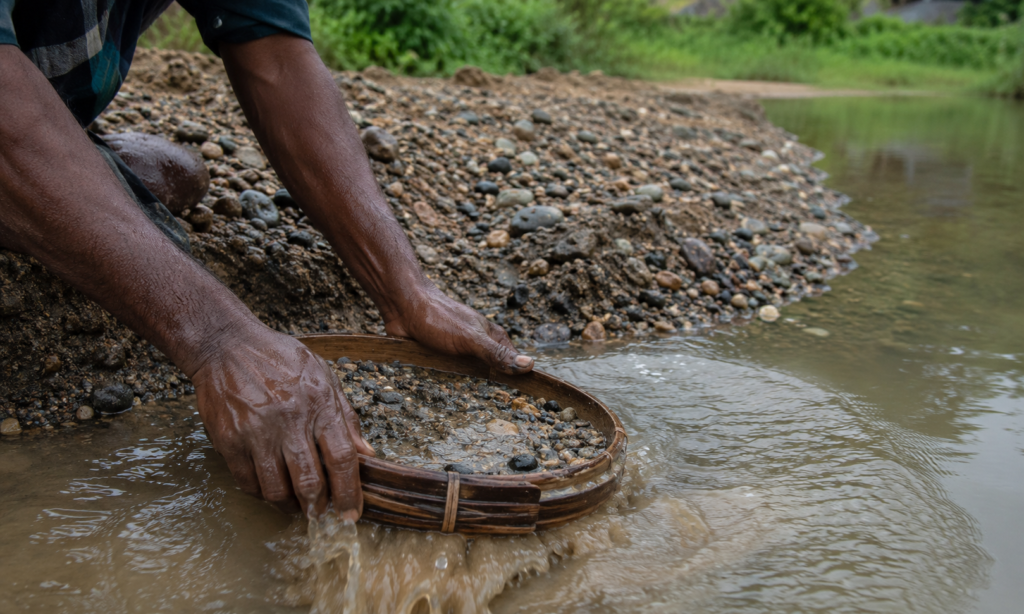
Much of Sri Lanka’s commercially important gemstone production comes from secondary deposits rather than sapphires being extracted directly from their original host rock. Over geological time, weathering released durable gem minerals from rock, and water transported and concentrated them in gravels.
GIA describes important deposits around Ratnapura, Balangoda and Elahera as secondary gravel deposits, while Sri Lanka’s National Gem and Jewellery Authority records gem minerals in alluvial, eluvial and residual formations. Mining can involve pits reaching gem-bearing gravel layers as well as river and other methods suited to local deposits.
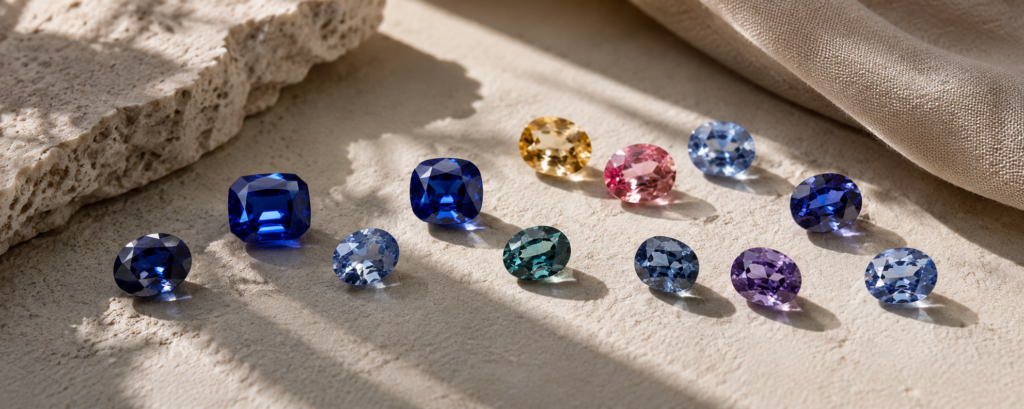
Sri Lanka Does Not Produce Just One Kind of Blue
A familiar idea in the trade is that Ceylon blue sapphire should look relatively bright or open. Some Sri Lankan sapphires certainly do have that character, but origin does not prescribe one shade.
Sri Lankan blue sapphires can differ substantially in tone, saturation, secondary hue, zoning, transparency and cut. GIA’s reference work on geographic origin also shows why appearance alone is not enough: metamorphic sapphires from Sri Lanka, Myanmar, Madagascar and Kashmir can overlap significantly.
A familiar Ceylon look may exist in the trade, but Sri Lankan origin does not prescribe one shade of blue.
Beyond Blue
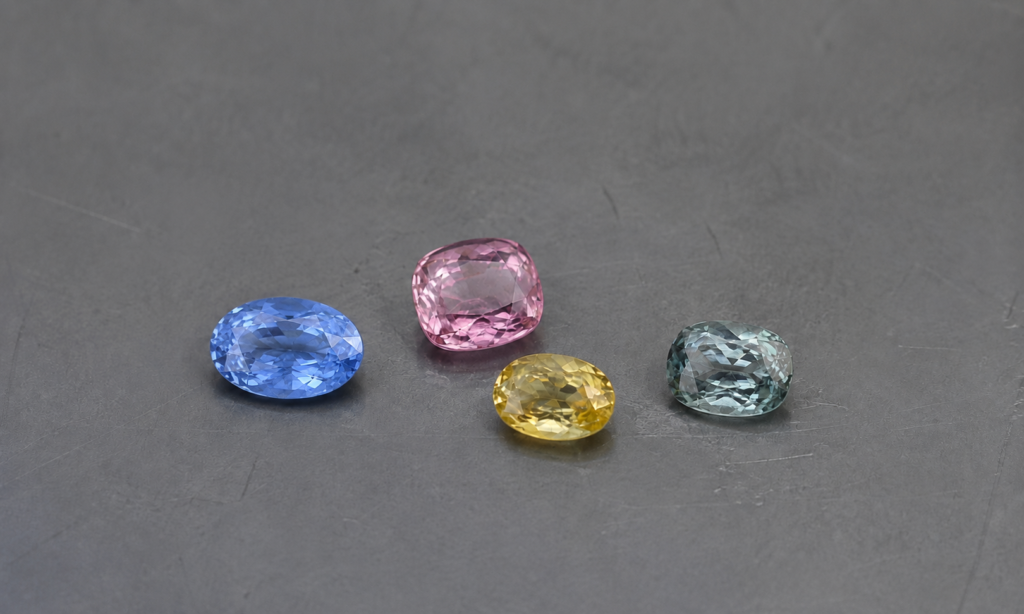
Sri Lanka’s corundum is not limited to blue sapphire. The island produces fancy-colour sapphire as well as ruby, and documented material includes yellow, pink, orange and other colour varieties. Padparadscha sapphire and asteriated, or star, sapphire also form part of Sri Lanka’s corundum tradition.
This diversity is useful when thinking about origin. “Sri Lankan Sapphire” describes where the material comes from; it does not define what colour the finished stone must be.
Geuda and the History of Heat Treatment
Sri Lanka is also closely associated with sapphire material known in the trade as geuda. It is often milky or translucent before treatment, and suitable material can respond strongly to heat treatment.
The discovery that some geuda could be transformed by heating became an important chapter in the modern sapphire trade. Heating can alter microscopic rutile and the stone’s colour appearance, allowing suitable material to develop a stronger blue.
Geuda is not simply a synonym for “bad sapphire,” and not every piece responds in the same way. It is better understood as part of the varied sapphire material associated with Sri Lanka and its treatment history.
Heated and Unheated Sri Lankan Sapphire
Sri Lankan origin does not tell us whether a sapphire has been heated. Material from the island can be encountered both with and without evidence of heat treatment.
These are separate questions. Origin asks where the sapphire came from; treatment asks whether its properties were subsequently modified by a treatment process. A heated sapphire does not stop being Sri Lankan because it was treated, and Sri Lankan origin does not imply that a stone is unheated.
Can You Recognise Ceylon Origin by Looking at a Sapphire?
Not reliably from face-up colour alone.
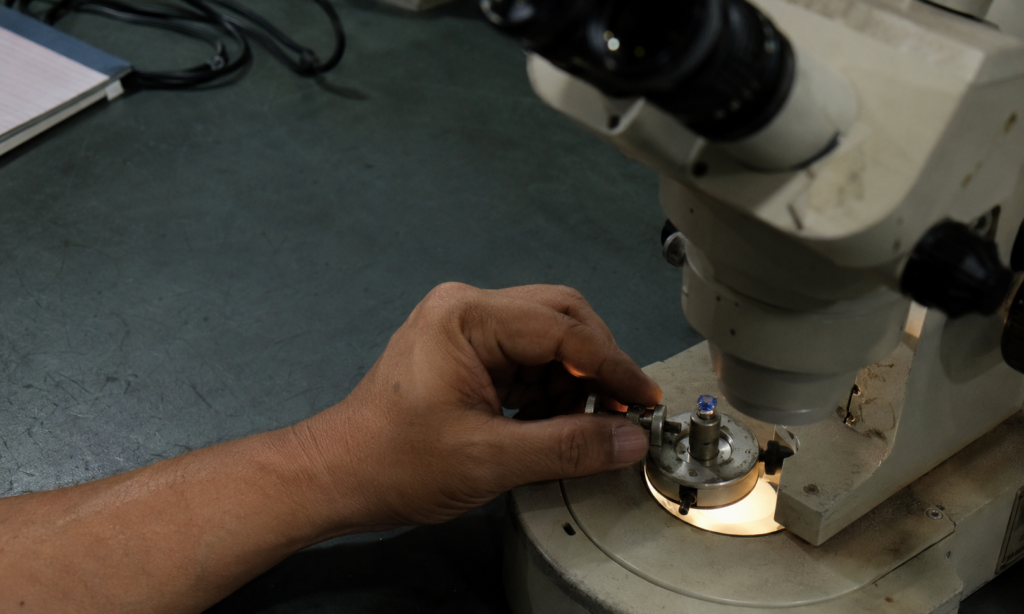
Gemological laboratories approach geographic origin by comparing multiple lines of evidence with reference material of known provenance. For blue sapphire, GIA uses microscopic inclusion features together with trace-element chemistry and spectroscopic data. Sri Lankan sapphires can show features such as long, fine rutile silk, particular healed-fracture patterns and other inclusions that may support an origin conclusion.
But individual features are often not exclusive to one country. GIA’s research demonstrates substantial overlap between sapphires from major metamorphic deposits, and in some cases the available evidence is not sufficient for a conclusive geographic origin.
This is why a bright blue appearance should not be treated as proof of Sri Lankan origin. When origin is commercially or personally important, an independent laboratory report provides much stronger context than appearance alone.
Does Sri Lankan Origin Make a Sapphire More Valuable?
Geographic origin can have commercial significance. The market attaches history, supply and reputation to particular sources, and an independently supported origin can become one part of how a gemstone is described and valued.
But origin alone does not determine the beauty or value of an individual sapphire. Colour, clarity, cut, size, treatment status, rarity, overall appearance and market demand all interact. Two sapphires from the same country can therefore differ greatly in both appearance and price.
More importantly, a Sri Lankan sapphire whose appearance does not appeal to you does not become the right choice simply because of its origin. A sapphire from another source may suit your preferences more closely, and that is not a lesser way to choose a gemstone.
Origin can add context and rarity. It cannot replace the appearance of the stone in front of you.
Choosing a Sri Lankan Sapphire
It can help to think about a sapphire in two layers. The first is the gemstone itself: its colour, brightness, clarity, cut and the individual character you see when you look at it. The second is its context: geographic origin, treatment history, laboratory documentation and the story of the source.
If Sri Lankan origin matters to you, that context can be a meaningful reason to seek it. If your preference leads you toward a sapphire from another origin, there is no need to treat that choice as a compromise. Origin tells us something important about a gemstone, but it is not a universal ranking of beauty.
Sri Lanka’s long gem history, varied deposits and diversity of sapphire make Ceylon an important name in the gemstone world. Its usefulness is greatest when the name gives a sapphire context rather than becoming a shortcut for judging the stone.
A laboratory can help tell us where a sapphire is from. The stone itself tells us whether we enjoy looking at it.