
Few sapphire origins have acquired a reputation quite like Kashmir. The name is associated with a brief period of remarkable production in the Himalayas, celebrated blue sapphires with a distinctive soft visual character, and a supply that became limited almost as quickly as it became famous.
That combination turned Kashmir into an important name in gemstone history. But the reputation should not be read as a rule that every Kashmir sapphire looks the same—or that origin alone decides which sapphire is most beautiful.
[IMAGE PLACEHOLDER — IMAGE showing two or three real sapphires with well-supported Kashmir origin and visibly different individual appearances, photographed under consistent neutral lighting; purpose: introduce the celebrated origin while showing that Kashmir is not a single fixed colour appearance]
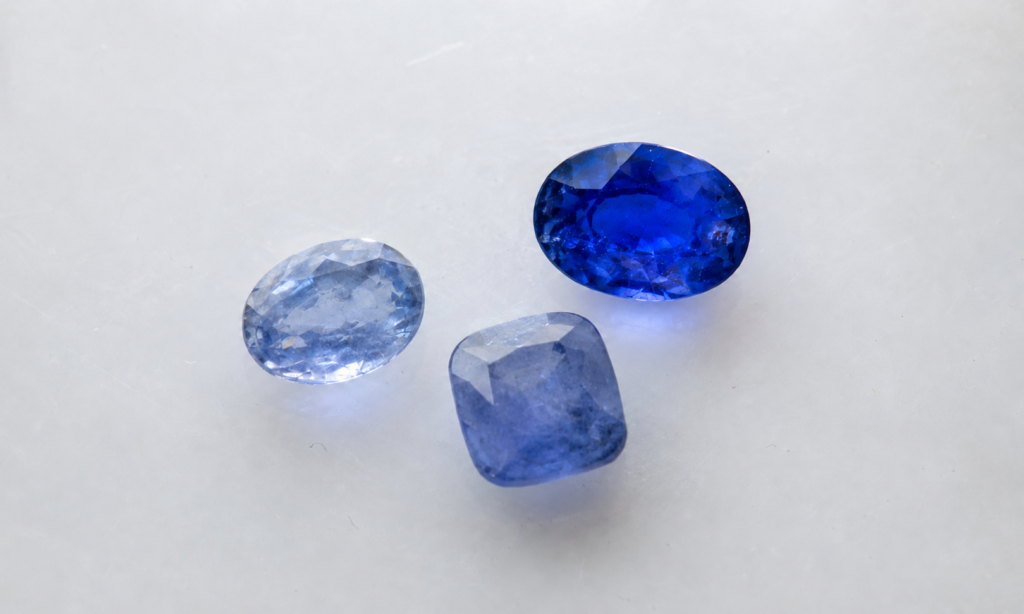
Where Did Kashmir Sapphire Come From?
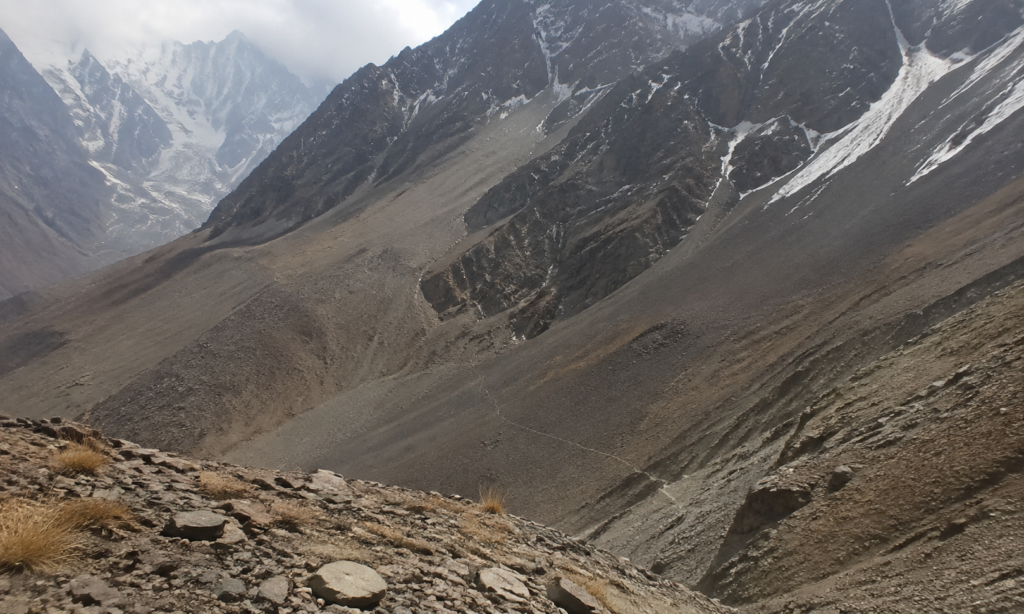
The historic Kashmir sapphire mines lie high in the Himalayas near Sumjam in the Pádar region, at an elevation of roughly 4,600 metres. The remote mountain setting became part of the story of the deposit, but its fame began with an unusually concentrated period of discovery and production.
GIA’s historical accounts place the discovery around 1881, when a landslide exposed sapphire-bearing material. Once important crystals began reaching the market, the locality came under the control of the Maharaja of Kashmir.
A Short Period That Created a Lasting Reputation
The most important early production was remarkably brief. GIA records that thousands of large sapphire crystals were recovered between 1882 and 1887. Mining declined after this initial period and later activity became intermittent.
This helps explain why Kashmir feels different from a major sapphire source with continuous modern production. Much of its reputation was established during a relatively short moment in the late nineteenth century, yet stones from that period continued to circulate through the gemstone trade and important collections long afterwards.
Kashmir’s reputation grew from an unusually concentrated moment in sapphire history.
The Famous Velvety Appearance
Among fine classical Kashmir sapphires, one of the most celebrated characteristics is a rich blue combined with a soft, slightly hazy or “velvety” appearance.
This softness is not simply surface texture. GIA’s microscopic research describes dense, extremely fine particle clouds arranged within the sapphire. These submicroscopic features scatter light and can create the sleepy, velvety visual effect associated with many fine Kashmir stones.
Velvety should not automatically be read as cloudy or dull. In admired examples, the scattering can soften the appearance while the stone still retains attractive colour and presence. At the same time, not every Kashmir sapphire has an identical degree of this effect.
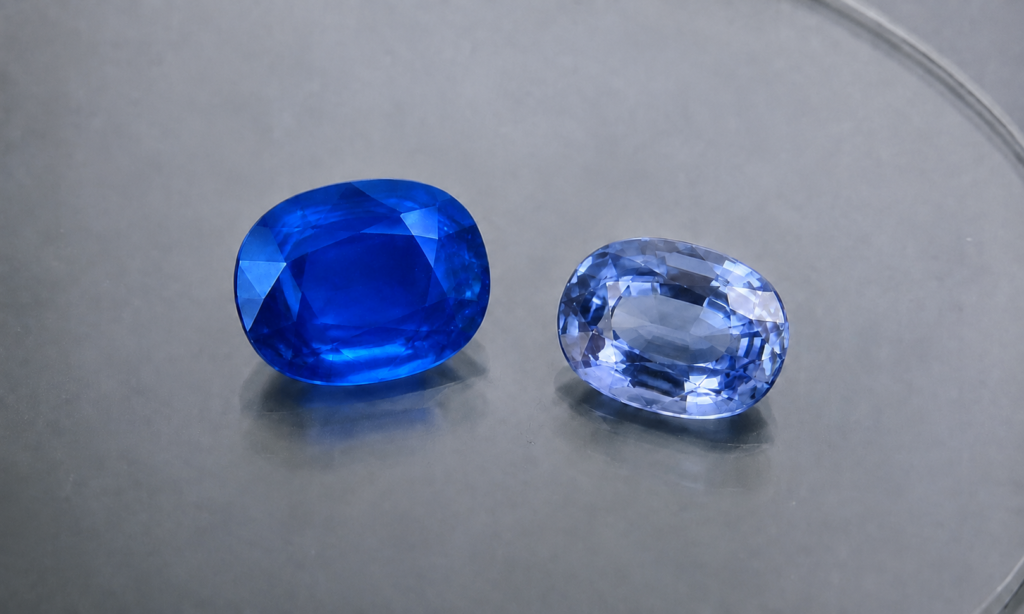
Velvety Does Not Prove Kashmir Origin
A characteristic appearance can become strongly associated with an origin without becoming proof of that origin. Sapphires from Sri Lanka, Myanmar and especially Madagascar can overlap with characteristics seen in classical metamorphic sapphires from Kashmir.
The same caution applies to familiar colour descriptions. A sapphire that looks “cornflower-like,” or one with a soft velvety appearance, should not be called Kashmir simply because it resembles the popular image of a Kashmir stone.
Kashmir Is an Origin, Not a Colour Grade
The word Kashmir answers a geographic question. It does not automatically mean Cornflower Blue, Royal Blue, unheated or any other separate colour or treatment description.
A laboratory report may, depending on the laboratory and the stone, contain both an origin conclusion and other descriptive information. Those conclusions should be read separately. A famous origin can have a familiar visual reputation without becoming a universal colour standard.
Why Is the Supply So Limited?
The simplest version of the story is sometimes that the Kashmir mines “ran out,” but the history is more nuanced. The extraordinarily productive early period declined rapidly, and subsequent mining was sporadic rather than disappearing completely.
GIA’s accounts describe difficult high-altitude terrain and limited later production. An expedition reported in 1983 found that gemstone production had slowed to a trickle and that much of the corundum then being recovered was industrial grade.
The important point for the modern market is that Kashmir never developed into a large, continuous contemporary source comparable with major sapphire-producing regions elsewhere. Fine historic material is therefore available in a very limited pool, much of it recirculating through collections and the secondary market.
Why Provenance Can Matter
With a rare historic sapphire, two related ideas can become important: geographic origin and provenance.
Geographic origin is a gemological conclusion about where the sapphire formed. Provenance is the documented history of an individual stone—its previous ownership, appearance in an established collection or auction history, for example.
For a notable Kashmir sapphire, strong laboratory support for origin can establish geological context, while documented provenance may add a separate historical story. One does not automatically substitute for the other.
Can You Identify Kashmir Sapphire by Eye?
Not reliably.
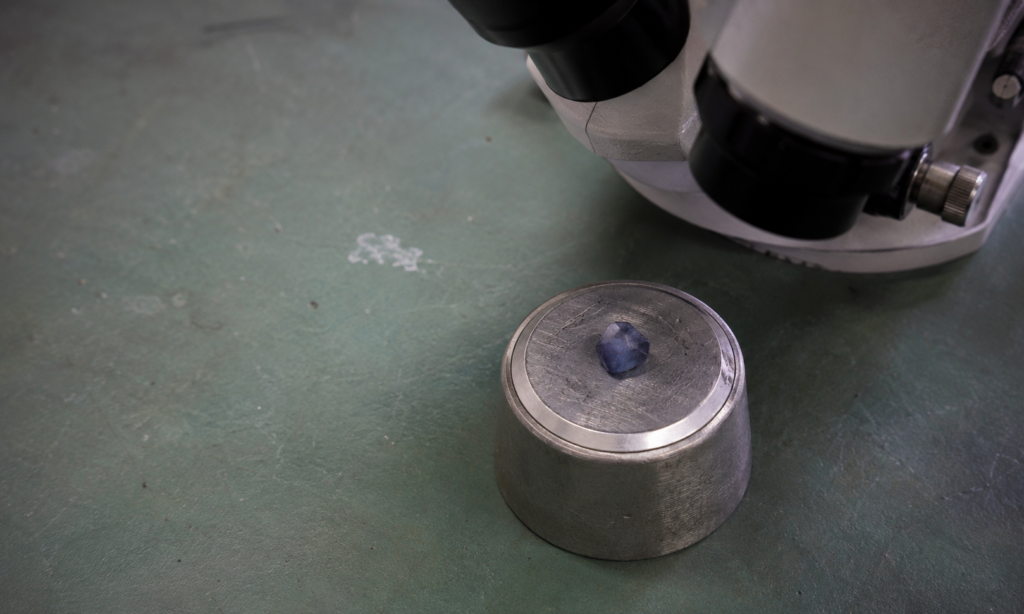
Modern laboratories use several lines of evidence for blue-sapphire origin determination. GIA combines microscopic examination of inclusions with trace-element chemistry and spectroscopic data, comparing the results with reference material and historic stones of well-supported provenance.
Some Kashmir sapphires contain particularly useful mineral inclusions or characteristic patterns of silk and particle clouds. GIA has documented features such as patterned clouds, including ladder-like, snowflake and wavy structures, as well as certain mineral inclusions that can provide strong evidence.
But origin determination is not always straightforward. Metamorphic blue sapphires from Kashmir, Myanmar, Sri Lanka and Madagascar can overlap, and sometimes the available evidence does not justify a conclusive country-of-origin opinion.
Why Can Fine Kashmir Sapphire Be So Expensive?
Origin can have a major effect on the market for fine sapphire, and Kashmir sits at the extreme end of that phenomenon. Its historic supply is small, collector recognition is strong, and exceptional stones with convincing origin documentation have few close replacements.
But the highest market significance belongs to a combination of characteristics rather than the word Kashmir by itself. Appearance, size, clarity, cut, treatment status, documentation, rarity and provenance can all matter.
GIA also cautions that every mine produces a range of quality. A famous origin can influence value substantially, but it does not make every stone from that origin equivalent.
The premium belongs to a rare combination of qualities—not simply to the word Kashmir.
Does Kashmir Mean “The Best Sapphire”?
Kashmir has extraordinary historical prestige, and fine examples can be exceptionally rare and valuable. That still does not create a universal rule for personal preference.
One person may love the softened, velvety character associated with a classical Kashmir sapphire. Another may prefer a brighter, more crystalline blue, a deeper saturated appearance or a completely different sapphire colour. Rarity and market value can explain why one stone is celebrated without deciding which appearance someone should enjoy most.
Rarity can explain why a sapphire is celebrated. It cannot decide which blue you prefer.
Kashmir became famous through an unusual combination: a remarkable discovery, a short but historically important period of production, memorable material among its finest stones, extremely limited later supply and more than a century of recognition in the gemstone world.
That history gives a well-documented Kashmir sapphire remarkable context. But a legendary origin is still context, not a verdict—the individual stone deserves to be seen as an individual stone.