
Before Thailand became known internationally as a centre for cutting, heat treatment and coloured-stone trading, it was itself an important source of ruby. The historic ruby fields of eastern Thailand—especially around Chanthaburi and Trat—produced stones that became known in the trade as Siam Ruby.
The name belongs to an earlier chapter of Thailand’s gemstone story. It carries a recognisable colour association, a particular geological background and a history that eventually helped Chanthaburi grow from a mining region into a gemstone centre connected to material from around the world.
What Did “Siam Ruby” Mean?
Siam was the former international name of Thailand, so older gemological and trade literature used expressions such as “Siam ruby” for ruby associated with the country. Historical references describe rubies from Siam in the gem gravels of the Chanthaburi-Trat region. Modern gemological literature generally refers to the material as Thai ruby or ruby from Thailand.
The term is therefore best understood as a historic geographic and trade name rather than a modern colour grade. “Siam Ruby” does not mean that a ruby must have one exact shade, and colour alone cannot establish Thai origin.
The Ruby Fields of Eastern Thailand
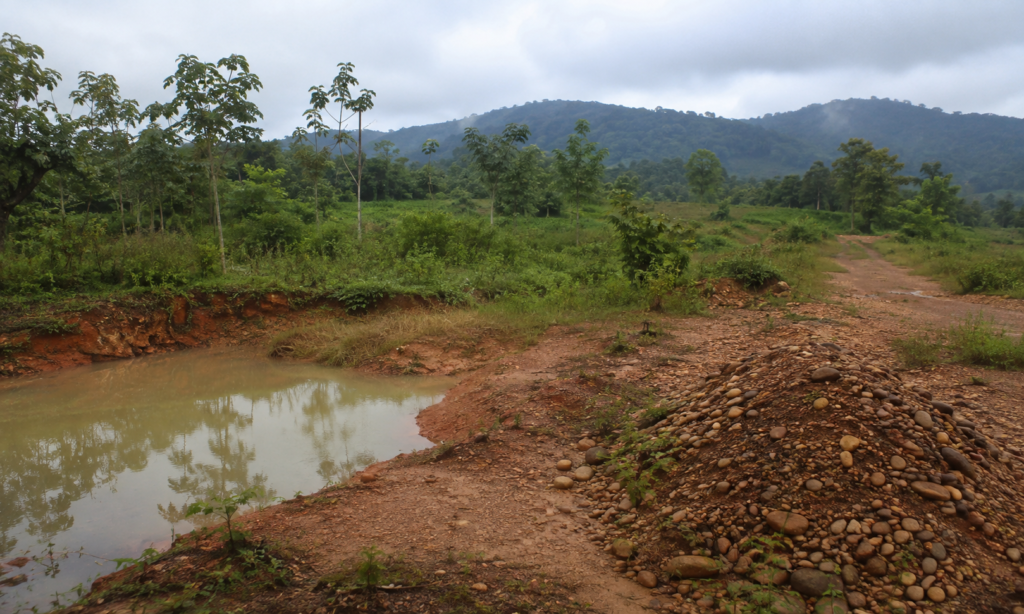
The most famous Thai ruby deposits are associated with eastern Thailand, particularly the Chanthaburi-Trat gem field. GIA identifies the Bo Rai deposit in Trat, close to Cambodia’s Pailin region, as the best-known source of Thai ruby and notes that material from this area and neighbouring deposits became known as “Siamese ruby.”
These rubies are associated with alkali-basalt geology. Over time, weathering and erosion concentrated corundum in secondary deposits that could be worked from soil and gem-bearing gravels. Mining ranged from small hand-worked operations to highly mechanised extraction during the industry’s most active period.
The Purplish-Red Character Associated with Siam Ruby
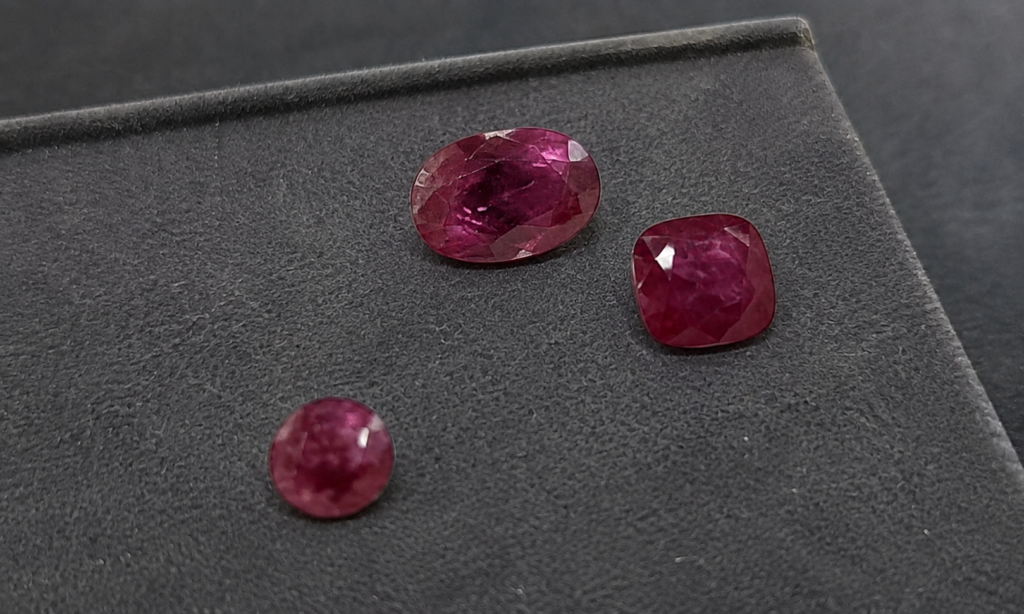
For people familiar with the gemstone trade, one of the appearances often associated with Siam Ruby is red with a noticeable purplish or violet component. This is more than a modern trade impression: historical and gemological descriptions of Thai ruby repeatedly record a violet or purplish aspect.
GIA’s study of rubies from Thailand and neighbouring Cambodia links this tendency to their basalt-related chemistry. These rubies commonly contain relatively high iron, and their visible-light spectra reflect contributions from both chromium and iron. The result in many stones is the purplish-red appearance long associated with material from the region.
But “often associated” is important. Thai ruby is natural material and its appearance varies. Not every Thai ruby shows the same amount of purple, and a ruby from another origin can also be purplish red.
Purplish red can make an experienced trader think of Siam Ruby. It does not prove Siam origin.
Colour Is a Clue, Not an Origin Conclusion
Someone who has handled many rubies may recognise an appearance that feels familiar for Thai-Cambodian material and use it as an initial clue. A gemological origin conclusion requires more.
Laboratories can examine microscopic inclusions, trace-element chemistry and spectroscopy and compare those observations with reference material from known deposits. GIA research shows that the combination of chemistry and microscopy can help distinguish Thai-Cambodian basalt-related rubies from material formed in other geological environments.
Fluorescence can also form part of the observed gemological character. High iron commonly suppresses fluorescence in Thai-Cambodian basalt-related ruby, so many examples show relatively weak fluorescence. This remains a tendency rather than a stand-alone origin test: individual stones vary, and fluorescence by itself should not be used to assign a country of origin.
From Ruby Source to Gemstone Centre
Thailand’s ruby story became especially important during the twentieth century. After access to Myanmar’s gem deposits became restricted in the 1960s, production from the Thai-Cambodian region took on much greater international importance. By the early 1980s, GIA described Thailand as the world’s major source of gem ruby.
Mining created more than a supply of stones. Around it grew generations of people who learned to sort rough, cut and polish gemstones, trade them and understand how corundum responded to heat. Chanthaburi developed the skills, networks and infrastructure of a gemstone industry.
That became crucial as local production changed. Instead of disappearing with the decline of the old ruby fields, Chanthaburi increasingly worked with gemstones arriving from elsewhere. GIA field reports describe a market where stones from Africa, Asia and other sources move through a local ecosystem of dealers, cutters and treatment specialists.

A Trade That Extended Beyond the Border
The geological and commercial story does not stop neatly at Thailand’s modern border. Pailin in Cambodia lies close to the Thai deposits, and rubies from the Thai-Cambodian region share a basalt-related geological setting and many gemological characteristics.
Chanthaburi’s position near these deposits helped connect mining areas with Thai expertise and markets. Over time, that pattern expanded much further: traders began sourcing rough from gemstone-producing regions around the world and bringing it to Thailand for sorting, treatment, cutting and sale.
This is why “Thailand’s ruby trade” and “Thai-origin ruby” are not interchangeable ideas. A ruby can be cut, heated or traded in Thailand while having formed geologically in another country.
Heat Treatment Became Part of Chanthaburi’s Expertise
Heat treatment became another important part of this transition. Thai specialists developed extensive practical knowledge of heating corundum, and Chanthaburi became internationally associated with gemstone treatment as well as trading and cutting.
For Thai-Cambodian ruby, heating has commonly been used to reduce the purplish aspect of some stones and, under appropriate conditions, improve aspects of appearance or heal certain fractures. Treatment does not change the geological origin of a ruby, but it can change what we see in the finished stone.
The larger historical point is that knowledge developed around local gemstones did not remain dependent on local supply. It became expertise that could be applied to corundum arriving from many different sources.
Why Large-Scale Ruby Mining Declined
It is tempting to reduce the end of Thailand’s great ruby-mining period to a single explanation such as “the rubies ran out.” The history is more complicated.
By 1980, large-scale mechanised gem mining had already become an environmental and land-use issue. A contemporary GIA account records that Thailand formally banned large-scale mechanised mining in response to pressure from farmers who said mining was destroying topsoil, although special permits and mechanised activity still existed at the time.
At the same time, decades of intensive extraction reduced economically productive deposits, while new ruby sources elsewhere began supplying the market. By the 1990s, activity in the Thai-Cambodian fields had declined sharply.
So the change was not simply a story of geology. Resource depletion, environmental impact, land use, regulation and changing global supply all formed part of the transition away from the large mining industry of the past.
Does Thai Ruby Still Exist Today?
Yes. The decline of large commercial mining does not mean Thai ruby ceased to exist.
GIA describes current production from the historic Thai-Cambodian ruby deposits as sporadic, and research at Thai corundum localities has documented small-scale or artisanal activity even where former commercial mines are no longer operating. Older Thai ruby also continues to circulate in the gemstone market and in existing jewellery.
This makes modern Thai-origin ruby a very different supply story from the large-scale production remembered from the twentieth century.
What Does “Siam Ruby” Mean Today?
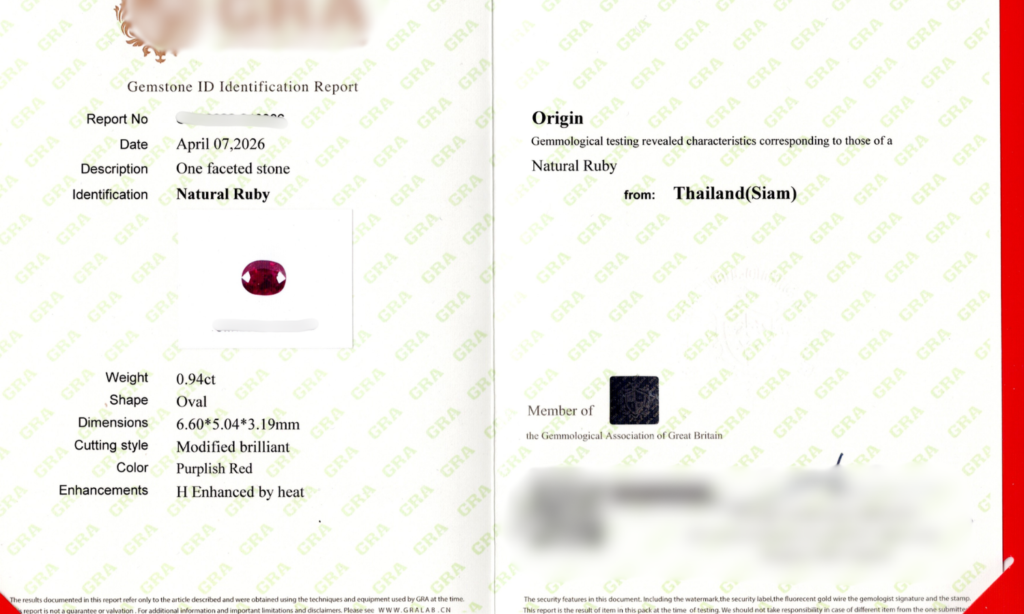
Siam Ruby remains a meaningful historic name, particularly when discussing the ruby heritage of Chanthaburi and Trat. In modern gemological communication, however, a laboratory conclusion such as Thailand is clearer when geographic origin needs to be stated precisely.
The old name is most useful when it gives the stone historical context rather than when it is treated as a colour grade or used to imply an origin from appearance alone.
A Legacy Larger Than the Mine
The historic ruby fields of eastern Thailand are no longer what primarily defines the country’s gemstone industry. Their larger legacy may be what grew around them: generations of miners, cutters, heat-treatment specialists and traders who turned local experience into a much broader coloured-stone culture.
That is what makes the story of Siam Ruby especially interesting. It is not only the story of a red gemstone from Thailand. It is also part of the story of how a mining region became a gemstone centre.
Siam Ruby belongs to an earlier chapter of Thailand’s gemstone story. Chanthaburi is part of what came next.