
“Cobalt spinel” sounds as though it should have a simple definition: a blue spinel that contains cobalt. In practice, the term is more specific than that.
Modern gemological testing can detect very small amounts of trace elements, but detecting cobalt is not the same as showing that cobalt dominates the appearance of a gemstone. For a blue spinel to meaningfully carry the cobalt name, the important question is what role cobalt plays in creating its blue colour.
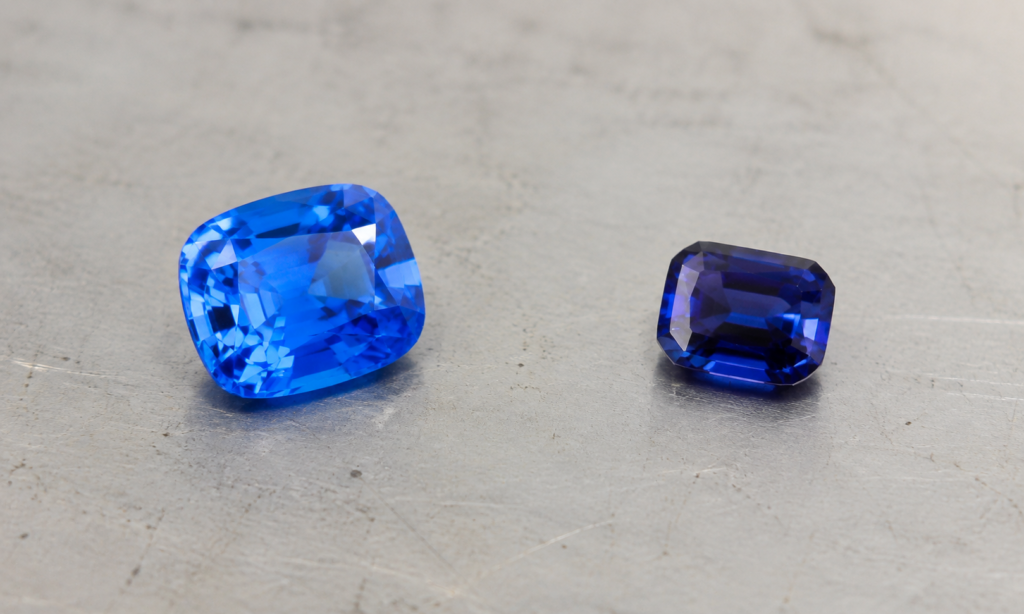
First: What Makes Spinel Blue?
Current GIA research describes the blue colour in spinel as being caused by divalent cobalt, Co²⁺. Iron-related absorption can then modify that blue by adding grey, purple or greenish components.
This is useful because older explanations are sometimes simplified into “cobalt makes one kind of blue and iron makes another.” The relationship is more nuanced. Cobalt is a powerful colouring agent, while iron can have a substantial influence on how that blue finally appears.
Research on blue spinel from Luc Yen, Vietnam, illustrates the relationship clearly. The most saturated samples showed the strongest cobalt contribution, while samples with a much higher iron-to-cobalt relationship appeared noticeably greyer.
Cobalt creates the blue. Iron can change what that blue looks like.
So What Makes a Spinel “Cobalt Spinel”?
The useful question is not simply, “Does this spinel contain cobalt?” It is whether cobalt meaningfully dominates the colour of the stone.
GIA’s current approach does not rely on a single cobalt concentration or one visual observation. Determining whether a blue spinel qualifies as cobalt spinel requires several pieces of evidence to agree: the visible colour, trace-element chemistry and the UV-Vis-NIR absorption spectrum.
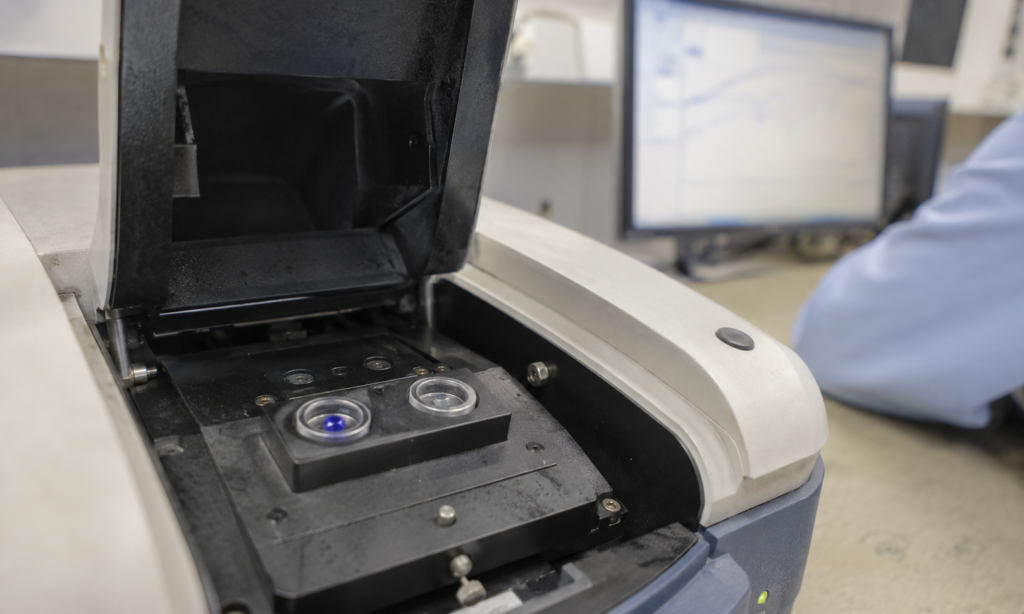
The spectrum is especially informative because Co²⁺ produces a characteristic group of absorption features in the visible region. Iron produces its own features, some of which overlap with cobalt. A stone whose appearance is strongly modified by iron may therefore fall outside the cobalt-spinel description even though cobalt is present.
Cobalt spinel is about the role cobalt plays in the colour—not simply whether cobalt can be detected.
More Cobalt Does Not Automatically Mean “Better”
It is tempting to turn chemistry into a quality scale: more cobalt, therefore better blue, therefore greater value. Gemstones are not that simple.
In the Luc Yen study, cobalt proved to be an extremely effective colouring agent, while the relative influence of iron was closely connected with greyer appearances. But a laboratory number by itself still does not describe everything we see face-up. Tone, saturation, cut and the combined optical effects of trace elements all contribute to the finished appearance.
This is why a cobalt concentration should not be treated like a score. Chemistry helps explain the colour; it does not replace looking at the gemstone.
Cobalt Spinel Does Not Have One Exact Shade
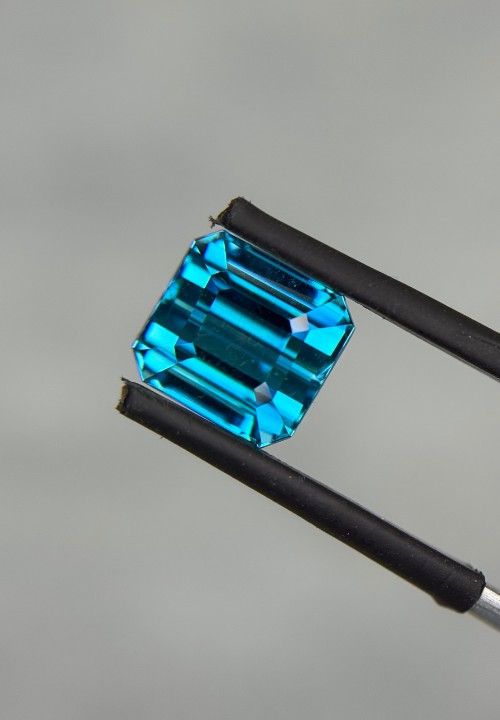
The name is often associated with vivid, highly saturated or almost electric blue, particularly in exceptional Vietnamese material. But “cobalt” is not an exact colour swatch.
Natural cobalt-dominant spinels can vary in tone and in the degree to which other absorptions influence their appearance. Some may lean slightly violetish, some may appear lighter sky blue, and lighting can reveal different aspects of the same stone.
Luc Yen material, for example, has been documented showing a subtle shift from blue under daylight-equivalent illumination toward violetish blue under incandescent light. This is part of the optical character of some stones, not a requirement for the cobalt name.
Why Vietnam Became So Important
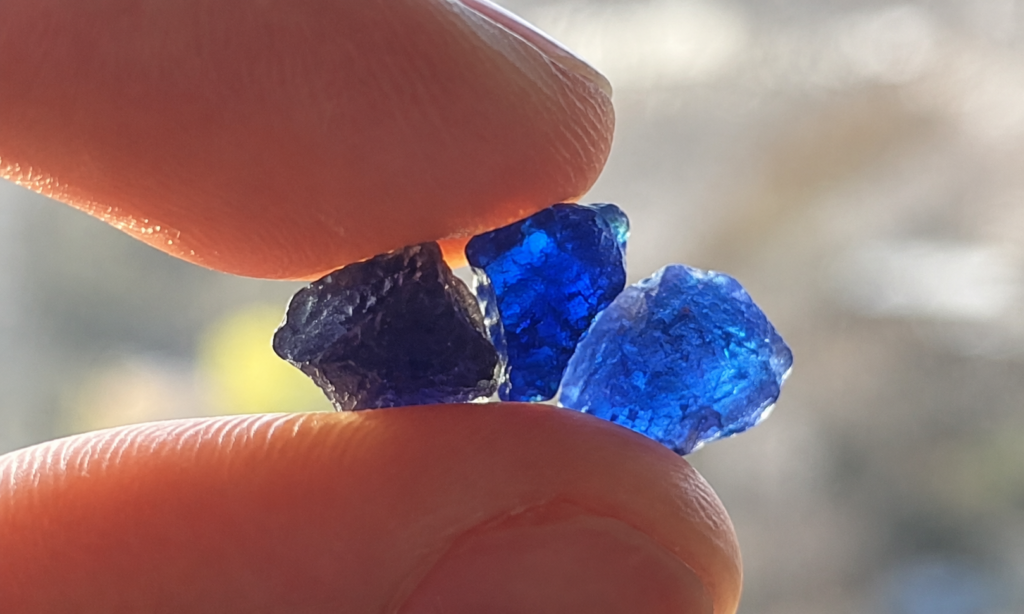
Blue spinel occurs in several parts of the world, but northern Vietnam—particularly the Luc Yen district in Yen Bai province—became especially important for exceptionally vivid material.
Vietnam’s major Luc Yen and Quy Chau spinel deposits were discovered in the late 1980s, and Luc Yen became a notable source of vivid blue spinel in the following decades. GIA research describes the district as a leading source of top-quality blue spinel and confirms that the saturated cobalt-blue colour of its finest material is predominantly related to Co²⁺.
Within Luc Yen itself, the appearance is not uniform. Some deposits produce bright blue material, some very saturated but small crystals, and others darker greyish blue stones. The source therefore illustrates the same lesson as the chemistry: even within the world most closely associated with vivid cobalt blue, individual stones still vary.
Cobalt Spinel Is Not Exclusive to Vietnam
Vietnam is the best-known modern reference for vivid cobalt-blue spinel, but blue spinel occurs in other deposits as well. Gemological research has examined blue spinel from localities including Sri Lanka, Madagascar and Tanzania, and other blue-spinel sources are known.
Origin and colour mechanism are therefore separate questions. A stone does not become cobalt spinel because it is Vietnamese, and a cobalt-dominant blue spinel does not have to be Vietnamese.
Why Can Cobalt Spinel Be So Valuable?
Cobalt matters because it can produce an unusually vivid and saturated blue in natural spinel. Fine examples are scarce, and that visual character has strong collector appeal.
But GIA makes an important distinction: it is the rich blue colour that gives these stones their desirability, not the mere presence of a trace element. A laboratory finding of cobalt should not be treated as a shortcut to value.
A spinel can contain cobalt and still have a colour that is grey, dark or simply different from the vivid blue someone is seeking. Conversely, a beautiful blue spinel should be appreciated for the appearance it actually presents rather than for how impressive a chemical label sounds.
Cobalt explains the colour. The colour is what we actually see.
Can You Identify Cobalt Spinel by Eye?
A vivid electric or highly saturated blue can certainly make cobalt-dominant colour a reasonable possibility. It cannot establish the conclusion reliably by appearance alone.
Blue spinel can show different degrees of iron influence. Synthetic blue spinel also exists, and treatment can introduce colour-producing elements into natural spinel. These possibilities are why a significant cobalt claim—particularly when it materially affects price—is better supported by appropriate gemological testing.
How Laboratories Look at the Cobalt Question
Laboratories can combine several analytical methods rather than relying on colour alone.
- UV-Vis-NIR spectroscopy reveals the absorption features associated with cobalt and iron and shows how strongly each contributes to the visible spectrum.
- Trace-element analysis, including methods such as LA-ICP-MS, can measure very small concentrations of elements such as cobalt and iron.
- Gemological examination helps establish whether the material is natural or laboratory-grown and whether evidence of treatment is present.
The important part is the combination. GIA describes cobalt-spinel determination as a multivariate approach involving colour, chemistry and spectroscopy together.
Natural Cobalt Colour and Cobalt Diffusion Are Not the Same
There is another reason the word cobalt needs context. GIA has documented a treatment in which natural spinel is heated at high temperature with cobalt and iron, creating a blue cobalt-rich layer near the surface of the stone.
This cobalt diffusion treatment is fundamentally different from a natural spinel whose cobalt entered the crystal during geological formation. In the treated examples studied by GIA, chemical analysis showed much higher cobalt concentrations near the treated rim than in the centre.
So finding cobalt is not, by itself, the whole story. A laboratory also needs to consider whether the colour and chemistry are consistent with natural formation or with a treatment process.
Not Every Blue Spinel Needs the Cobalt Name
A steel-blue, greyish-blue or violet-blue spinel may not fit the cobalt-spinel description used for strongly cobalt-dominant material. That does not make it an inferior gemstone.
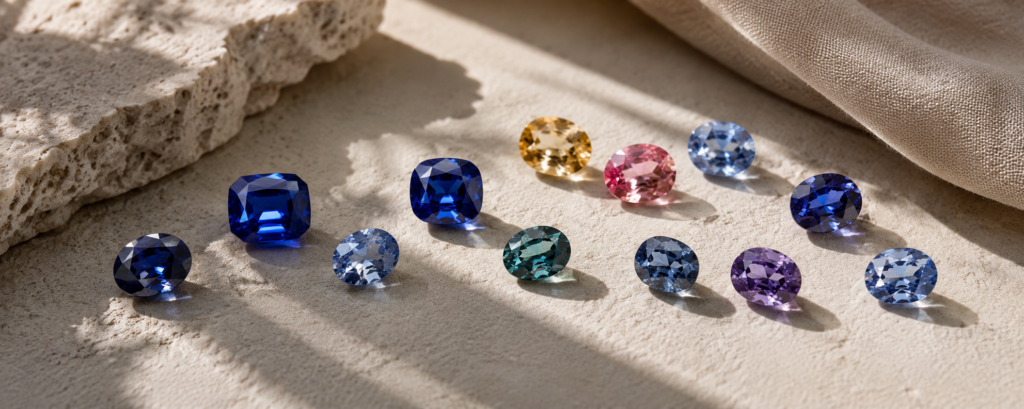
Some people specifically want the vivid saturation associated with fine cobalt blue. Others prefer a softer sky blue, a moody grey-blue or a violet influence. These are different visual characters rather than a requirement to move every blue spinel toward one ideal.
This distinction also keeps the terminology useful. If every blue spinel containing a detectable trace of cobalt were marketed simply as “cobalt spinel,” the name would tell us very little about the stone we are actually looking at.
What Should “Cobalt” Tell You?
When the term Cobalt Spinel is used meaningfully, it should tell you more than “a machine detected cobalt.” It should describe a blue spinel in which cobalt plays an important or dominant role in the colour, supported by the stone’s appearance and appropriate gemological evidence.
If the cobalt description has a significant effect on the asking price, independent laboratory evidence can be especially useful. But the report answers a different question from your own eyes. It can explain what produces the colour and whether treatment has been detected; it cannot decide whether that particular blue is the one you prefer.
“Cobalt” is meaningful when it explains the blue—not when it is used simply as a more impressive name for a blue spinel.