
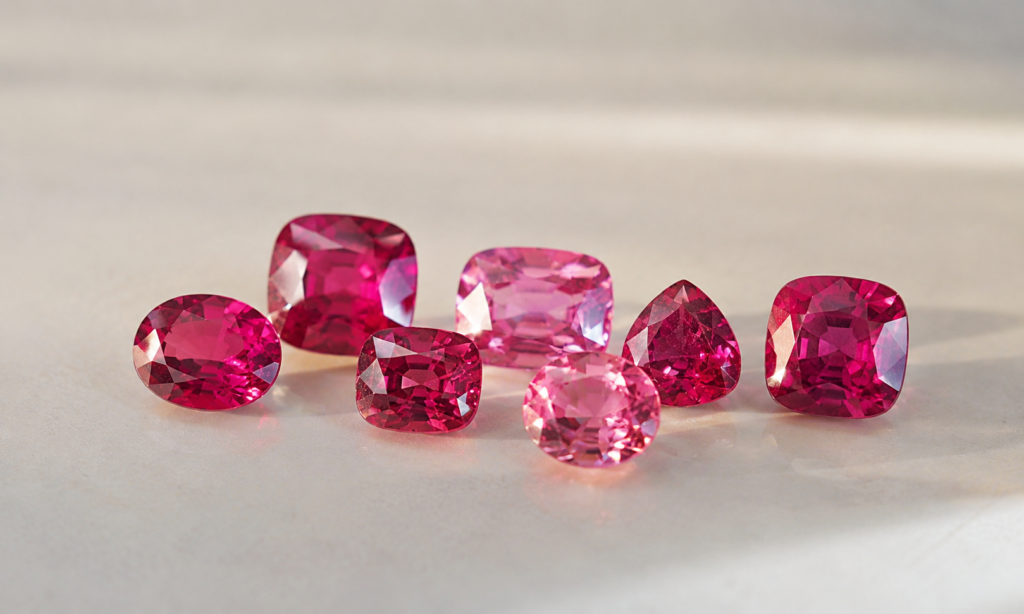
In the spinel market, few trade names carry as much immediate excitement as Jedi. The term is usually associated with exceptional red-to-pink spinel that looks intensely saturated, bright and almost neon, without the heavy dark areas that can make a faceted stone feel closed.
That market perception is important: Jedi is generally not used to describe an average bright pink spinel. It points toward a particularly desirable balance of colour, tone, brilliance and liveliness. But it began as trade language, not as a mineralogical variety, and its boundaries have not always been used consistently.
Where Did the Name “Jedi” Come From?
The modern story of the name is unusually well documented. Gemologist Vincent Pardieu encountered striking neon pinkish-red spinel from Namya, Myanmar, in the early 2000s. While later searching for similarly fine stones with Bangkok gem dealer Henry Ho, he became particularly aware of how a dark tone could diminish an otherwise beautiful spinel.
With Star Wars: Episode II – Attack of the Clones in cinemas at the time, the “dark side” became a memorable way to describe what they were trying to avoid. The bright, glowing stones without that heavy dark appearance became known between them as Jedi spinels. The name eventually spread through the trade.
The original idea was simple: exceptional colour, strong brightness—and no heavy “dark side.”
What Does the Trade Usually Mean by Jedi?
There is no single worldwide trade authority controlling every use of the word. In practice, however, the term has become associated with a recognisable visual character: red to pink spinel with strong saturation, a bright face-up appearance and little distracting darkness.
This is why describing Jedi simply as a colour is incomplete. Two spinels may occupy a similar red-pink hue, yet one can feel luminous and open while the other appears heavier or darker. The Jedi perception comes from the balance of these characteristics rather than hue alone.
- Colour: red, pinkish red and reddish pink, with some formal criteria extending to orangey red.
- Saturation: enough intensity for the colour to feel vivid rather than washed out.
- Tone: sufficiently open that darkness does not dominate the face-up appearance.
- Brilliance: a lively return of light rather than a flat or sleepy appearance.
- Clarity: inclusions should not visibly disrupt the stone’s brightness and overall presentation.
In everyday trade language, people often compress all of this into one word: neon. It is not a formal gemological grade, but it captures why the best examples are so recognisable—the colour seems to remain energetic rather than simply darkening into red or pink.
“No Dark Side” Does Not Mean No Dark Facets
A faceted gemstone naturally shows changing reflections as it moves. Some facets can appear dark from certain viewing angles because they are reflecting the environment rather than returning light directly to the eye.
So the Jedi idea should not be interpreted as a stone that contains no dark reflection whatsoever. What matters is the overall face-up impression: large or persistent dark areas should not overpower the colour and liveliness of the stone.
Jedi Is Not One Exact Shade
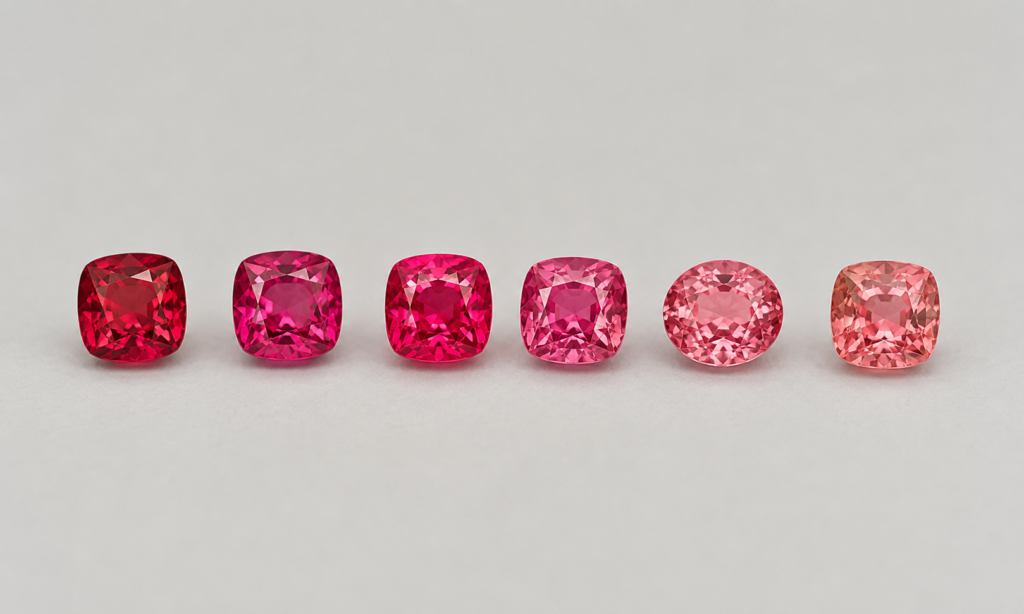
The earliest stones associated with the name were often described as glowing hot pink or neon pinkish red. Later material from Man Sin in Mogok included examples that were noticeably redder while retaining similarly intense brightness.
This history helps explain why Jedi is better understood across a red-to-pink range than as one exact colour chip. A fine example may read more red, more pinkish red or more reddish pink while still carrying the bright, saturated character the term is meant to express.
AIGS Turned a Trade Name into a Defined Standard
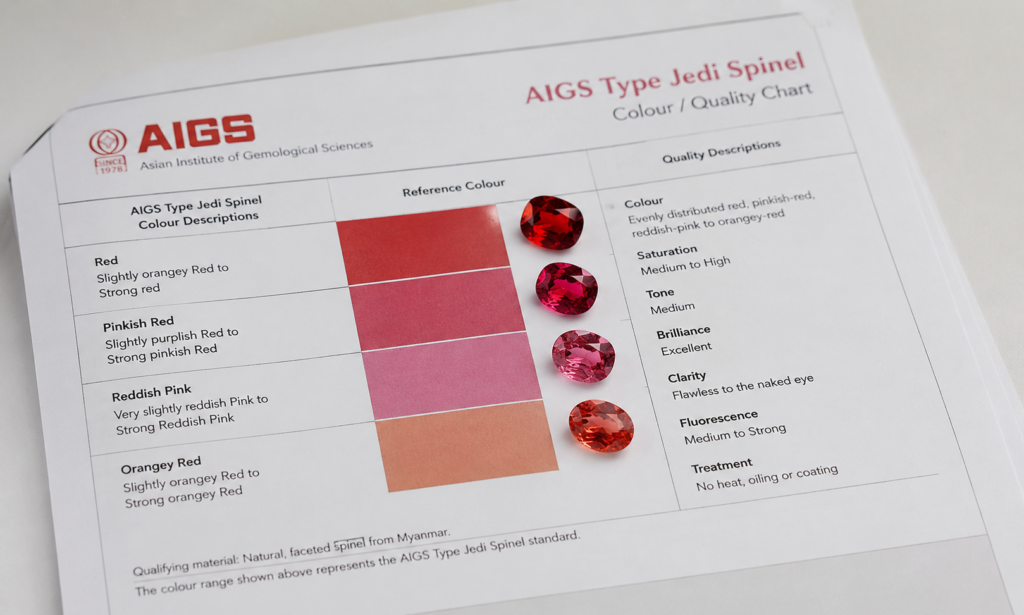
As the word spread through the market, different interpretations naturally appeared. The Asian Institute of Gemological Sciences (AIGS) subsequently introduced its own defined AIGS Type Jedi Spinel framework.
This distinction matters. Jedi remains a trade name in the wider market, while AIGS Type Jedi Spinel follows a specific laboratory framework. According to the AIGS reference, qualifying material is natural faceted spinel from Myanmar with evenly distributed red, pinkish-red, reddish-pink to orangey-red colour, medium-to-high saturation and without brown or black tones. The reference also specifies excellent brilliance, clarity that is flawless to the naked eye, medium-to-strong fluorescence, and no heat, oiling or coating treatment.
Does Jedi Mean Myanmar?
Historically, the name is closely tied to Myanmar. The original Namya material came from Kachin State, and later discoveries around Man Sin in the Mogok region produced similarly vivid stones. For the AIGS Type Jedi designation, Myanmar origin is specifically required. Wider trade usage can be less disciplined, however, and the word Jedi or “Jedi-like” may sometimes be applied more loosely to neon-looking spinel.
Why Do Fine Jedi Spinels Look So Luminous?
The effect does not come from one property alone. Strong saturation gives the stone its intense red-to-pink colour, while a suitable tone allows that colour to remain visually open. Good transparency and an effective cut help light return from the stone rather than allowing inclusions or persistent extinction to dominate its appearance.
Chemistry matters too. Studies of vivid Burmese Jedi material have found relatively low iron in comparison with many darker spinels. Chromium is an important cause of red and pink colour in spinel, while iron can influence tone and suppress some of the bright visual character associated with chromium-rich material.
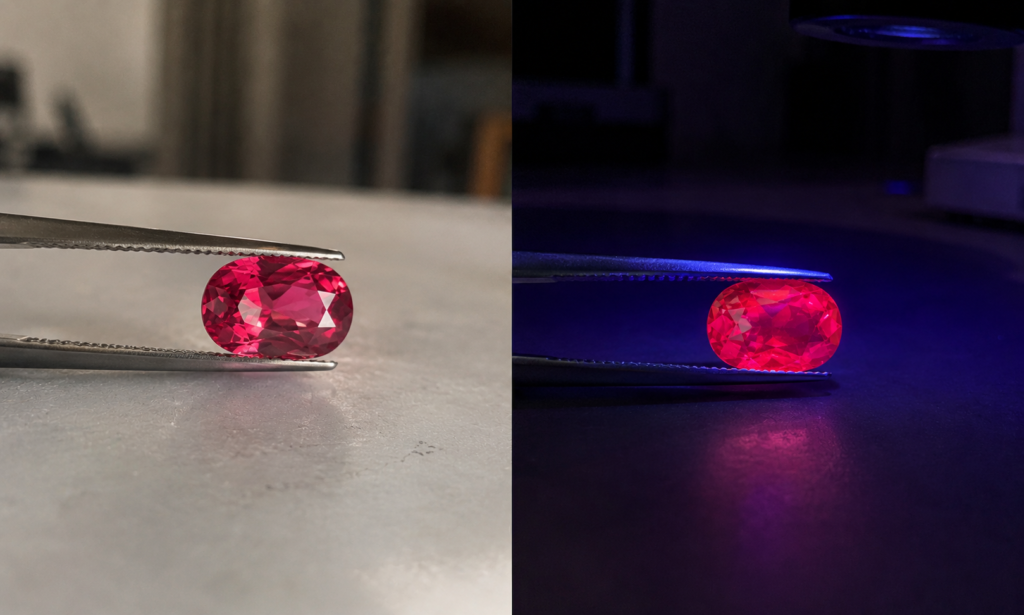
Fluorescence can add another dimension. Chromium-bearing red and pink spinel may fluoresce under ultraviolet-containing light, and strong fluorescence is documented in fine Burmese material. Under the AIGS Type Jedi framework, medium-to-strong fluorescence is one of the stated requirements.
Is Fluorescence What Makes a Spinel Jedi?
Not by itself. Strong fluorescence cannot compensate for a stone that is too dark, poorly saturated, visibly included or lacking brilliance. “Neon” is the combined visual experience, not simply the result of putting a stone under a UV lamp.
Why Does Jedi Carry a Market Premium?
The word itself does not create rarity. The appearance behind it does.
Fine Jedi material is rare because several desirable qualities must appear together: saturated colour, an open tone, good transparency and lively face-up performance. The combination becomes increasingly difficult to find as size increases.
The name does not create the value. The rare balance behind the name can.
Fine Red Spinel Does Not Have to Be Jedi
A rich crimson spinel with a deeper tone can be exceptional even if it does not have the neon, low-darkness character associated with Jedi. The same is true of fine purplish-red, raspberry or other red-pink spinels that sit outside a particular Jedi definition.
Jedi is best understood as one highly prized expression of spinel—not the final destination of every red or pink stone. Different colour characters can be beautiful for different reasons.
How Should You Read the Word “Jedi”?
When you encounter the name, first look at what the seller or laboratory actually means by it. In ordinary trade use, it often describes a particularly vivid, neon-like red-to-pink spinel with little heavy dark face-up appearance. If the claim is specifically AIGS Type Jedi Spinel, a more defined set of laboratory criteria applies.
Origin, treatment and laboratory designation should still be read separately from the visual appeal of the stone. And even within the finest Jedi range, one person may prefer a redder example while another is drawn to hot pink.
“Jedi” works best when it describes the character of an exceptional spinel—not when the name is asked to replace the stone itself.