
Today, Burmese spinel is often associated with vivid red, hot pink and the highly saturated material sometimes described as Jedi. But the story of spinel from Myanmar is much broader than any one modern trade name.
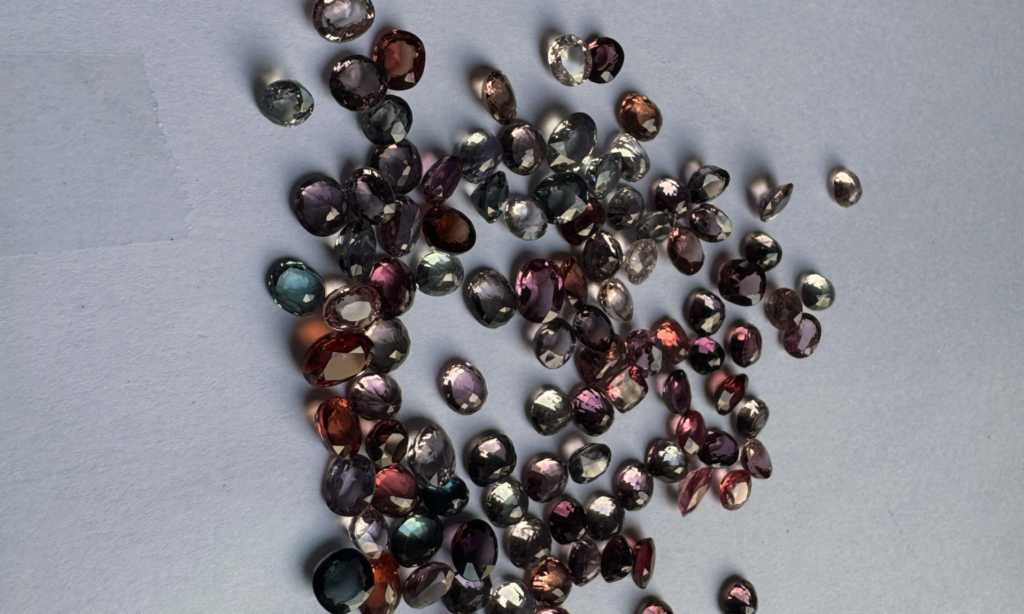
Myanmar—particularly the historic Mogok gem-producing region—has supplied spinel for generations alongside ruby, sapphire and other coloured stones. Its spinel can appear in different colours and characters, from bright pink and vivid red to deeper crimson and purplish red. Burmese spinel is therefore an origin, not a colour style.
Where Does Burmese Spinel Come From?
“Burmese spinel” is the traditional trade expression for spinel originating from Myanmar. Within the country, two names are especially important to the modern story: Mogok, the historic gemstone district in Upper Myanmar, and Namya in Kachin State farther north.
They should not be treated as the same deposit. Myanmar contains different geological occurrences, and stones from different areas can develop different appearances. The country name tells us the broader origin; a more specific locality tells a more detailed part of the story.
Mogok: A Gemstone Landscape, Not Just a Ruby Source
Mogok is internationally famous for ruby, but its gem deposits are much more diverse. Spinel occurs within the same remarkable gemstone landscape, together with sapphire and numerous other minerals.
This matters historically. Spinel was not a recent addition to the Burmese gem trade. Red spinel could occur alongside stones that were valued as ruby, and before mineralogy developed the tools to separate the two reliably, their similar appearance created centuries of confusion.
Why Spinel Spent So Long in Ruby’s Shadow
Fine red spinel and ruby can look remarkably similar to the unaided eye. For much of history, gemstones were often classified more by appearance than by the mineralogical distinctions used today. As a result, some red spinels were historically regarded as rubies.
By the late eighteenth century, mineralogical study had established spinel and ruby as different minerals. That distinction eventually allowed spinel to develop an identity of its own rather than remaining in ruby’s shadow.
The historical confusion is useful context, but it should not be used to assign a Burmese origin to every famous historic “ruby” later identified as spinel. The history of spinel as a mineral is wider than the history of spinel from Myanmar.
“Polished by the Spirits”
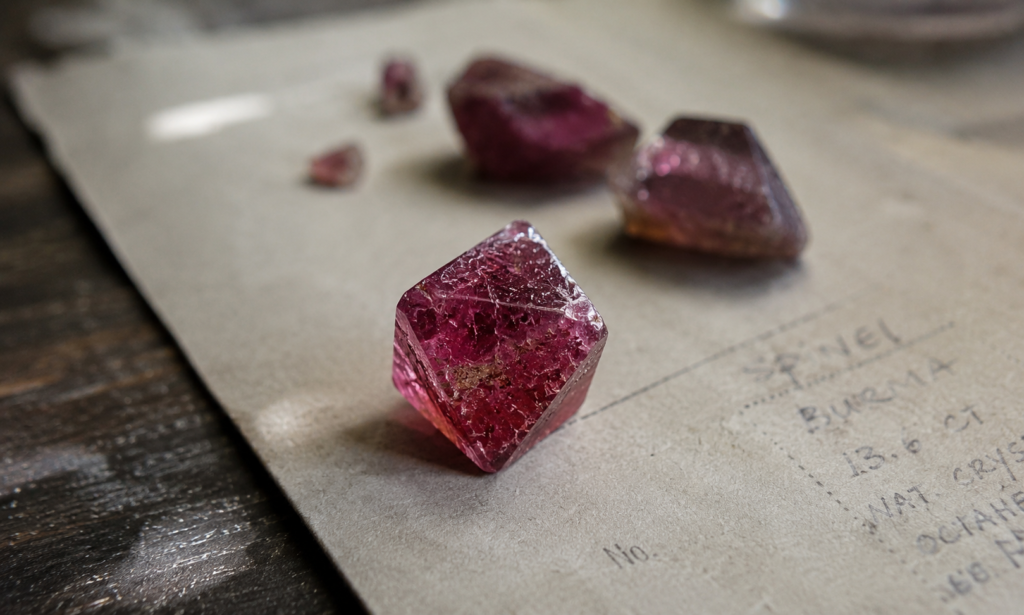
One of the most evocative details in Burmese spinel history comes from the natural crystal itself. Spinel commonly forms as octahedral crystals, and particularly well-formed crystals can look remarkably complete before a cutter has touched them.
In Myanmar, such crystals have been associated with the expression nat thwe, often translated as “polished by the spirits.” The phrase captures something distinctive about spinel: nature can give the rough crystal a geometric beauty that already feels finished.
What Colour Is Burmese Spinel?
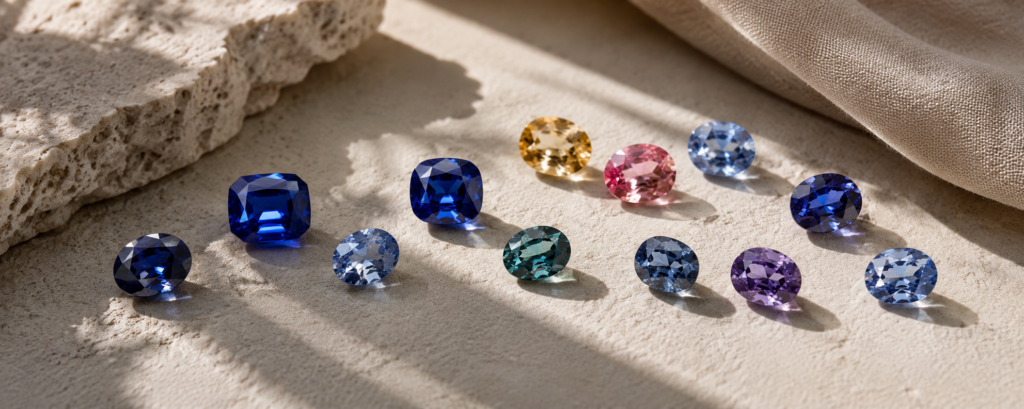
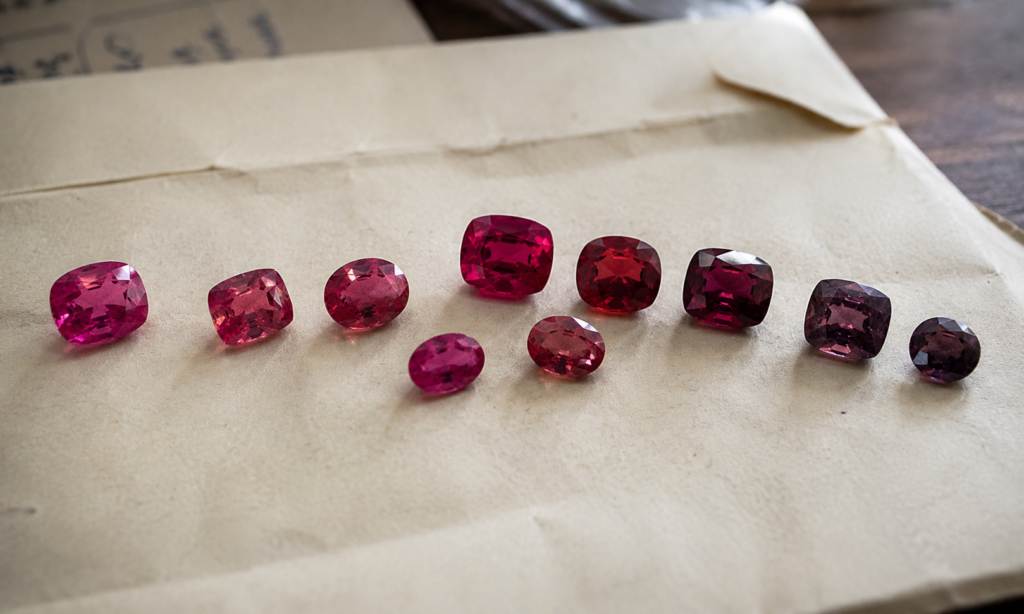
There is no single Burmese spinel colour. Within the red-to-pink family alone, Myanmar can produce stones that appear hot pink, pinkish red, vivid red, deeper crimson or purplish red. Individual deposits and individual stones vary.
This variation is visible even within famous modern sources. Field research has described material from Man Sin in the Mogok region as generally redder than the hot-pink character strongly associated with Namya. Neither appearance defines the whole country.
The Modern Rise of Neon Burmese Spinel
In the early 2000s, exceptionally bright pink-to-red spinel from Namya drew renewed international attention. Later, vivid and strongly fluorescent material from Man Sin in Mogok added another important chapter to the modern market.
These stones helped build the contemporary fascination with intensely saturated Burmese spinel and contributed to the story behind the trade term Jedi spinel. But this is one celebrated chapter in Burmese spinel—not its definition.
A Burmese spinel does not need to be Jedi, neon or hot pink to be genuinely Burmese or visually compelling.
What Gives Some Burmese Red and Pink Spinel Its Bright Character?
Red and pink colours in spinel are strongly associated with chromium. In some of the famous vivid material studied from Namya and Man Sin, researchers also found relatively low iron compared with many darker spinels from other deposits.
This chemical balance can help explain why certain stones show unusually open colour, strong brightness and noticeable fluorescence. It should not, however, be turned into a shortcut for origin. Not every Burmese spinel has low iron, strong fluorescence or a neon appearance, and those properties alone do not prove that a stone came from Myanmar.
Burmese Spinel Is Not Always Neon
The market’s enthusiasm for neon pink and vivid red can make it easy to overlook other Burmese characters. Myanmar also produces spinel with deeper red, crimson, purplish-red and softer pink appearances.
A deeper tone does not automatically make a stone unsuccessful. Some people are drawn to the glowing openness of a hot-pink spinel; others prefer the richness and depth of a darker red. These are different visual expressions rather than a simple hierarchy.
Neon is one celebrated Burmese character. It is not the only Burmese character.
Mogok and Namya: Same Country, Different Stories
Mogok carries centuries of gemstone history and contains multiple mining areas rather than one uniform source. Within its modern spinel story, Man Sin became particularly known for vivid red material.
Namya, in Kachin State farther north, became famous in the modern market for exceptionally bright pink and pinkish-red spinel and played an important role in the early Jedi story.
Both belong to the wider story of Myanmar spinel, but their identities remind us that a country of origin is not a single geological source.
Does Burmese Origin Make a Spinel More Valuable?
Myanmar carries significant historical reputation and collector interest, particularly for exceptional red and pink spinel. A well-supported origin can therefore add context and, for certain stones, market significance.
It does not make every Burmese spinel equally desirable. Colour, tone, clarity, cut, size, treatment status and the overall appearance of the individual gemstone still matter. Exceptional spinel also comes from other origins.
Origin can add history and rarity. It cannot make an ordinary stone extraordinary by itself.
Can a Laboratory Determine Burmese Origin?
Gemological laboratories can investigate geographic origin by comparing multiple forms of evidence, including microscopic inclusions, trace-element chemistry, spectroscopy and reference material collected from known deposits.
Origin determination is therefore different from recognising a colour style. A stone that visually resembles famous Burmese material is not automatically Burmese, and distinguishing specific deposits can be more complex than identifying the gemstone as spinel.
When origin materially affects a purchase or valuation, an appropriate laboratory report provides more meaningful evidence than appearance alone.
Burmese, Myanmar—or Both?
Myanmar is the country’s current official English name, while Burmese remains deeply established as a traditional adjective in the international gemstone trade. This is why expressions such as Burmese ruby, Burmese sapphire and Burmese spinel are still commonly encountered.
In this context, “Burmese spinel” and “spinel from Myanmar” refer to the same country of origin. The difference is one of terminology rather than gemstone provenance.
A Place with More Than One Signature
The modern market may celebrate Myanmar for hot-pink, vivid-red and Jedi-type spinel, but those stones sit within a much longer and more varied history. Mogok’s gemstone landscape, the distinctive material from Namya and the many shades found across the country all resist being compressed into one visual formula.
That is what makes origin useful when it is understood carefully. It adds geography, geology, history and market context without asking every stone from the same country to look alike.
Burmese spinel is not one colour to recognise. It is an origin with many expressions—and a history much older than the trade names we use today.