
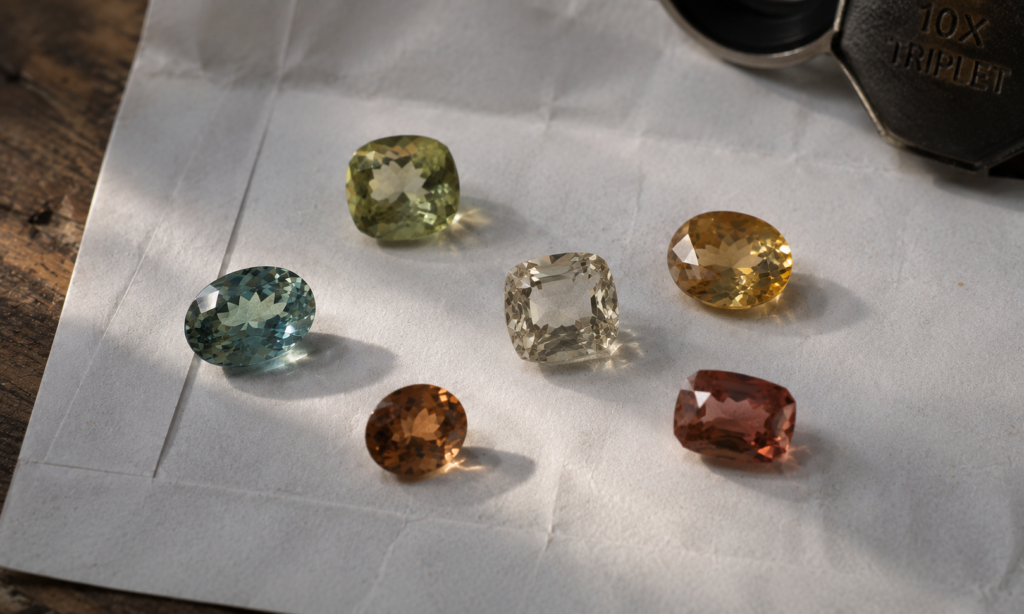
Zircon is often confused with cubic zirconia, but they are entirely different materials. Zircon is a natural zirconium silicate mineral, ZrSiO₄, with a geological and optical identity of its own. Cubic zirconia is a different material, commonly laboratory-made and used as a diamond simulant.
Zircon and cubic zirconia share part of a name. They do not share an identity.
Zircon Is a Natural Gemstone With an Extraordinary History
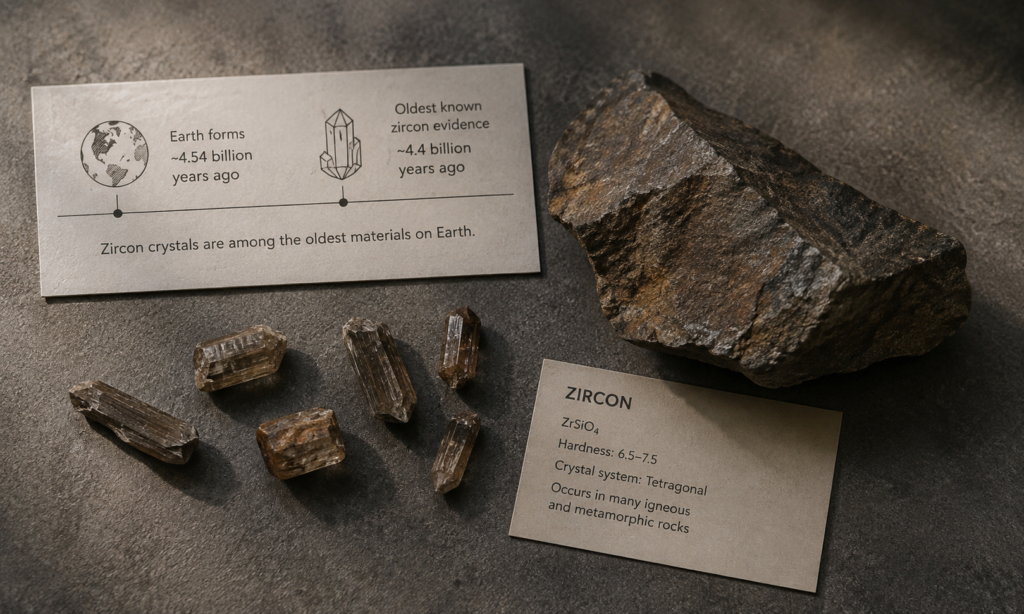
Zircon occurs naturally in many rocks, and some ancient zircon crystals from Western Australia have been dated to about 4.4 billion years. That does not mean every gem zircon is 4.4 billion years old. It means zircon as a mineral can preserve an extraordinary record of the earliest chapters of Earth’s history.
Long before zircon became a gemstone, it was already recording the history of the Earth.
What Makes Zircon Look Different From Other Gemstones?
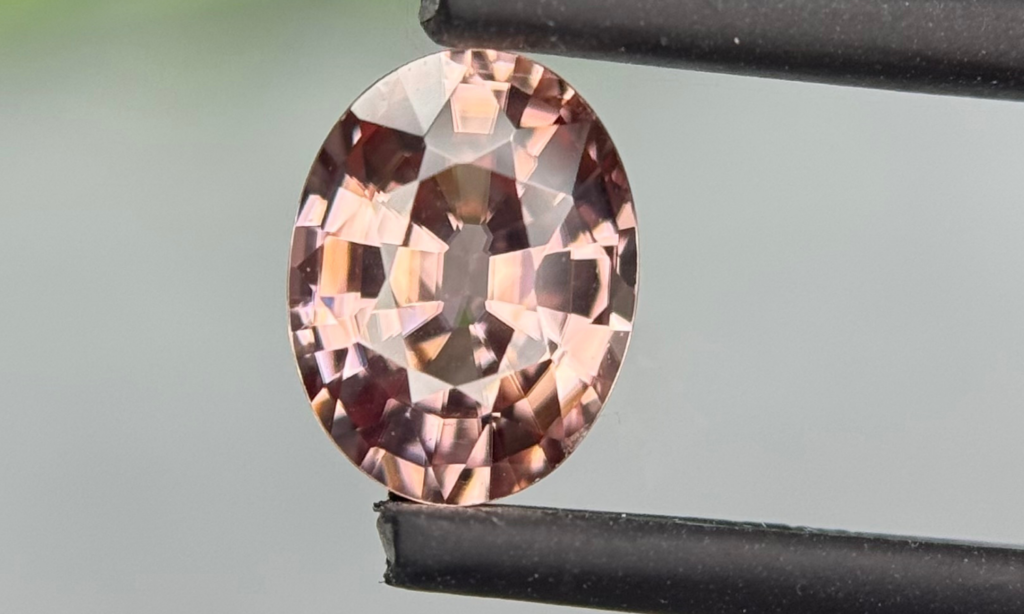
Zircon can have a high refractive index and high dispersion. Together, these properties can give a well-cut stone strong brilliance and flashes of spectral colour known as fire. Colourless zircon was historically used as a diamond alternative, but its optical character deserves to be understood on its own.
Zircon does not need to imitate diamond to be brilliant. Fire is already part of its own optical identity.
What Does “Fire” Actually Mean?
Fire is not simply another word for sparkle. In gemology, it refers to dispersion: white light separating into spectral colours as it travels through and leaves the gemstone. Zircon’s relatively strong dispersion can produce noticeable flashes of red, orange, yellow, green, blue and violet when the cut and lighting allow them to appear.
Brilliance is light returning to the eye. Fire is white light returning as colour.
Why Can Zircon Sometimes Look Slightly “Doubled”?
Zircon is doubly refractive. Light entering the crystal can split into two rays, and in many faceted zircons this can make facet junctions viewed through the stone appear slightly doubled. This is an optical property of zircon rather than automatically a sign of poor cutting or blur.
What can look like a doubled facet is not necessarily a cutting mistake. It can be zircon behaving exactly like zircon.
Zircon Is Not Just Blue
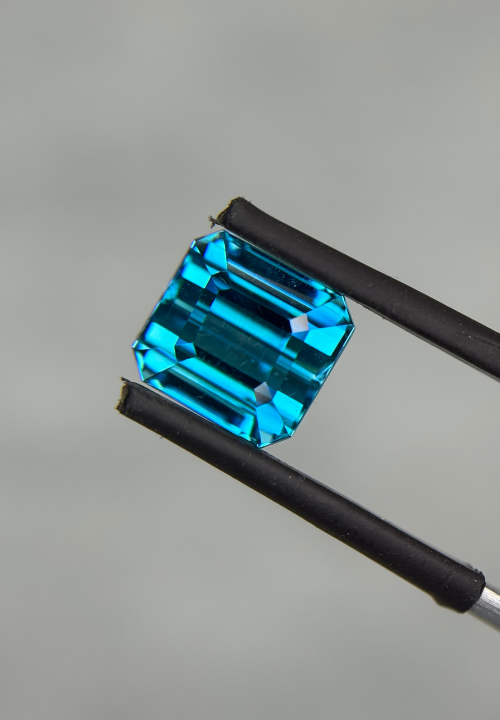
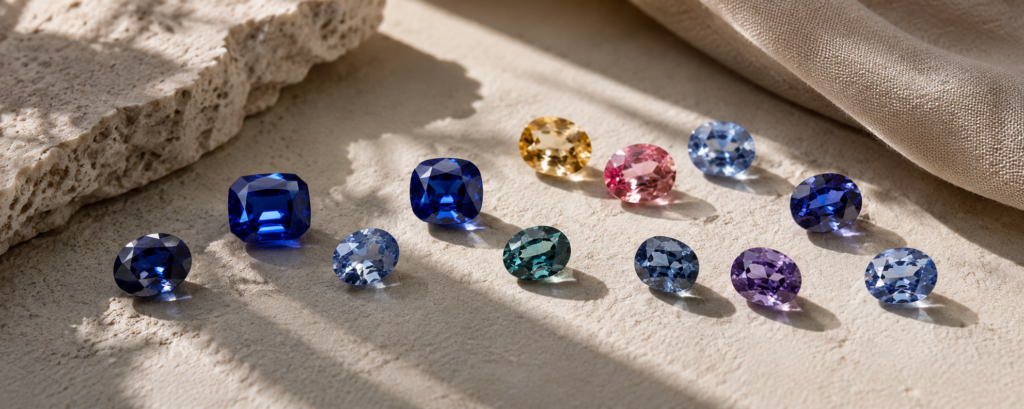
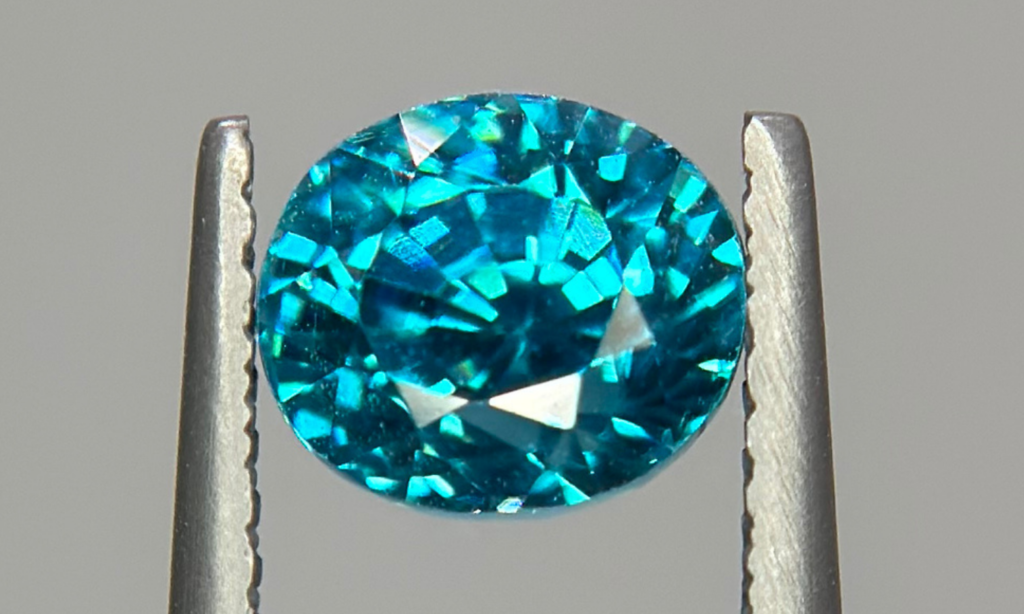
Blue may be zircon’s most familiar modern colour, but zircon occurs in a much wider palette including green, yellow, orange, red, reddish brown, brown and colourless, along with intermediate shades.
Blue may be zircon’s most familiar modern face, but it is only one part of the mineral’s palette.
Why Is Blue Zircon So Common in Jewelry?
Intense blue zircon is commonly produced by heating suitable brown zircon. Heat can also produce near-colourless material and other colour changes. Nearly all blue and near-colourless zircon in the market is treated because these appearances are comparatively uncommon in nature.
The blue that made zircon famous is often a partnership between nature and heat.
Does That Mean Every Zircon Is Heated?
No. Zircon occurs naturally in brown, yellow, orange, red, green and other colours, and untreated material is available. Heat treatment is especially common in blue zircon rather than an automatic condition of every zircon gemstone.
Zircon Has an Unusual Relationship With Radiation
Zircon can incorporate trace uranium and thorium into its crystal structure. Over immense periods of time, radioactive decay can gradually disrupt that structure. Gemologists call this process metamictization. It helps explain why different zircons can have different physical and optical properties.
In zircon, “high” and “low” can describe the crystal structure—not a ranking of beauty.
What Are High, Intermediate and Low Zircon?
High zircon retains a relatively intact crystalline structure. Intermediate zircon shows more radiation-related structural change, while low zircon has experienced much more extensive disruption. These terms describe structural condition rather than a simple quality ladder. Most zircon used in jewelry is high type.
Is Zircon Radioactive?
Some zircon contains trace radioactive elements and can show very low levels of radioactivity. This scientific story can sound dramatic without context, but zircon used as ordinary jewelry is not considered a radiation health risk.
The radiation story makes zircon scientifically unusual. It does not make ordinary zircon jewelry something to fear.
Heat Can Do More Than Change Zircon’s Colour
Heating zircon is especially interesting because its effects can extend beyond colour. In some structurally damaged material, sufficiently high-temperature heating can partially restore crystallinity. Geological time can disrupt the crystal lattice and heat can, in some cases, repair part of that disruption.
In zircon, heat can change colour—and in some material, partially rebuild what geological time has disrupted.
Why Is Zircon Often So Clean?
Faceted zircon in the market is often free of inclusions visible to the unaided eye, although inclusions and cloudy or smoky appearances can occur. Clean appearance is common, but it should not be turned into an absolute rule for every stone.
Why Are Round and Oval Zircons So Common?
Because brilliance and dispersion are central parts of zircon’s visual appeal, cutters often use brilliant-style or mixed faceting to encourage light return and fire. Round and oval shapes are common, although cushions, step cuts and many other forms are possible.
Zircon’s cut often has one central job: give its light somewhere to go.
Why Can Zircon Feel Surprisingly Heavy?
Zircon has relatively high specific gravity, so it can weigh more than many gemstones with similar visible dimensions. A three-carat zircon should therefore not be expected to have exactly the same apparent size as a three-carat sapphire or tourmaline.
Carat measures weight, not visual size—and zircon is a particularly good reminder of that.
Is Zircon Durable Enough for Jewelry?
Zircon can be worn successfully in jewelry, but it deserves thoughtful care. Its hardness varies with structural condition and is generally around 6 to 7.5 on the Mohs scale. It can also be brittle, and facet edges may abrade or chip more readily than those of tougher everyday stones such as sapphire.
Settings and wearing habits can take this into account. Warm soapy water is a safer cleaning choice than ultrasonic or steam cleaning, and rough activities are best avoided while wearing zircon.
Zircon can absolutely be worn in jewelry. It simply rewards a little more consideration in how it is set and worn.
Where Does Gem Zircon Come From?
Gem zircon is found in several parts of the world, including Cambodia, Sri Lanka, Myanmar, Vietnam, Australia, Madagascar and Tanzania. Zircon is also associated with sapphire-bearing deposits in several regions. Ratanakiri in Cambodia is particularly well known for brown zircon rough that can yield attractive blue material after heating.
What Makes Zircon Worth Looking At?
Zircon does not need to be understood as a cheaper version of another gemstone. Its identity comes from an unusual combination of deep geological history, broad colour range, brilliance, strong dispersion, double refraction and a crystal structure that records the effects of both geological time and treatment.
Zircon is interesting not because it resembles another gemstone, but because very few gemstones behave quite like zircon.
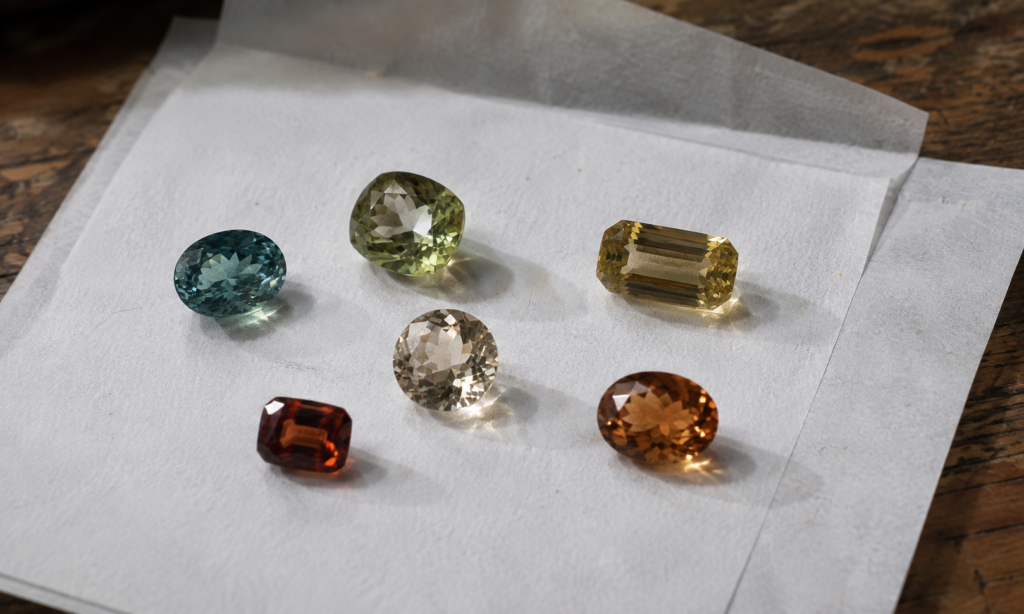
An Ancient Gemstone With a Modern Identity
Its name may still cause confusion with cubic zirconia, but natural zircon has a story that stands completely on its own. It is an ancient mineral, a colourful gemstone and an unusually expressive optical material whose fire and doubling can make it immediately distinctive once you know what to look for.
Zircon has spent billions of years becoming itself. It deserves to be known by its own name.