
Zircon has colour, brilliance, fire, natural origin and a long jewelry history. Yet many people hear “zircon” and think of cubic zirconia. Perhaps the useful question is not how to make zircon seem more prestigious, but what becomes visible when we stop defining it through another material.
Perhaps zircon has never lacked the qualities of a fine gemstone. What it has lacked is the chance to be seen without comparison.
Zircon Already Has a Place in Fine Jewelry History
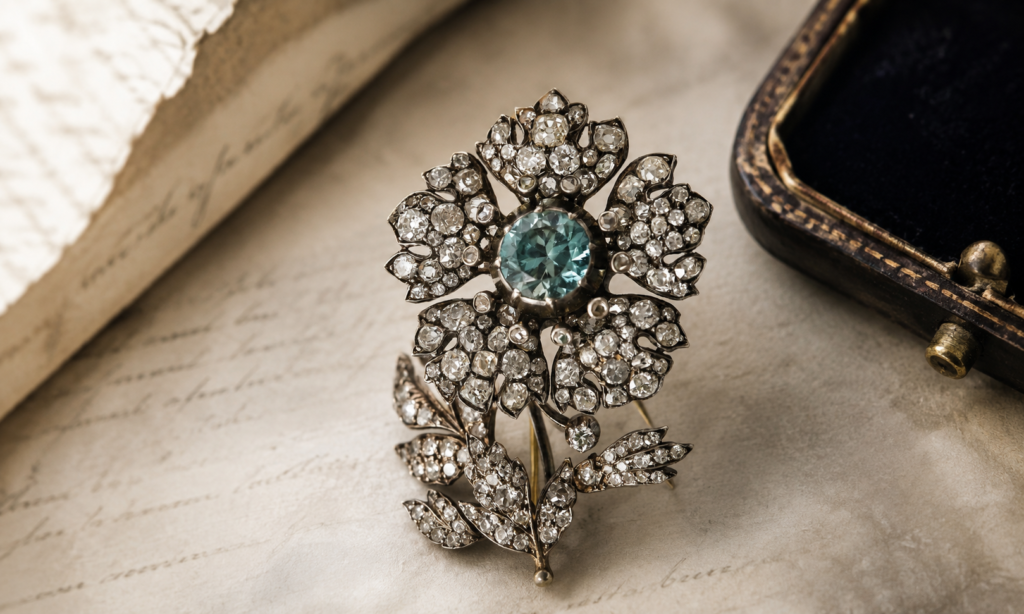
Zircon is not a newcomer to fine jewelry. Blue zircon appeared in Victorian jewelry in the late nineteenth century, and gemologist George F. Kunz became a notable advocate, even proposing the name “starlite” for its fiery appearance. The name did not endure, but the history reminds us that zircon has long been appreciated in its own right.
Zircon is not trying to enter the history of fine jewelry for the first time. It is returning to a conversation it has already been part of.
Its Reputation Was Complicated by a Name
Natural zircon is zirconium silicate; cubic zirconia is a manufactured zirconium-oxide-based material. They are fundamentally different, but similar names have encouraged decades of confusion. Part of zircon’s modern problem lies not in what it lacks, but in what its name has come to suggest.
Sometimes a gemstone can be overlooked not because of what it lacks, but because of what its name has come to suggest.
Fine Jewelry Does Not Have to Mean the Same Few Gemstones
Diamond, sapphire, ruby and emerald have important places in fine jewelry, but appreciating them does not require limiting fine jewelry to them. Other gemstones can add their own visual languages without replacing familiar ones.
Expanding the language of fine jewelry does not require replacing familiar gemstones. It simply requires making room for more of them.
Zircon Brings Its Own Kind of Light
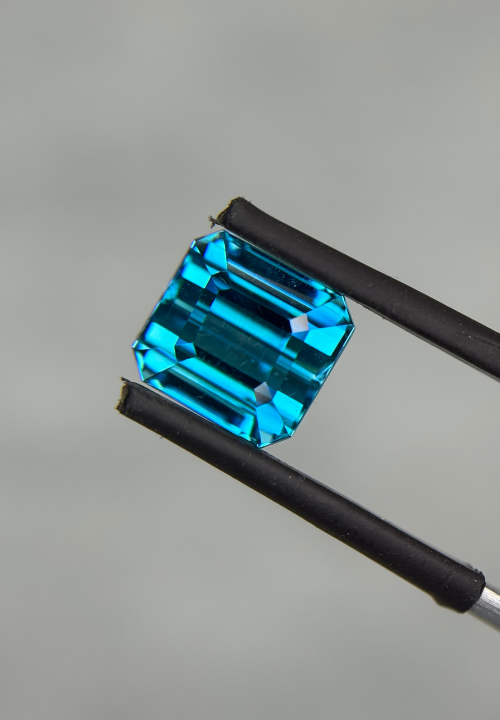
Zircon has high luster, high refractive indices and strong dispersion, creating notable brilliance and spectral fire. It is also doubly refractive, which can make facet junctions appear doubled. These qualities should not be reduced to how closely zircon resembles diamond; together they create an optical identity of its own.
Zircon does not need to borrow another gemstone’s brilliance. Its relationship with light is already distinctive.
Fire Can Become Part of the Design
A gemstone with strong visual activity gives a designer something to respond to. Metal, setting openness, side stones and silhouette can amplify or quiet that activity. Restrained, architectural and decorative approaches can all make sense around different zircons.
A gemstone with a strong visual voice gives a designer something to respond to.
Colour Gives Zircon More Than One Personality
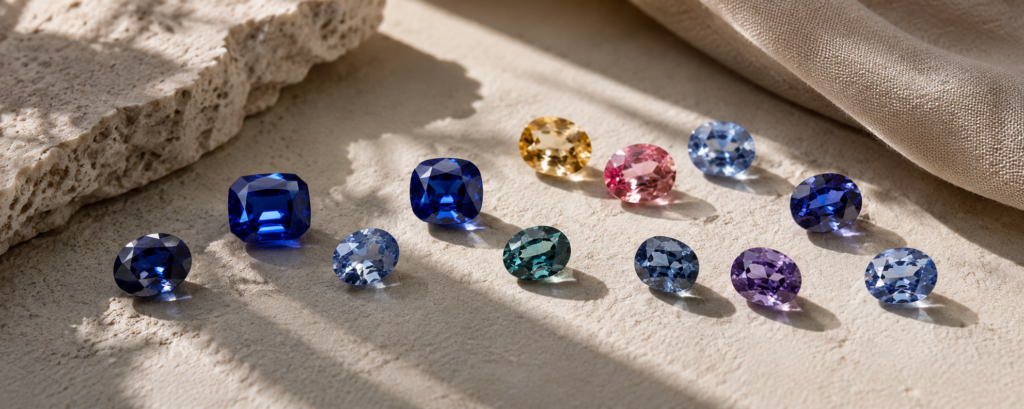
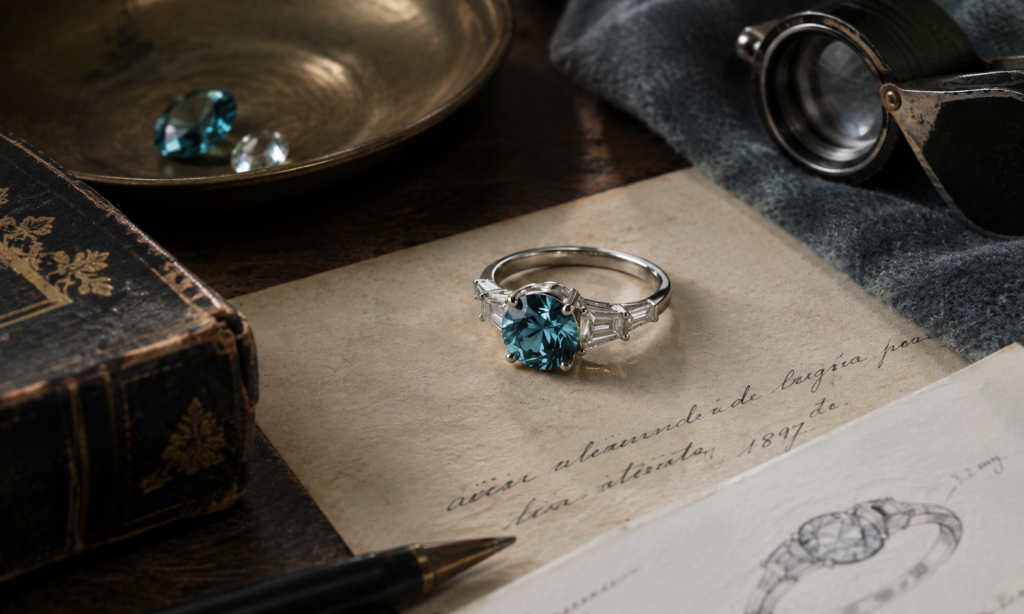
Zircon occurs naturally in blue, green, yellow, orange, red, reddish brown, brown and colourless appearances. An electric blue, deep green, warm golden-brown and colourless zircon can each suggest a very different design direction.
Zircon is not one look waiting for one kind of jewelry. Its colour range gives designers several different starting points.
Scale Can Be Part of Its Presence
Gem-quality zircon occurs across a useful range of sizes, although fine large stones become less common. Its relatively high specific gravity also means carat weight should be read alongside dimensions and depth. Scale is interesting as a design quality, not as a promise of a larger look for less money.
Scale can be part of zircon’s presence, but carat weight alone never tells the whole visual story.
Fine Jewelry Does Not Require an Indestructible Gemstone
Zircon has a Mohs hardness around 6 to 7.5 and can be brittle; facet edges can abrade and hard blows can cause damage. These limitations do not exclude zircon from jewelry. They mean the material should be understood and worn with appropriate care.
Fine jewelry is not made only from indestructible materials. It is made by understanding the materials we choose.
Durability Can Become a Design Consideration
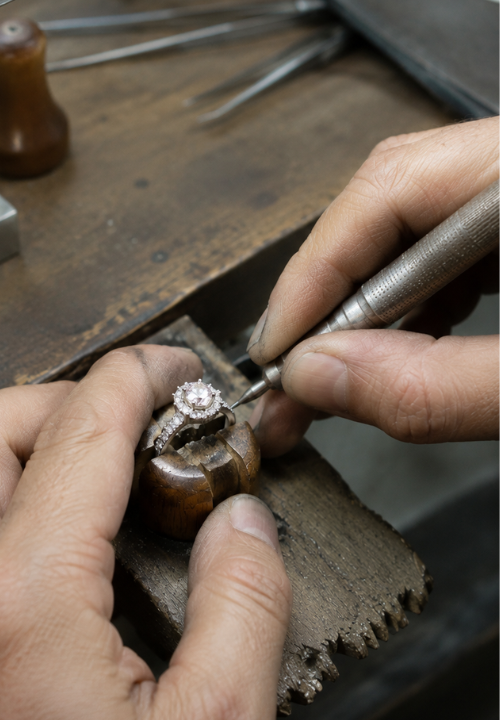
A frequently worn zircon ring may invite different decisions from earrings or a pendant. Vulnerable corners, exposed girdles, setting height and intended wear can inform the design.
Respecting a gemstone’s limits does not diminish the design. It can become part of the design intelligence.
Fine Jewelry Is Also About Choosing the Right Stone
A mineral name alone does not make a piece fine. An individual zircon still asks us to consider colour, clarity, cut, condition, dimensions and character. Fine jewelry emerges through selection, design and craftsmanship rather than the prestige of a gemstone category.
A gemstone category does not make a piece fine. The decisions made around an individual stone do.
Treatment Does Not Remove Zircon From Fine Jewelry
Heat treatment is common in zircon, especially in much blue and near-colourless material. Fine jewelry does not require this history to be hidden. Treatment should be understood and disclosed so the gemstone can be considered for what it actually is.
Fine jewelry does not require us to hide a gemstone’s treatment history. It requires us to understand and disclose it.
Zircon Does Not Need an Exaggerated Rarity Story
Some zircon colours, sizes and qualities are less common than others, but zircon does not need every example to be called extremely rare or investment-worthy. Its colour, optical character, history and design possibilities are already meaningful.
A gemstone does not need an exaggerated rarity story to deserve thoughtful jewelry.
Nor Does It Need to Be a “Value Alternative”
Positioning zircon as a cheaper way to imitate diamond or sapphire places another gemstone at the centre of its identity. Zircon becomes more interesting when it is chosen because its own colour, fire and character are wanted.
The strongest case for zircon is not that it costs less than something else. It is that nothing else is quite zircon.
Its History Is Deeper Than Its Modern Reputation
Ancient zircon crystals preserve records reaching back roughly 4.4 billion years, while zircon also has a documented jewelry history. Against that scale, modern confusion with cubic zirconia is surprisingly recent.
Zircon’s modern misunderstanding is surprisingly young compared with the history of the mineral itself.
What Could Contemporary Zircon Jewelry Look Like?
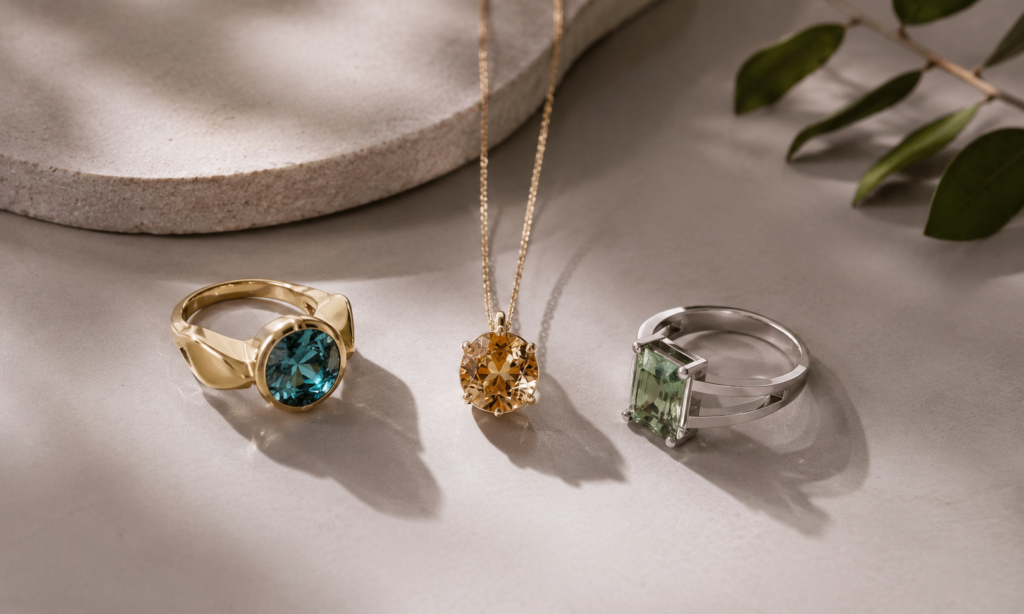
There is no single answer. Zircon can become a colour-led statement, a quiet single-stone piece, an architectural composition or a design built around an unusual cut. The opportunity is to let its individual qualities become part of the design language.
The opportunity is not to make zircon look more expensive. It is to make jewelry that takes zircon seriously.
Fine Jewelry Begins With Intention
Price, carat weight, rarity labels or surrounding diamonds do not by themselves create fine jewelry. Intention appears when the stone is chosen deliberately, the design responds to the material, craftsmanship is considered, treatment is understood and intended wear has been thought through.
Fine jewelry begins when every choice feels intentional—including the choice of gemstone.
Giving Zircon Its Own Place
Zircon does not need to become diamond, sapphire or emerald, and its limitations or treatment history do not need to be disguised. Its strongest place in fine jewelry begins when it is allowed to contribute its own colour, light, history and character.
Zircon does not need to become another gemstone to belong in fine jewelry. It only needs to be allowed to be zircon.