
Hessonite reveals one of the warmer sides of the garnet family. Its colours can move from golden yellow-orange and honey through cinnamon, orange-red and reddish brown. Perhaps more surprisingly, it belongs to grossular—the same garnet species that also gives us vivid green tsavorite.
Tsavorite and hessonite show just how far one garnet species can travel through colour.
First, What Exactly Is Hessonite?
Hessonite is a variety of grossular garnet rather than a separate garnet species. Grossular has the ideal formula Ca₃Al₂(SiO₄)₃, but natural stones can contain additional garnet components and trace elements that influence their appearance. Hessonite is the warm orange-to-reddish-brown expression within this part of the family.
One Species, Two Very Different Worlds
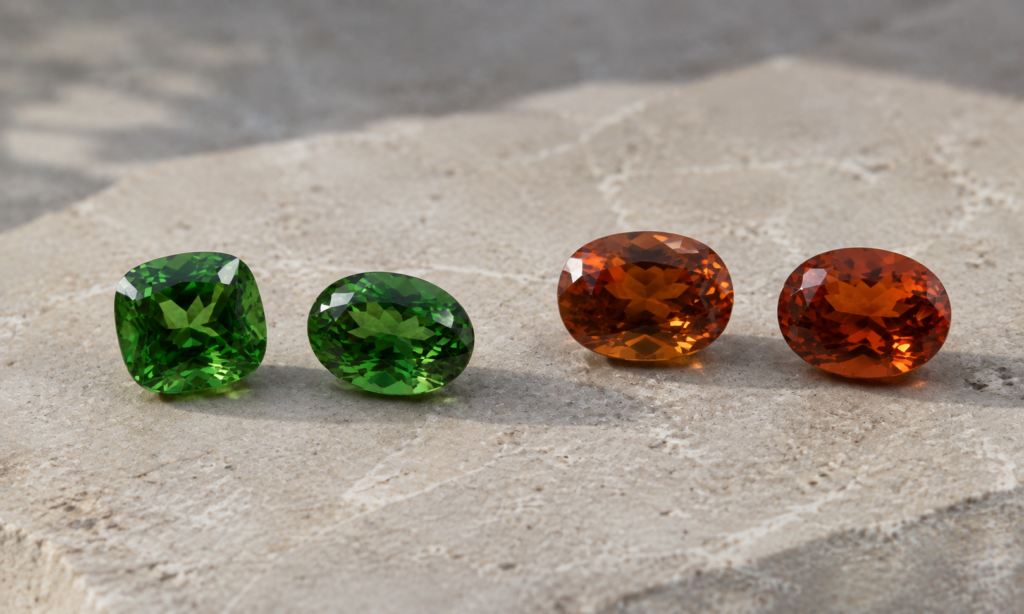
Tsavorite and hessonite both belong to grossular, yet their colours tell very different stories. Tsavorite’s green is associated especially with vanadium and sometimes chromium. Studies of hessonite show that iron and an andradite component can help move its colour through yellowish orange, orange, orange-brown and reddish brown. The comparison is useful not as a ranking, but as a reminder that a mineral species can contain remarkably different visual identities.
Why Is It Called the Cinnamon Stone?
Hessonite has long been known as the “cinnamon stone,” a name inspired by its characteristic warm orange to reddish-brown appearance. Cinnamon, however, should not be treated as a fixed gemological colour boundary. Real hessonite occupies a broader palette.
“Cinnamon” is a useful description of hessonite’s warmth, not a single colour the gemstone must match.
Hessonite Is Not One Cinnamon Colour
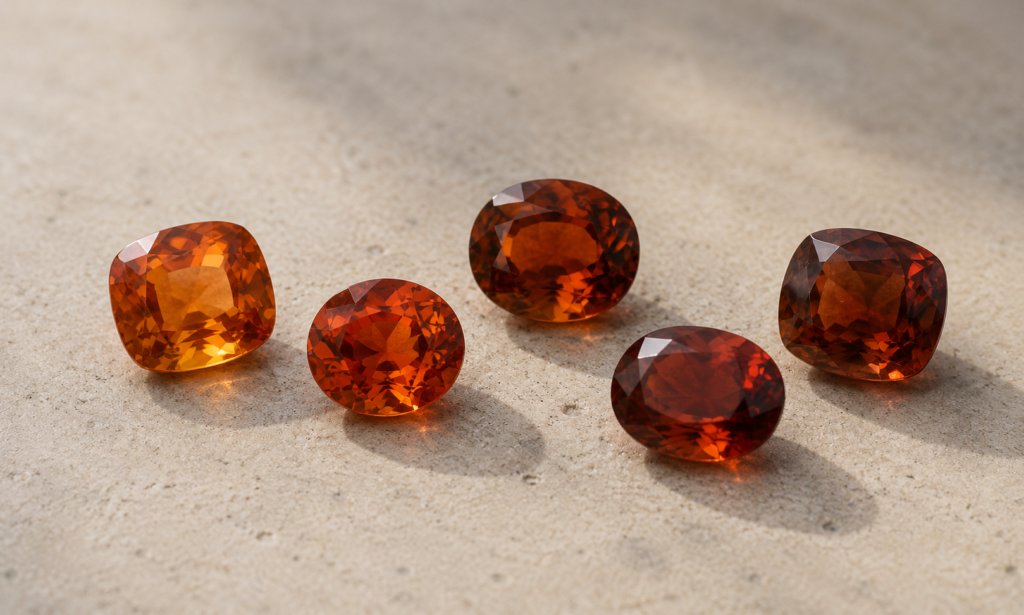
Documented hessonite ranges through yellowish orange, orange, orangy red, orange-brown, reddish brown and brownish red. Rather than one colour swatch, it is more useful to think of hessonite as a family of warm expressions.
Where Honey Becomes Cinnamon
Lighter hessonite can feel golden, luminous or honey-like. As tone deepens and orange becomes warmer, the same broad colour family can take on the earthy character that inspired the cinnamon name. The transition is gradual rather than a change from one strict category to another.
Where Cinnamon Moves Toward Red
Hessonite does not stop at orange-brown. Some material moves toward orangy red and brownish red, bringing it visually closer to the territory of familiar red garnets while retaining a distinctly warm orange or brown influence.
Iron Helps Shift the Warmth
Gemological studies have linked increasing iron and andradite components in hessonite samples with changes from yellowish-orange and orange toward orange-brown and reddish-brown appearances. Natural gemstone colour remains complex, but the relationship helps explain why hessonite’s warm spectrum has a real chemical foundation.
Hessonite Has Another Visual Signature
Colour is only part of hessonite’s identity. Many stones display a characteristic internal appearance described as roiled or turbulent. Instead of looking perfectly crisp inside, the gemstone can appear softly swirled or textured, giving facet reflections a distinctive visual quality.
Roiled Does Not Mean Poorly Cut
A slightly disturbed or softened appearance inside a hessonite is not necessarily caused by the facet surfaces or poor workmanship. Part of that visual effect can belong to the material itself.
Some of hessonite’s softness belongs to the material itself, not to the surface of the cut.
Clarity Works Differently Here
Hessonite is among the orange garnets in which eye-visible internal features can occur. Some stones look transparent and open, while others show the roiled character more strongly. Neither microscopic perfection nor obvious internal texture defines every hessonite; natural material varies.
Why Hessonite Can Feel Almost Liquid
Warm body colour, internal roiling and moving facet reflections can combine to create an almost liquid visual impression in some stones—something reminiscent of light moving through honey. This is a descriptive way of experiencing the gemstone rather than a formal gemological phenomenon.
Sri Lanka Is an Important Part of the Story
Sri Lanka has a long association with hessonite and remains an important chapter in its gemological history. Documented Sri Lankan material includes substantial faceted stones, and hessonite has been recorded among the island’s garnet varieties. This history adds context without making one origin a universal standard.
But Hessonite Is Not Exclusively Sri Lankan
Hessonite and hessonite-like grossular material are documented beyond Sri Lanka, including East African sources such as Tanzania. A locality can enrich the story of an individual stone without defining what every hessonite must look like.
Sri Lanka is one of hessonite’s important chapters, not the definition of the gemstone.
Hessonite and Spessartine Can Share Similar Colours
Orange does not identify a garnet species by itself. Spessartine can overlap visually with hessonite through yellow-orange, orange, reddish-orange and brownish-orange territory, even though the two have different mineral chemistry. Spessartine is a manganese-rich garnet species; hessonite is a variety of calcium-rich grossular.
Similar Colour, Different Mineral Story
This overlap is a useful reminder that gemstone colour and mineral identity are not the same thing. Two garnets can arrive at similar warm appearances through different compositions, so visual colour alone is not enough to separate every orange garnet.
Hessonite and Tsavorite: Two Faces of Grossular
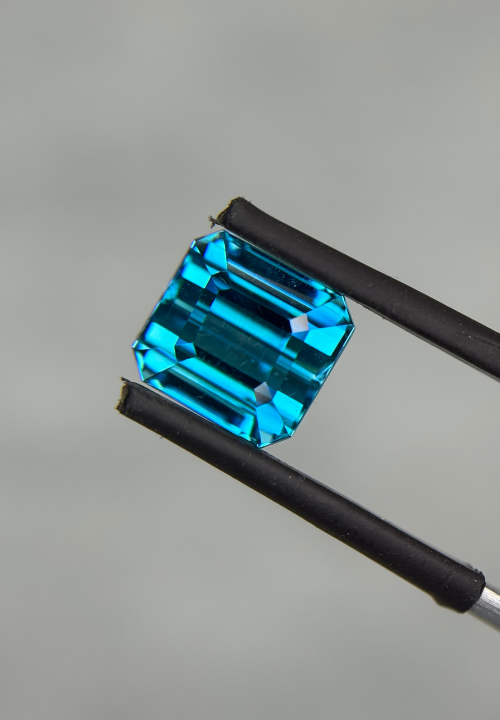
Placed side by side, green tsavorite and warm hessonite can look unrelated. Mineralogically, however, both belong to grossular. Their contrast makes them a particularly clear example of why a gemstone species should not be imagined as having only one colour personality.
Cut Changes How Warmth and Texture Meet
Facet arrangement, depth, proportions and extinction influence how hessonite’s warmth is experienced. A cut can make golden-orange material feel more open or allow deeper orange and brown tones to become denser, while internal roiling can soften the crispness of reflections. These variables interact rather than producing one required look.
Larger Stones Can Reveal More of the Interior
Documented hessonites include faceted examples well above ten carats. In larger stones, both the warm body colour and internal visual character can become especially easy to appreciate. Size changes the viewing experience, but it does not determine the beauty of the individual stone.
Treatment Is Not the Main Story
Routine colour enhancement is not the defining market narrative around hessonite. Experimental heating has been studied in garnets, but that is different from saying that commercial hessonite is routinely treated. Its familiar colour story is fundamentally connected with natural mineral composition.
Warmth Is the Character, Not a Ranking
Golden and honey-toned hessonite can feel luminous; cinnamon can feel earthy and warm; orange-red material can feel richer and deeper. These descriptions are different personalities rather than steps toward one ideal colour.
Hessonite does not need one ideal shade of cinnamon. Its character comes from the many ways warmth can appear.
From Rough Warmth to a Finished Jewel
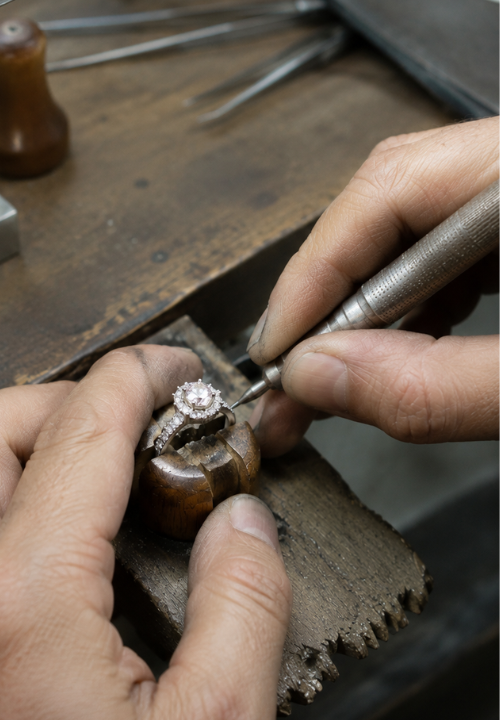
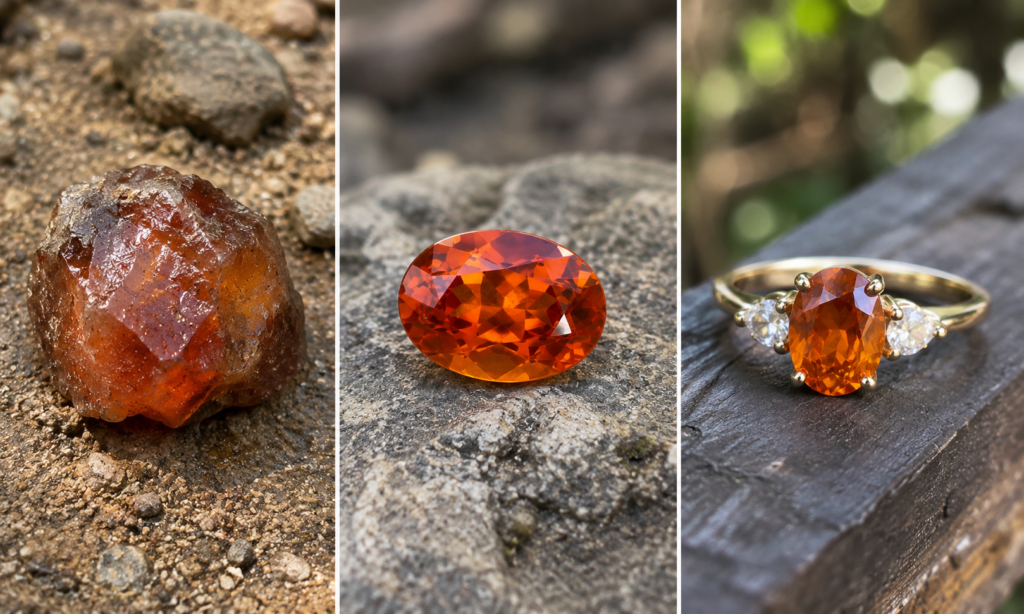
Hessonite’s journey can move from earthy orange or brown-orange rough to a transparent faceted gemstone whose colour and internal movement become much more visible. Jewelry then gives that warmth a new context without changing the mineral story beneath it.
More Than the Cinnamon Stone
Hessonite is called the cinnamon stone, but cinnamon is only the beginning of its colour story. From honey and gold to orange and reddish brown, its warmth is not one fixed shade—it is an entire side of the grossular family.