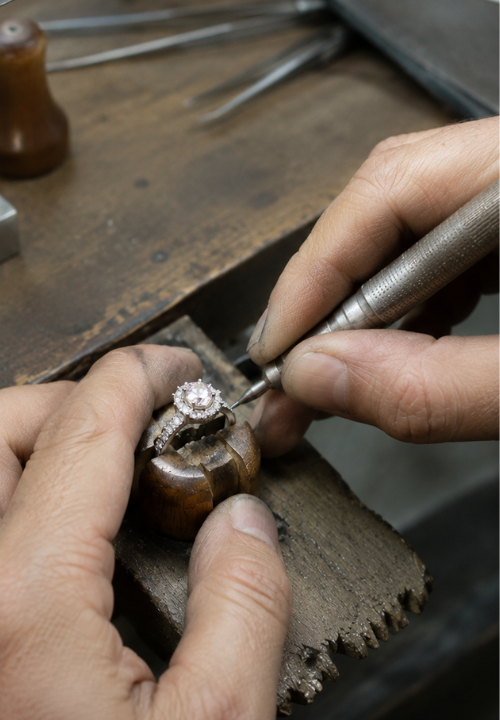
Kunzite can seem difficult to describe with a single colour. One stone may feel softly pink at first, then reveal lilac, violet or violetish-pink impressions as the viewing direction changes. This is more than poetic language: kunzite is strongly pleochroic, and the relationship between colour and crystal direction is central to its identity.
Kunzite does not always seem entirely pink or entirely violet. Much of its character lives in the space between them.
First, What Exactly Is Kunzite?
Kunzite is the pink to violetish-purple variety of spodumene, a lithium-bearing mineral with the formula LiAlSi₂O₆. Trace manganese is associated with its pink-to-violet colour. Kunzite is therefore not a separate mineral species, but a distinctive coloured variety within the spodumene family.
A Surprisingly Young Gemstone
Compared with gemstones known for thousands of years, kunzite entered modern gemological vocabulary remarkably recently. Pink-to-lilac spodumene from San Diego County, California, attracted attention in 1902 and was examined by mineralogist and gem expert George Frederick Kunz. In 1903, chemist Charles Baskerville proposed the name “kunzite” in honour of Kunz.
Kunzite had existed in the earth long before 1902. What was new was our recognition of it.
From Soft Pink to Violet
Kunzite can include very pale pink, pink, violetish pink, lilac-like appearances and violet to violetish purple. Much material is relatively light in tone, while more intensely coloured stones occur less commonly. The trade may value stronger colour more highly, but that preference does not need to become a definition of what kunzite should look like.
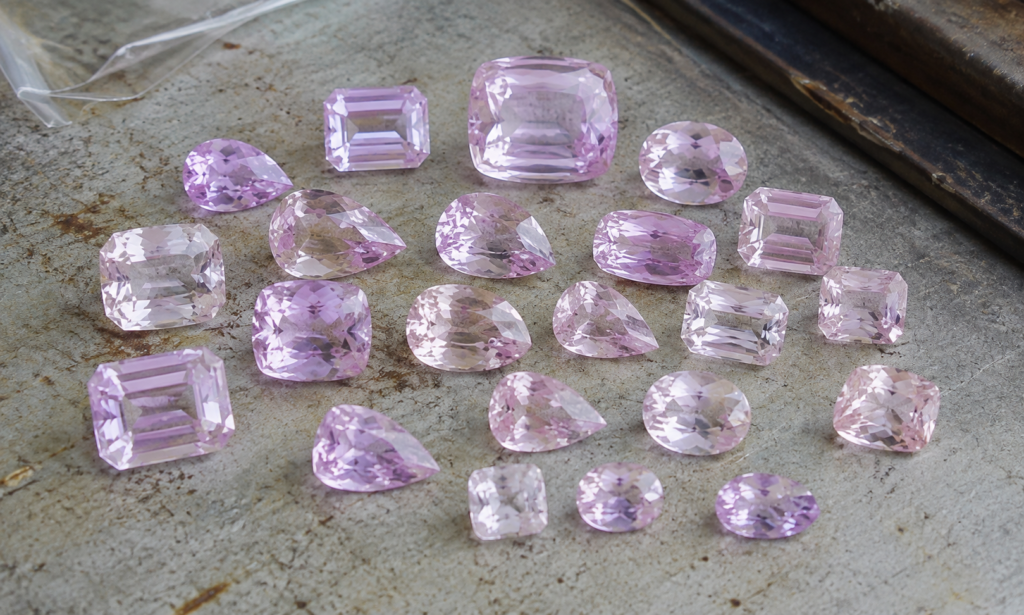
Why One Kunzite Can Seem to Hold More Than One Colour
Kunzite is strongly pleochroic. The crystal can show different colour appearances or intensities when viewed along different crystallographic directions, and the strongest colour is associated with particular directions through the crystal. This is different from a colour-change gemstone responding to different types of illumination.
The colour is not changing into another colour. We are simply seeing a different direction of the same crystal.
The Cutter Has to Find the Colour
Strong pleochroism gives the cutter an additional decision to make. Orientation can influence how much of kunzite’s stronger pink or violet colour appears face-up, while rough shape, depth, weight retention and the intended design remain part of the decision. The finished gem becomes a meeting point between natural colour direction and the choices made during cutting.
Large Crystals Are Part of the Kunzite Story
Spodumene can form elongated, sometimes blade-like prismatic crystals, and kunzite rough can reach substantial sizes while remaining transparent. Exceptional faceted examples can weigh hundreds of carats. More broadly, sizeable transparent rough allows kunzite’s gentle colours to be experienced across broad facets and considerable depth.
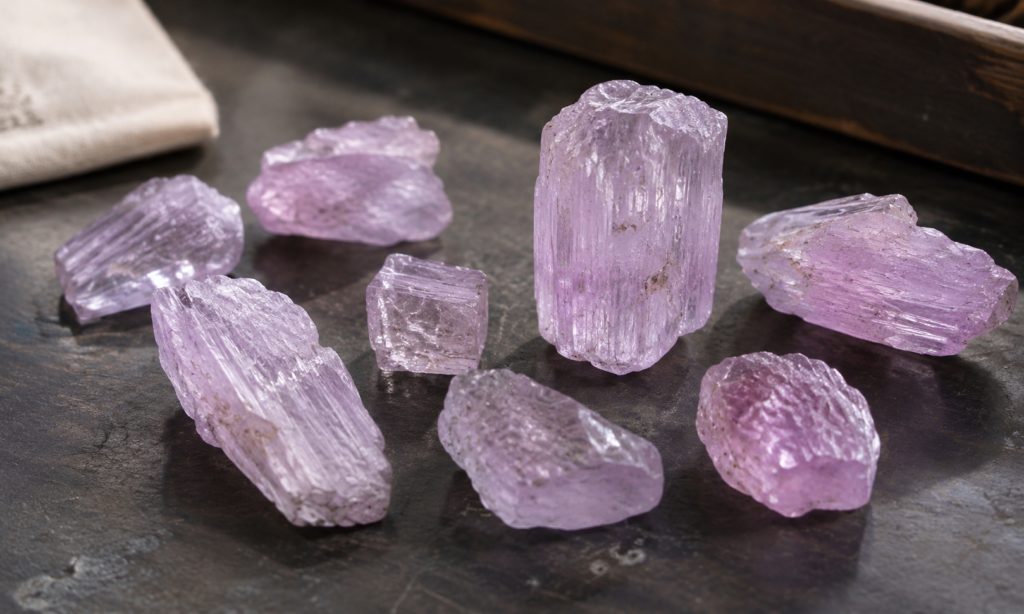
Transparency Gives the Colour Space
Faceted kunzite is often relatively clean to the unaided eye, and transparent material can occur in large sizes. This openness changes the way gentle colour is perceived: light, facet reflections and depth remain visible rather than being overwhelmed by body colour alone. Sometimes its impression comes from colour appearing to float through a large transparent volume of crystal.
Beautiful, but Structurally More Delicate Than It Looks
Kunzite has a Mohs hardness of about 6.5 to 7, but hardness is only one part of durability. Spodumene also has perfect cleavage, so a sufficiently hard impact can cause the crystal to split along cleavage planes. This matters during cutting, setting and wear without meaning kunzite cannot be used in jewellery. Design and wearing context simply deserve consideration.
The Colour Has a Relationship with Light
Kunzite colour can fade with prolonged exposure to intense light or heat. This should not be interpreted as meaning that ordinary brief exposure to daylight immediately removes its colour. Long-term care is straightforward: avoid extended strong direct sunlight, intense display lighting and excessive heat, and keep the gemstone protected when it is not being worn.
Kunzite’s relationship with light is part of understanding the gemstone—not a reason to be afraid of wearing it.
Soft Colour Does Not Mean a Lesser Presence
Kunzite is a reminder that visual presence does not depend on saturation alone. A large pale-pink stone can feel expansive because of transparency and broad facets, while lilac or deeper violet material creates another balance between colour and light. Size, transparency, tone, pleochroism and cut all participate in the final appearance.
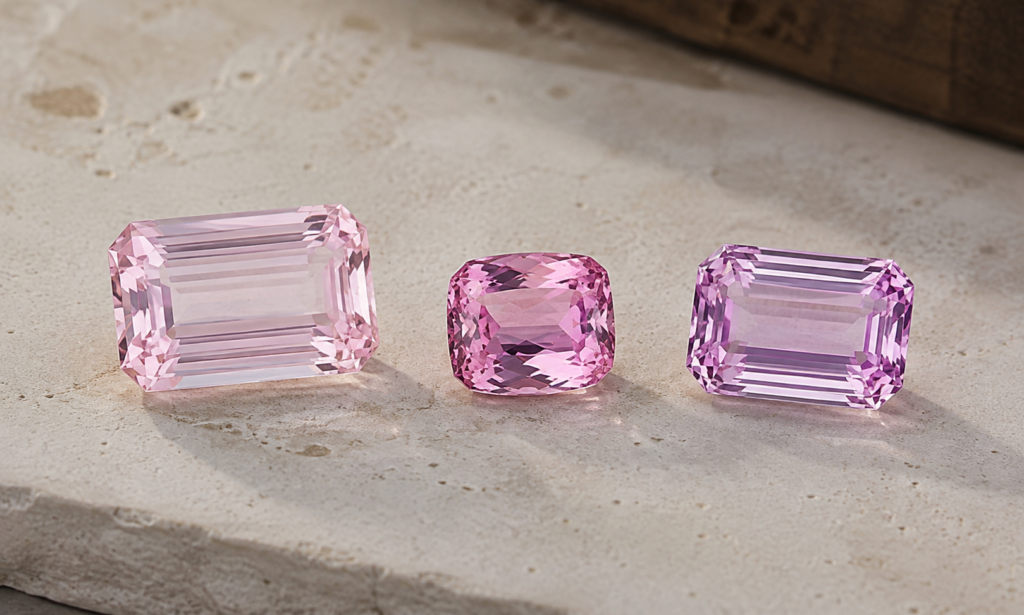
A Gemstone That Lives Between Colours
Kunzite can be pale pink, cool lilac, violetish pink or unexpectedly purple. Sometimes more than one of those impressions seems to exist within the same stone because crystal direction changes how its colour reaches us.
Its beauty is not built around one ideal shade, but around the way colour, direction, transparency and light meet inside the crystal. Kunzite does not need to choose between pink and violet. The space between them is part of what makes it itself.