
Topaz is often encountered today through vivid blue, yet its colour story reaches much further. The same mineral can appear colourless, yellow, golden, orange, pink, red or purple, and the paths that create these appearances are not all the same. Blue topaz and the warm colours associated with golden and Imperial topaz therefore reveal very different sides of one mineral.
Topaz does not belong to one colour story. Its cool blues and warm golden oranges arrive there by very different paths.
First, What Exactly Is Topaz?
Topaz is a mineral species in its own right, an aluminium fluorosilicate with a Mohs hardness of 8. In a chemically pure state it is colourless, while the many colours associated with gem topaz arise from trace elements, structural defects, colour centres and, in some material, treatment.
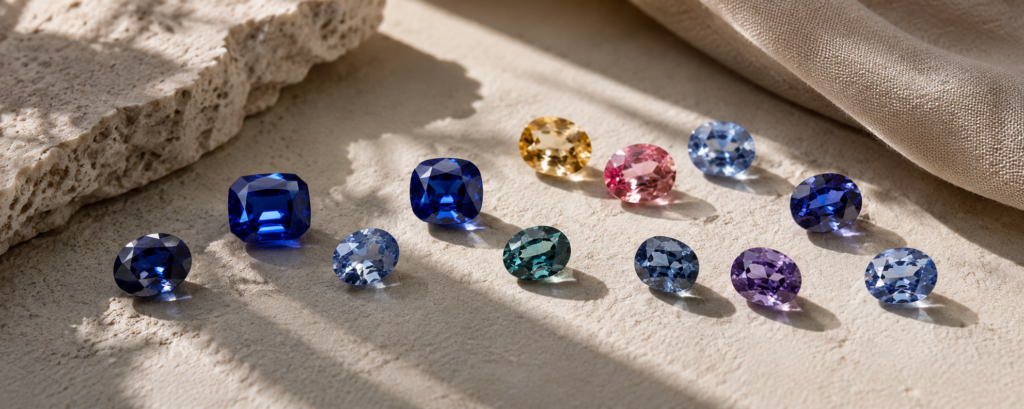
Its palette can include colourless, blue, yellow, golden, brown, orange, pink, red, purple and occasional green appearances. That range makes the familiar image of topaz as simply a blue gemstone only one part of a much larger story.
Topaz Is Naturally a Gemstone of Many Colours
Topaz can display an unusually broad range of colour, and it is also pleochroic, so some stones can show different colour impressions along different crystallographic directions. Yet these colours are not equally common and do not share identical causes.
Colourless material is abundant, while yellow and brown topaz occur naturally. Strong natural blue is much less common, and fine pink, red or purple material occupies another, rarer part of the spectrum. These differences help explain why two topazes can have very different histories even when both are completely natural crystals.
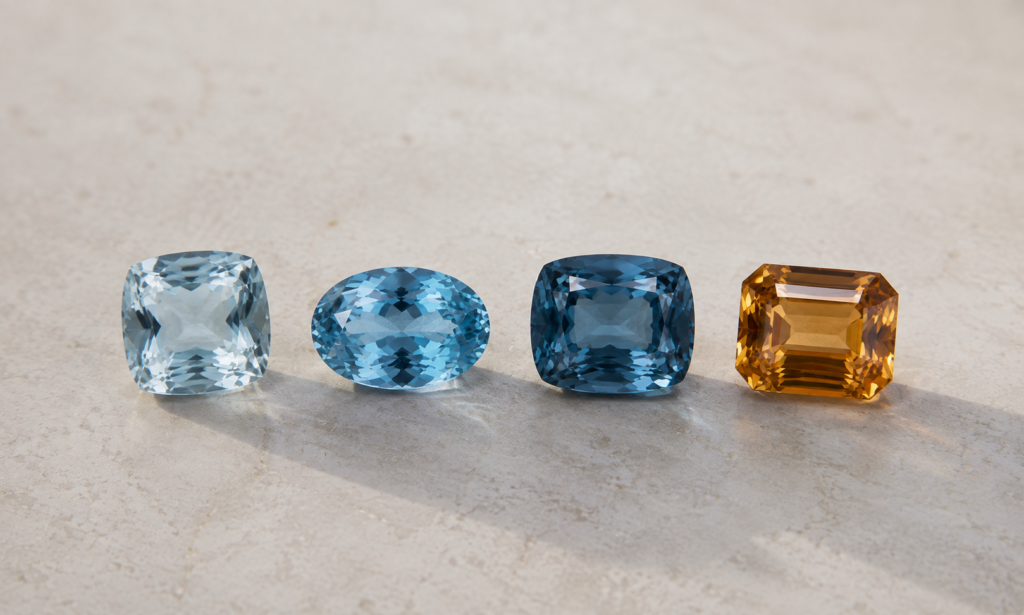
The Blue Topaz Most of Us Know Today
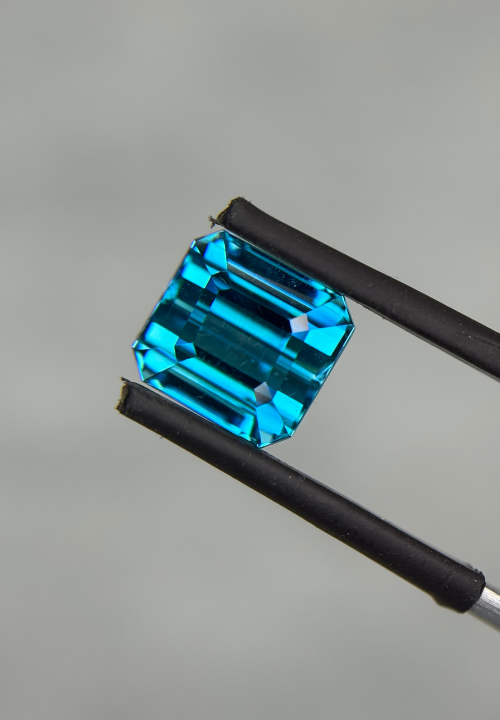
Blue topaz exists naturally, but strongly coloured natural blue material is rare. Most vivid blue topaz in the modern market begins as natural colourless or pale topaz and receives irradiation followed by controlled heating to develop or modify its blue colour.
This distinction is useful without making treatment a negative label. The gemstone remains natural topaz; treatment changes colour centres within the existing crystal rather than creating a synthetic stone.
The blue may be created by treatment, but the crystal itself remains natural topaz.
Sky, Swiss and London Blue
The trade commonly uses names such as Sky Blue, Swiss Blue and London Blue. Sky generally refers to lighter blue, Swiss to a brighter or more vivid blue, and London to deeper, darker blue appearances.
These are practical trade descriptions rather than universal scientific grades. Boundaries can overlap between sellers, and the names should not be read as a ladder from lesser to better. An airy light blue and a deep London-like blue simply create different visual characters.
Then Topaz Turns Warm
Move away from the cool blues and topaz enters a very different palette: yellow, honey, gold, orange, peach, pinkish orange and reddish orange. Many of these warm appearances occur naturally and form an important part of topaz’s historic identity.
Not every yellow or orange topaz should be called Imperial. Warm topaz includes a broad territory of its own, while Imperial is a more particular trade and historical term whose boundaries are not universally fixed.
The same mineral that can look icy and blue can also hold colours that feel almost like sunlight.

Golden Topaz Has Its Own Identity
Golden topaz can occupy yellow, golden-yellow, honey and yellowish-orange territory. These colours deserve to be understood as expressions of topaz in their own right rather than as stones that are somehow waiting to become Imperial.
The trade has also used names such as “sherry topaz” for warm yellowish-brown, brownish-yellow or orange material, drawing an analogy with the colour of sherry wine. As with many trade names, it is descriptive language rather than a universal gemological grade.
So What Is Imperial Topaz?
Imperial topaz is one of the best-known names within the warm topaz spectrum, commonly associated with rich orange, reddish-orange, orange-red and related pinkish or reddish colours. Historical material from Brazil has helped shape this identity.
There is, however, no single official worldwide colour boundary for the term. Some dealers use Imperial across a relatively broad orange-to-pink or reddish territory, while others reserve it for narrower combinations of hue and saturation. It is therefore better understood as an established trade and historical designation than as one exact colour value.
Ouro Preto and the Imperial Story
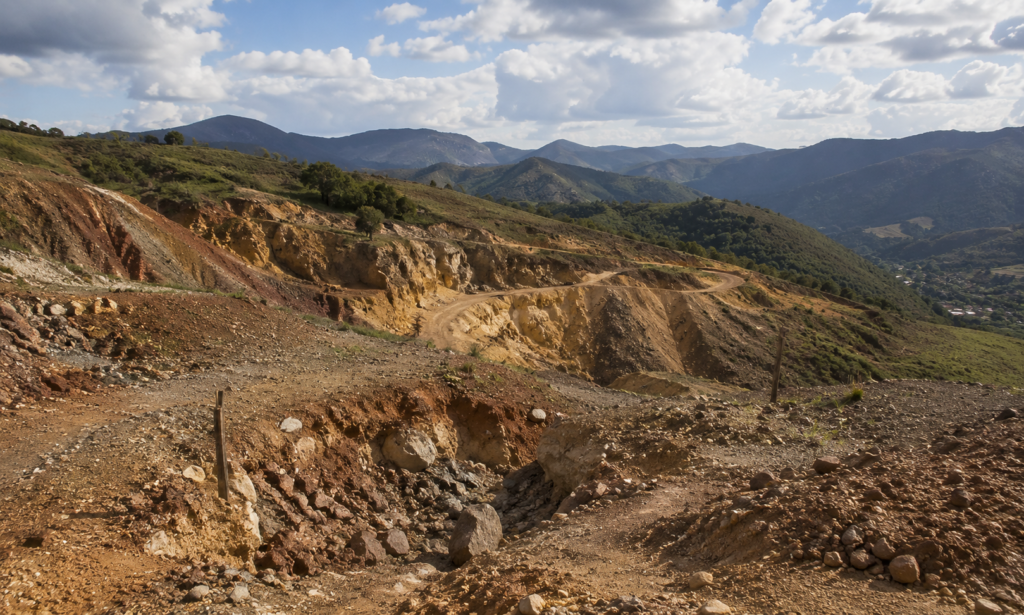
The region around Ouro Preto in Minas Gerais, Brazil, is central to the history of Imperial topaz. Deposits and mines in this area have produced celebrated warm-coloured topaz for generations, helping connect the region with orange, pinkish-orange and reddish material in the international gem trade.
That history gives Ouro Preto an important place in the story without making locality a guarantee of appearance or quality. The individual gemstone still varies in colour, transparency, cut and overall character.
Colour in Topaz Is More Complicated Than It First Appears
Topaz is allochromatic: its colours are produced by factors that are not essential components of the mineral’s basic chemical formula. Trace elements, defects in the crystal structure and colour centres can all participate. Chromium is associated with some pink, red and violet-purple appearances, while defects and colour centres play important roles in brown and blue material.
Treatment can deliberately alter some of these colour centres, as in much modern blue topaz. The result is a useful reminder that even within one mineral species, colour can have several different scientific histories.
The Name Matters Less Than the Colour We Actually See
Sky Blue, Swiss Blue, London Blue, Sherry and Imperial are useful pieces of trade vocabulary, but they can sound more precise than they really are. They help people communicate about broad appearances; they do not replace looking carefully at an individual stone.
This is particularly important with Imperial, where no universal definition creates one exact boundary accepted by every seller or laboratory. The name can provide context, but the actual hue, tone, saturation, transparency and overall appearance remain properties of the gemstone itself.
Trade names help us describe topaz. They should not replace the experience of looking at the stone itself.
One Mineral, Many Ways to Hold Colour
Blue, golden and Imperial topaz are not steps on a ladder. They are different colour stories within the same mineral. Modern blue shows how treatment can work with colour centres in a natural crystal; golden topaz reveals a broad warm palette; and Imperial topaz connects particularly celebrated warm colours with a long Brazilian history.
Topaz can be icy blue, softly golden, fiery orange or touched with pink and red. To understand it is not to decide which colour wins, but to see how many different identities one gemstone can hold.