
Tourmaline has more than one way to become green. Many familiar green tourmalines owe much of their colour to iron, while the material known in the trade as chrome tourmaline belongs to a different colour story involving chromium, vanadium or both.
That chemistry can produce remarkably concentrated green, but the most interesting part of the name is that chromium is not always the dominant character.
Tourmaline does not have one green. Chrome tourmaline begins with a different route to green.
What Exactly Is Chrome Tourmaline?
Chrome tourmaline is a variety or trade name rather than a separate mineral species. Much of the classic material belongs to the dravite–uvite side of the tourmaline group, rather than the elbaite species associated with many other brightly coloured gem tourmalines.
Chrome tourmaline is a colour name first. Beneath that colour can be a different part of the tourmaline family.
Why Is It Called “Chrome” Tourmaline?
The name suggests a simple explanation: chromium makes the stone green. The chemistry is more complicated. Gemological research has shown that vanadium can be the dominant colouring agent in material sold as chrome tourmaline, even though the historical trade name remained.
The name survived even after the chemistry became more complicated.
So Is Chromium Unimportant?
No. Chromium remains important in the chrome-tourmaline story, and individual stones can contain contributions from both chromium and vanadium. Some studied material has even shown chromium exceeding vanadium.
The useful conclusion is not that chrome tourmaline should really be called vanadium tourmaline, but that the familiar name simplifies a colour system that can involve both elements.
Chromium matters. Vanadium matters. The surprising part is that the gemstone called “chrome” does not require chromium to be the dominant colour source in every stone.
Why Does This Chemistry Create Such an Intense Green?
Chromium and vanadium can produce strong absorption patterns that leave green wavelengths particularly prominent to the eye. The result can be richly saturated green with a concentrated bodycolour that invites comparison with other famous green gems.
That does not make chrome tourmaline an emerald or tsavorite substitute. It shows that different minerals can arrive at visually powerful green through related colouring elements.
Chrome tourmaline’s green is not simply darker green. It can be green with unusually concentrated colour.
Chrome Tourmaline Is Not One Exact Green
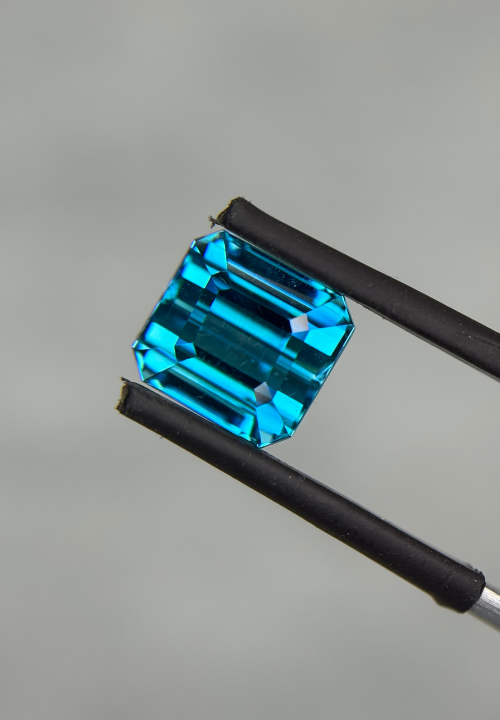
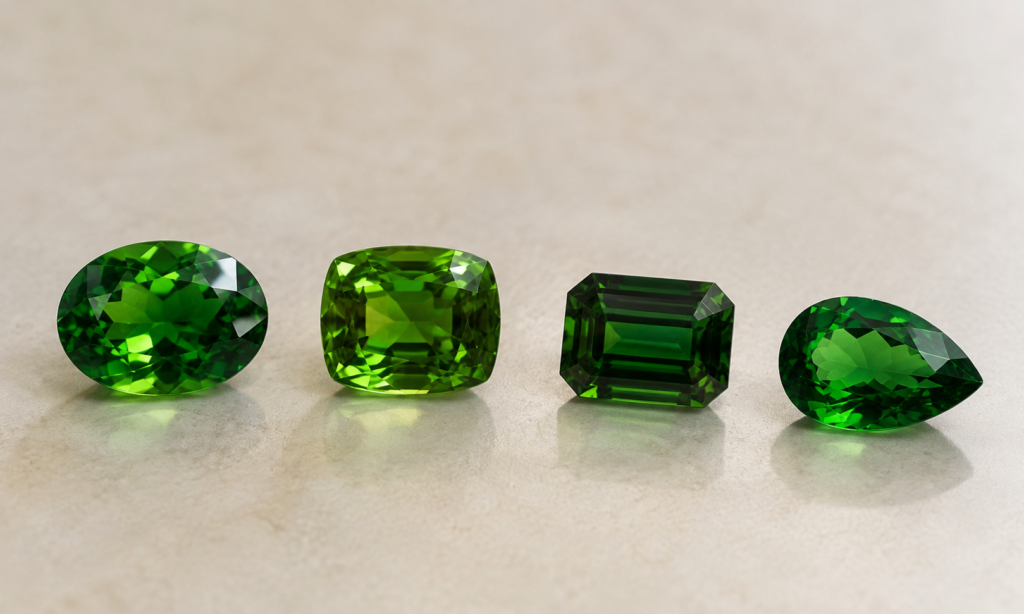
Chrome tourmaline should not be reduced to one ideal colour swatch. Individual stones can show balanced rich green, slightly yellowish green, subtly bluish green or considerably deeper green depending on chemistry, tone, orientation, cut and thickness.
Chrome describes a colour mechanism and a trade family—not one compulsory shade of green.
Why Can Chrome Tourmaline Look Like Emerald or Tsavorite?
Part of the resemblance comes from colouring chemistry. Chromium and vanadium are also important to the green of emerald and tsavorite. Their minerals and geological histories remain different, but their colours can occupy surprisingly close visual territory.
They can arrive at surprisingly similar greens while remaining completely different gemstones.
A Different Green Also Comes From a Different Geological Story
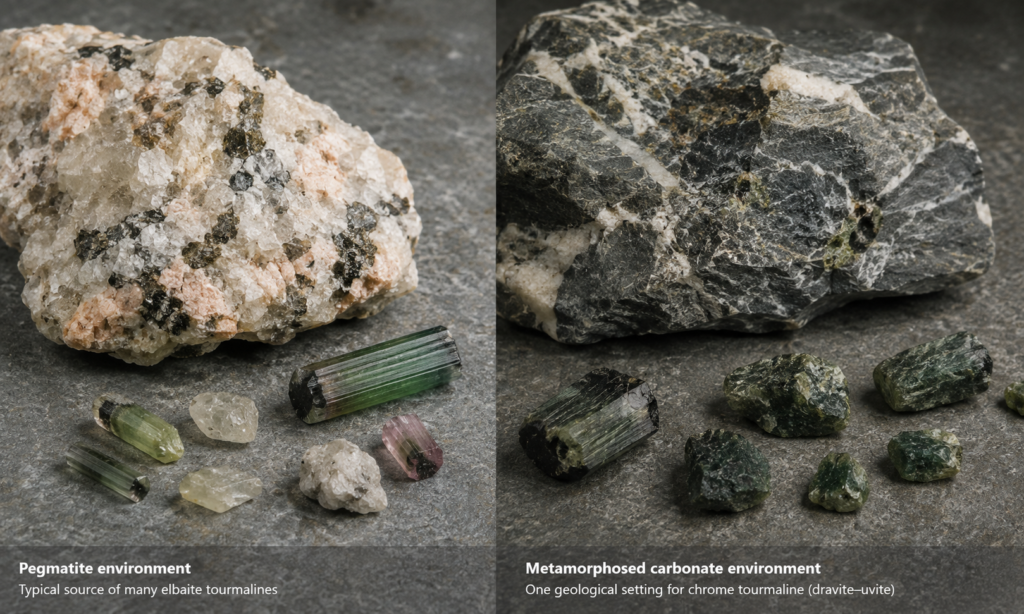
Many colourful elbaite tourmalines are associated with granitic pegmatites. Classic chrome tourmaline has another important geological context: dravite–uvite tourmaline can form where carbonate rocks such as limestone are altered by heat, pressure and chemically active fluids, producing metamorphic environments such as marble.
Where chromium and vanadium are available in that environment, they can become part of the growing tourmaline and its green colour story.
The different green begins before the colour appears—it begins with a different geological environment.
Why Is East Africa So Important to the Story?
East Africa, particularly Tanzania and also Kenya, is central to the history of gem-quality chrome tourmaline. The region is also famous for other chromium- and vanadium-related green gemstones, reflecting geological environments capable of producing several distinct expressions of intense green.
East Africa did not create one green gemstone. Its geology created several different ways for nature to make extraordinary green.
Why Can Chrome Tourmaline Become Too Dark?
The same concentrated colour that gives chrome tourmaline its appeal can also become challenging. Strong absorption, considerable tone, stone thickness and tourmaline’s pleochroism can combine to make some material look very dark face-up.
The challenge is therefore not always finding more saturation. It can be preserving enough brightness for the green to remain visible and lively.
The challenge with intense green is not always finding more colour. Sometimes it is finding enough light to carry that colour.
Cutting Chrome Tourmaline Is About Opening the Green
A cutter has to balance orientation, depth, saturation, tone and yield. Rich rough may need thoughtful proportions and orientation so that the finished gemstone does not become a dark green mass.
This is why the deepest-looking rough is not automatically destined to become the most beautiful finished stone.
The best cut does not simply preserve green. It gives the green somewhere for light to move.
Is Every Intense Green Tourmaline Chrome Tourmaline?
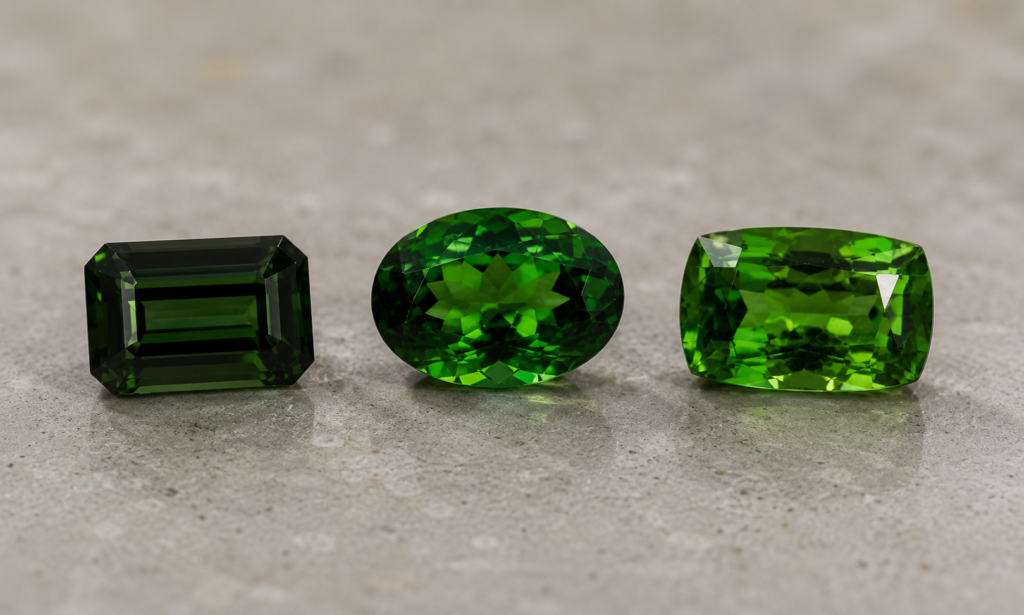
No. Green tourmaline can receive colour from iron-related mechanisms as well as chromium- and vanadium-related ones. A photograph of a vivid green stone cannot by itself establish why that colour exists.
Green is an appearance. “Chrome” makes a statement about why that green exists.
Can You Identify Chrome Tourmaline by Colour Alone?
Visual appearance can suggest the possibility, but overlapping greens make colour alone an unreliable chemical test. Spectroscopy and chemical analysis can distinguish absorption associated with chromium, vanadium and iron more meaningfully than visual judgement alone.
The eye can recognise an extraordinary green. The laboratory can help explain what created it.
Does “Chrome” Automatically Mean Better Green?
No. The name carries useful information about the gemstone’s colour family and chemistry, but it does not guarantee brightness, attractive tone, good cutting or an appealing individual appearance.
A dark or poorly cut chrome tourmaline does not automatically become more beautiful than an iron-coloured green tourmaline simply because of its name.
A different colour mechanism does not automatically create a better gemstone.
How Should You Look at Chrome Tourmaline?
Start with the actual green. Notice whether it leans yellowish, balanced or slightly bluish; whether the tone remains open; whether saturation feels rich without becoming visually closed; and whether the cut allows light to move through the stone.
Then chemistry, laboratory identification and geographic origin can add context where those details matter.
See the green first. Then understand what made that green possible.
The Name Is Chrome. The Story Is Bigger.
Chrome tourmaline carries a remarkably simple name for a colour story involving chromium, vanadium, mineral species, East African geology, absorption and light. The historical name remained useful even as gemology revealed that the chemistry underneath it was less simple than expected.
That complexity is part of what makes this green different: not because it must be ranked above other green tourmalines, but because nature arrived at it by another route.
Chrome tourmaline carries a simple name for a complicated green—one shaped by chromium, vanadium, geology and light.