


When people begin comparing emeralds, one question often arrives surprisingly early: Where is it from? Colombia and Zambia are familiar names, while Brazil and Nigeria add different histories to the conversation. But origin is sometimes asked before colour, transparency, cut or treatment have even been considered.
Origin can matter. In fine emeralds it can influence provenance, collector interest and market value. The problem begins when a country name is used as a shortcut for quality.
Origin can matter greatly. But it should not be asked to do the job of quality.
What Does Origin Actually Tell You?
If a respected laboratory concludes that an emerald originated in Colombia, the statement concerns geographic origin. It does not automatically mean fine quality, exceptional colour, minor enhancement, high transparency or superior beauty.
Laboratory reporting treats identity, detectable treatment and geographic origin as different questions. Origin therefore describes one part of the emerald’s biography rather than grading the finished gemstone.
Origin tells you where an emerald formed. It does not grade what nature produced there.
Then Why Does Origin Matter?
Because a gemstone carries more than physical appearance. Origin can bring history, rarity, provenance, collector interest and market reputation.
Colombia is the clearest example. Centuries of exceptional stones, international trade and cultural association have given Colombian emerald a particularly powerful name. Other origins—including Zambia, Brazil and Nigeria—carry different geological and historical stories.
For fine-quality emerald, geographic origin can therefore become commercially meaningful even though it remains separate from quality.
Origin adds a biography to the gemstone.
A Famous Origin Does Not Guarantee a Beautiful Emerald
Imagine a Colombian emerald with colour you do not enjoy, limited transparency and an unflattering cut beside a Zambian emerald with colour that immediately attracts you, better transparency and a more successful cut.
The country name alone cannot make the first stone more beautiful. Colour remains central to emerald quality, while transparency, clarity character and cut strongly influence how the gemstone presents itself.
A prestigious origin can add value to a beautiful emerald. It cannot manufacture beauty that is not already there.
Every Origin Produces a Range
Colombia does not produce only exceptional emerald. Zambia does not produce only dark bluish green. Brazil is not limited to commercial material, and Nigeria does not produce only bluish-green stones.
Even a single mine can yield material across a wide quality range. Yet reputations are often built around the finest and most memorable examples.
A mine produces a range. The market remembers its best stones.
Different Origins Can Look More Similar Than We Expect
Trade descriptions often associate certain appearances with particular origins. Colombian material may be described as warmer or more purely green, while some Zambian and Nigerian emeralds are associated with cooler or bluish-green character.
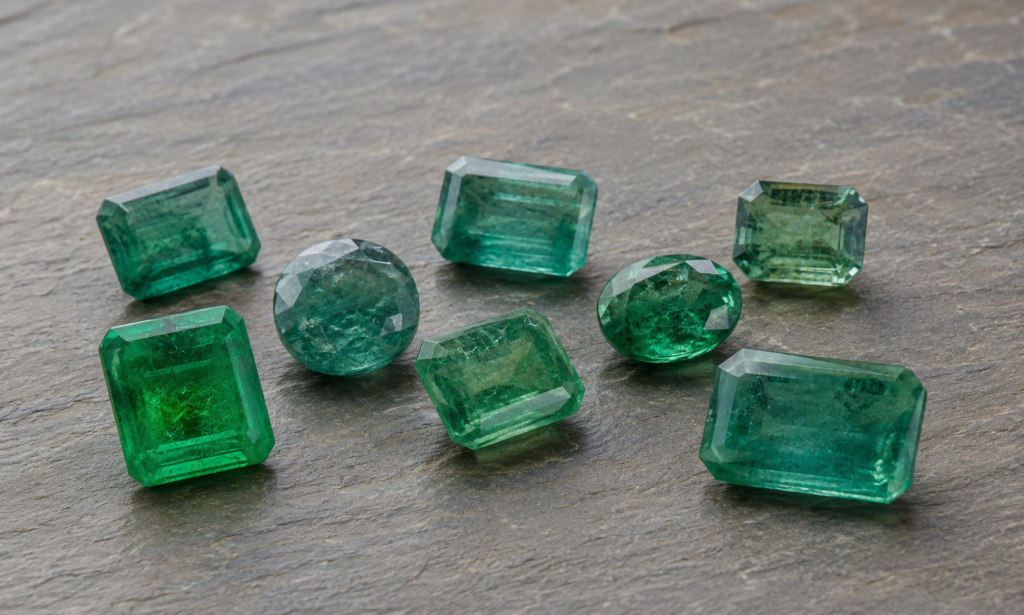
These can be useful tendencies, but they are not rules. Emerald appearance overlaps between sources, and individual stones from the same country can differ considerably.
Origin can influence character. It does not give every emerald from a country the same uniform.
“Looks Colombian” Is Not the Same as “From Colombia”
Expressions such as “Colombian colour,” “Zambian character” or “looks Colombian” may describe a visual impression. They do not establish geographic origin.
Professional origin determination uses multiple lines of gemological and analytical evidence. Because characteristics can overlap between sources, a laboratory may sometimes be unable to reach a definitive origin conclusion.
A look can suggest an origin. It cannot prove one.
Origin Matters More as the Emerald Becomes More Exceptional
For an everyday emerald chosen primarily because its colour is beautiful, geographic origin may have relatively little influence on the decision. The conversation can change as the gemstone becomes larger, rarer and finer.
When an emerald combines exceptional colour, strong transparency, attractive cutting and desirable treatment characteristics, provenance can become more important to collectors and the high-end market.
The finer the emerald becomes, the more room there is for origin to matter.
Origin Is Only One Part of the Story
Consider a Colombian emerald with significant clarity enhancement beside a Zambian emerald with minor enhancement. Origin alone cannot tell you which stone is preferable.
Treatment is a different dimension from origin, just as colour, transparency, cut and size are different dimensions. Each piece of information helps explain the gemstone, but none should automatically erase the others.
Where an emerald formed and what happened to it afterward are two different parts of its story.
When Should You Ask for Proof of Origin?
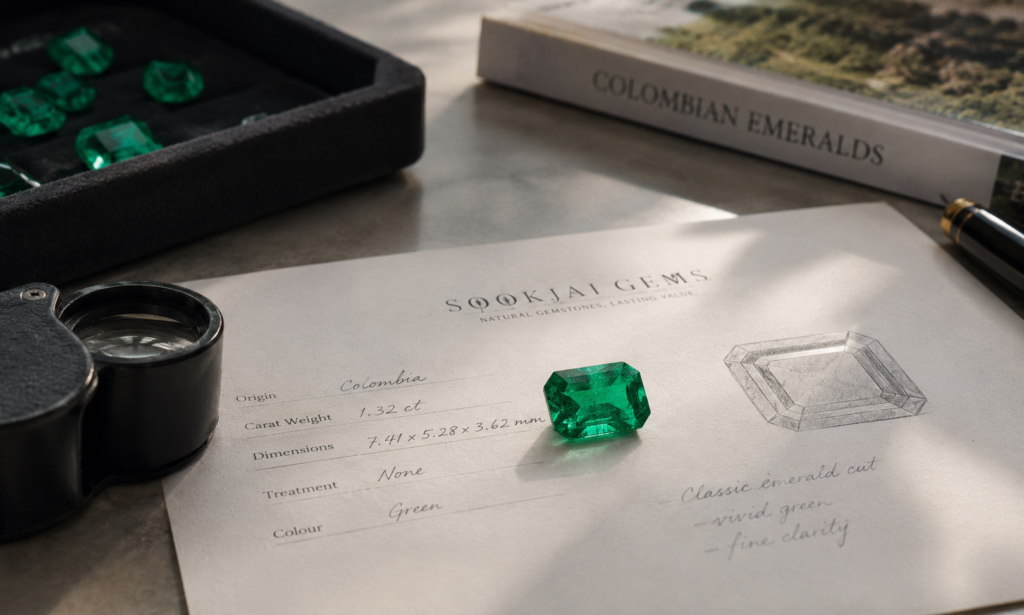
The importance of documentation increases when the country name materially affects the asking price. If a seller is requesting a meaningful premium specifically because an emerald is Colombian—or because of another commercially significant origin—independent laboratory evidence becomes much more valuable.
The more value the origin name adds, the more important it becomes to prove the origin name.
So Which Should Come First: The Emerald or the Origin?
Begin by experiencing the stone. Do you actually like it? Then understand what you are seeing: its colour, transparency, clarity character, cut and size.
Next, understand what has been done to it, including any clarity enhancement. Then consider where it came from and what that origin contributes to its history, rarity or market position.
Finally, ask what you are paying for. Is the premium coming from the beauty of the stone, its size, treatment, rarity, provenance, origin—or a combination of them?
See the emerald first. Read its biography second.
When Two Emeralds Are Equally Beautiful, Origin Becomes Interesting
Origin becomes especially useful when two emeralds have already earned your attention. If both have colours you love, comparable quality, suitable treatment and prices within reach, their different histories can become a meaningful reason to choose.
Someone may value Colombia for its centuries of emerald history, Zambia for its modern mining story, Brazil for an evolving reputation, or Nigeria because its lesser-known origin feels personally interesting.
That is not an origin ranking. It is another layer of personal value.
Origin becomes most useful after the emerald has already earned your attention.
The Emerald Comes Before the Map
Before an emerald became Colombian, Zambian, Brazilian or Nigerian in the language of the market, it was a crystal formed by a particular geological event beneath the earth.
Humans later added borders, mine names, trade histories, reputations and premiums. Those things can be meaningful, and at the highest levels of the market they can matter considerably. But they cannot decide how an emerald makes you feel when you finally see it.
A laboratory can investigate identity, treatment and geographic origin. It cannot choose which emerald you find beautiful.
Origin can tell you where an emerald’s story began. It cannot tell you whether that emerald should become part of yours.