
Spinel is unusual among major coloured gemstones because natural material is commonly encountered without routine treatment. That does not mean spinel can never be treated. It means treatment is relatively uncommon compared with gemstones such as ruby and sapphire, where heat treatment is a familiar part of the market.
This distinction matters. “Commonly untreated” and “never treated” are not the same statement. For spinel, treatment history is still information that should be understood rather than assumed.
Is Natural Spinel Usually Untreated?
Yes—untreated natural spinel is common in the gem market. GIA describes spinel as rarely treated, and research on heat-treated spinel notes that top-quality natural spinel has largely escaped the kind of large-scale treatment processes familiar in corundum.
That makes spinel different from ruby and sapphire in an important practical sense. A fine natural spinel does not need to be unusual simply because no treatment has been detected; untreated material is already a normal part of the market.
Untreated is common in natural spinel. It should still be verified when the distinction matters.
Why Isn’t Spinel Routinely Heated Like Ruby or Sapphire?
Spinel can respond to heat, but heat treatment never developed into the same large-scale commercial tradition seen with corundum. In practice, the natural spinel market already contains substantial untreated material with attractive colour and transparency, and the results of heating are not used routinely across the market in the same way.
It would be too simple to say that heating “does not work” on spinel. Laboratory research shows that heating can alter colour and internal features in some stones. The more accurate point is that routine enhancement is not a defining part of the natural spinel market.
Can Spinel Be Heat Treated?
Yes. GIA has documented heat-treated natural spinel and developed criteria for distinguishing heated material from untreated natural spinel and from synthetic spinel.
Spinel can be heat treated, but treatment detection is not always straightforward. In many cases, a conclusive opinion may require advanced spectroscopy and suitable reference material, so not every laboratory will report a definitive heated or unheated result.

Other Treatments Have Also Been Documented
Heat is not the only treatment reported in spinel. GIA notes that fracture filling may be used to improve the apparent clarity of a fractured stone, although this is rarely done.
More specialised colour treatments have also appeared. In 2015, GIA laboratories identified natural spinel that had undergone cobalt diffusion, producing strong blue colour through high-temperature treatment with added cobalt and iron. In 2023, GIA researchers reported nickel diffusion in spinel, producing blue-to-green colour in pale starting material.
These treatments are important because they exist, not because they are common. A documented treatment can be commercially relevant without representing the majority of spinel in the market.
A treatment can exist without being common.
Blue Spinel Deserves Extra Attention
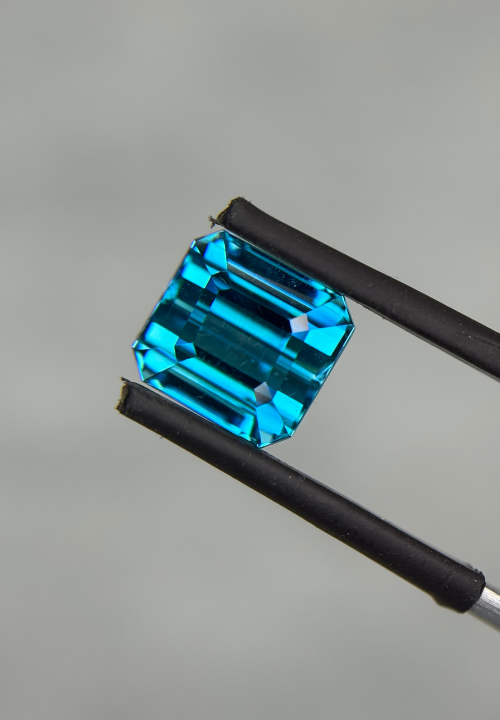
Blue spinel is a useful example of why treatment and colour should be considered separately. Natural blue spinel can owe its colour to trace elements including cobalt and iron, and intensely saturated blue material can be rare and valuable.
But vivid blue appearance alone does not tell us whether a stone is natural, synthetic or treated. GIA has documented both cobalt-diffused and nickel-diffused natural spinel, and synthetic blue spinel is also well known in the market.
For a high-value blue spinel—especially one carrying a cobalt-related claim—independent laboratory examination can provide useful confirmation of natural origin and detectable treatment.
Natural Does Not Automatically Mean Untreated
Two different questions are often mixed together:
| Term | What It Describes |
|---|---|
| Natural | The gemstone formed through natural geological processes |
| Synthetic / Laboratory-grown | The material was produced by humans rather than formed naturally |
| Untreated | No relevant treatment has been detected within the scope of examination |
| Treated | A process has been used to modify appearance or other properties |
A natural spinel can therefore be untreated or treated. Likewise, identifying a stone as natural does not by itself answer the treatment question.
Does Untreated Spinel Automatically Mean More Valuable?
Not automatically. Treatment status is one part of a gemstone’s description, but value still depends heavily on colour, size, clarity, cut, rarity, origin in some stones and overall market demand.
This point is especially relevant to spinel because untreated material is already common. “No treatment” should not be turned into an artificial rarity claim by itself. A visually ordinary untreated spinel does not become more desirable simply because it has not been treated.
No treatment is information—not a guarantee of beauty.
Should Spinel Have a Laboratory Report?
Not every spinel needs a laboratory report. The usefulness of one depends on the stone and the claims being made.
For a valuable red spinel, a rare saturated blue, a significant origin claim, or any stone where treatment status materially affects the purchase decision, an independent report can be useful. For lower-value material with no unusual treatment or origin claim, formal reporting may be less important.
GIA’s coloured-stone reports identify whether spinel is natural or laboratory-grown and list detectable treatments. Red spinel can also be submitted for geographic-origin determination.
Why Untreated Spinel Still Matters
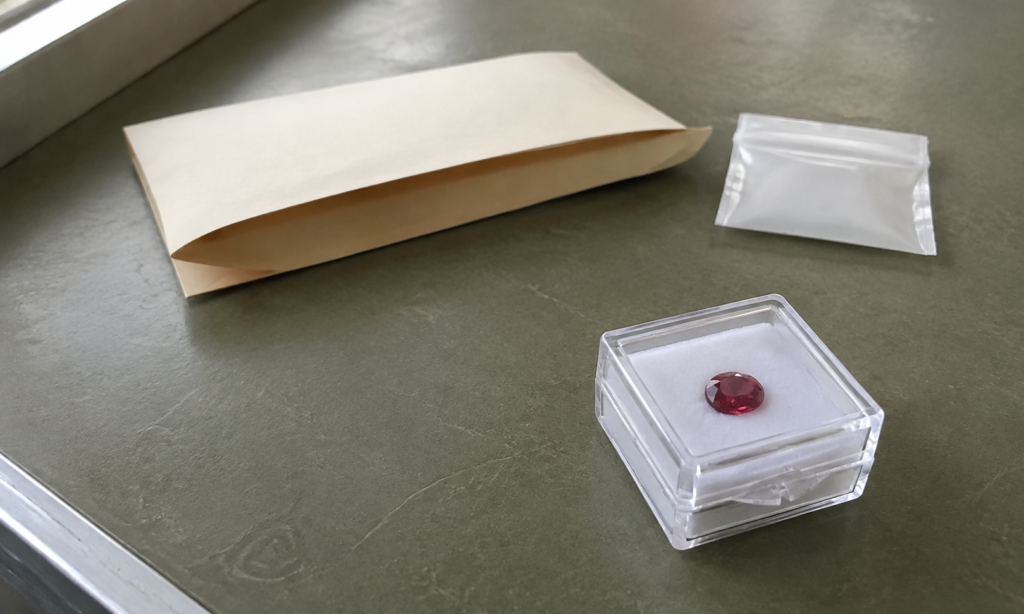
For some people, one of spinel’s attractions is that many fine stones reach the market with their natural colour essentially as it formed, without the routine enhancement commonly encountered in some other gemstone categories.
That can be meaningful without becoming a ranking. Someone may value the treatment history of a stone; someone else may care more about its colour or design potential. Both can understand the same information and choose differently.
The most useful approach is simple: know whether the spinel is natural, understand any treatment that has been identified, and then judge the individual gemstone for what it is.
Treatment status tells us part of a gemstone’s story. It does not tell us whether the gemstone is beautiful.
Natural spinel is commonly encountered without treatment, which gives its market a different character from ruby and sapphire. But “commonly untreated” should never become “never treated.” The distinction is small in wording and important in meaning.