
Mention garnet and many people picture a deep red gemstone: wine-red, dark crimson or reddish brown. That image is not wrong. Red garnets have a long jewelry history and are widespread in nature. But they represent only one part of a much larger mineral family.
The familiar deep-red garnet is real. It is simply not the whole story.
Garnet Is a Group, Not a Single Mineral
Unlike a gemstone name that refers to one mineral species, “garnet” refers to a group of closely related minerals. Members share the same basic crystal structure while differing in chemical composition. Those differences help create the remarkable range of colours and properties seen across garnet.
“Garnet” is less like the name of one gemstone and more like the name of a mineral family.
Meet the Main Members of the Garnet Family
Five garnet species are especially important as gemstones: pyrope, almandine, spessartine, grossular and andradite. Uvarovite is another member, famous for green colour, although its crystals are usually too small for conventional faceting. These names describe different mineral members within the broader family.
The word garnet brings several mineral species together under one family name.
Garnets Do Not Always Fit Into Neat Boxes
Nature does not always produce chemically pure end-members. Many garnets contain mixtures of components from two or more species, creating compositional series such as pyrope–almandine and almandine–spessartine. A garnet can therefore sit chemically between members rather than fitting into a perfectly isolated box.
Nature does not always draw a clean line between one garnet species and the next.
Species and Variety Are Not the Same Thing
This distinction becomes useful when familiar gem names appear. Grossular is a species; tsavorite is a green variety of grossular. Andradite is a species; demantoid is its green gem variety. Rhodolite is associated with pyrope–almandine compositions, while hessonite is a variety of grossular. A gem-trade name is therefore not always a mineral species name.
A garnet’s market name and its mineral species are not always the same thing.
Why Do We Think of Garnet as Red?
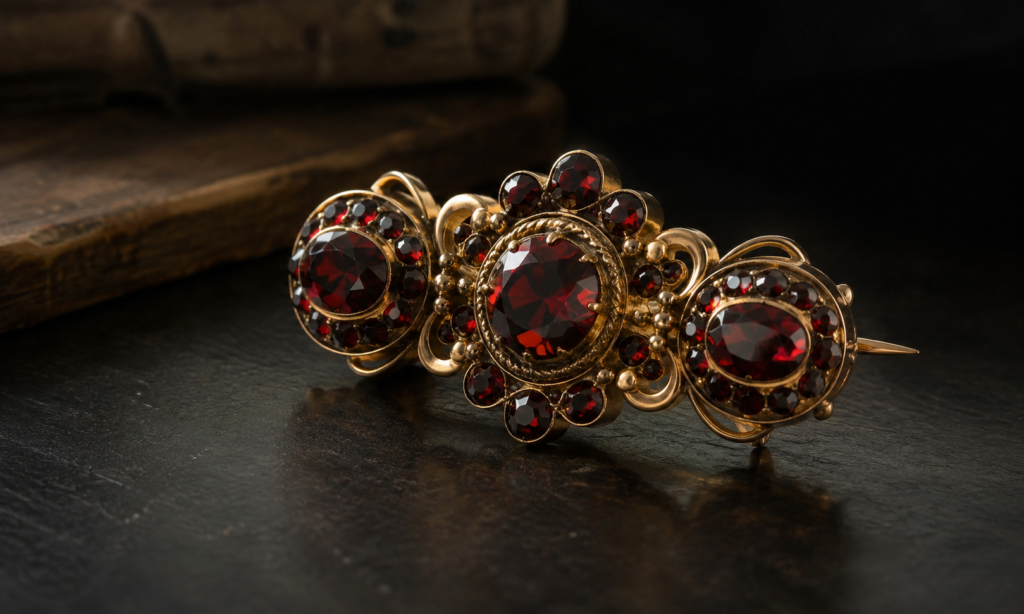
Red garnets have been encountered and used for centuries. They appeared in historical jewelry, were associated with clergy and nobility in the Middle Ages, and Bohemian pyrope became especially fashionable during the Victorian era. Over time, the red side of the family became garnet’s most familiar public face.
Red became the face of garnet because it was the part of the family people encountered most often.
Then the Garnet Palette Opens Up
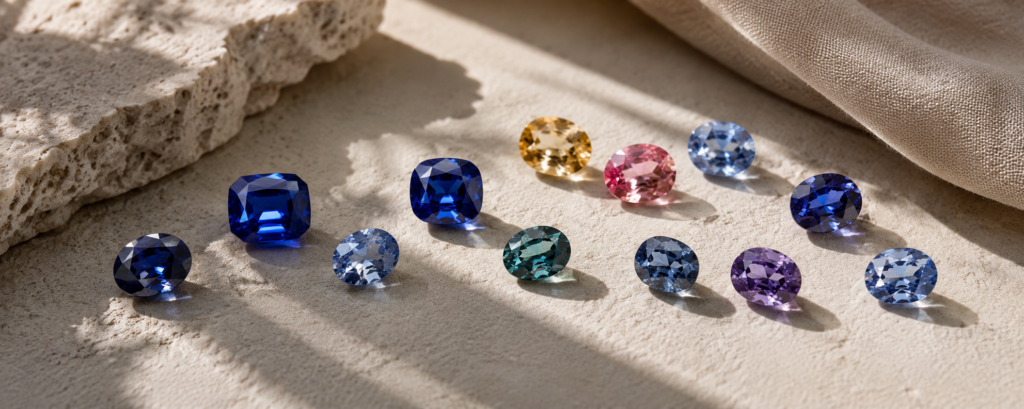
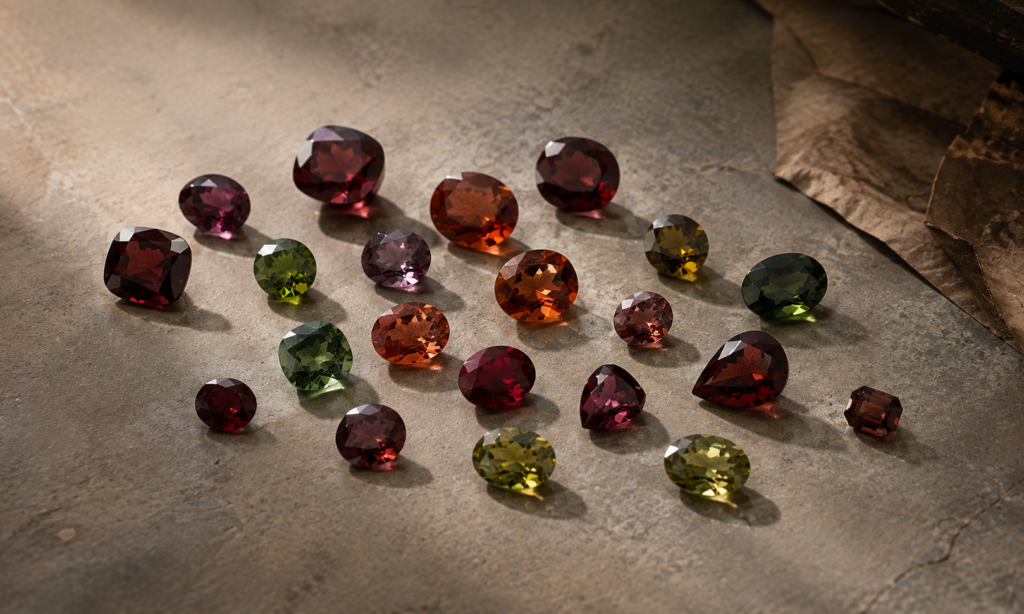
Move beyond familiar red and the family changes dramatically. Rhodolite can bring purple-red tones; spessartine can be vivid orange; hessonite often occupies warm orange to brownish-red territory; tsavorite and demantoid introduce very different greens. Garnet can also appear yellow or yellow-green, and some material can show colour change.
Once we move beyond red, garnet begins to look less like one gemstone and more like a palette.
Two Green Garnets Can Be Completely Different Minerals
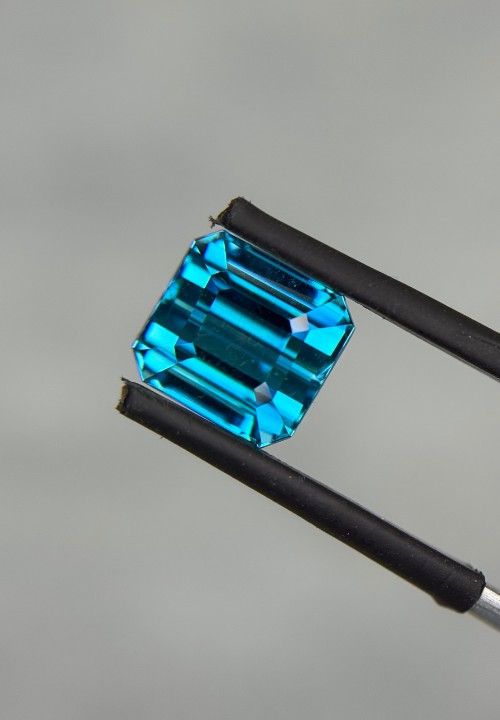
Tsavorite and demantoid make the family concept easy to see. Both can be green garnets, yet tsavorite belongs to grossular while demantoid belongs to andradite. Their properties are not identical either: andradite has higher refractive index and dispersion than grossular. Sharing a colour does not mean sharing the same mineral identity.
Two garnets can share a colour without sharing the same mineral identity.
Garnets Can Behave Differently Too
Members differ in more than colour. Demantoid is known for strong dispersion and visible fire. Hessonite can show a distinctive roiled internal appearance. Some spessartine contains eye-visible inclusions, while many red almandine, pyrope and rhodolite gems are encountered without obvious inclusions to the unaided eye.
Being part of the same family does not mean every garnet behaves the same way.
Some Garnets Can Even Change Colour
Certain garnets can change their apparent colour under different light sources. This phenomenon surprises people who associate garnet with one stable deep-red appearance. Its chemistry deserves a separate discussion; here, it simply demonstrates how much variety the family can contain.
Even the idea that garnet has one fixed colour can sometimes be challenged by the gemstone itself.
Garnet Is Found Across the World
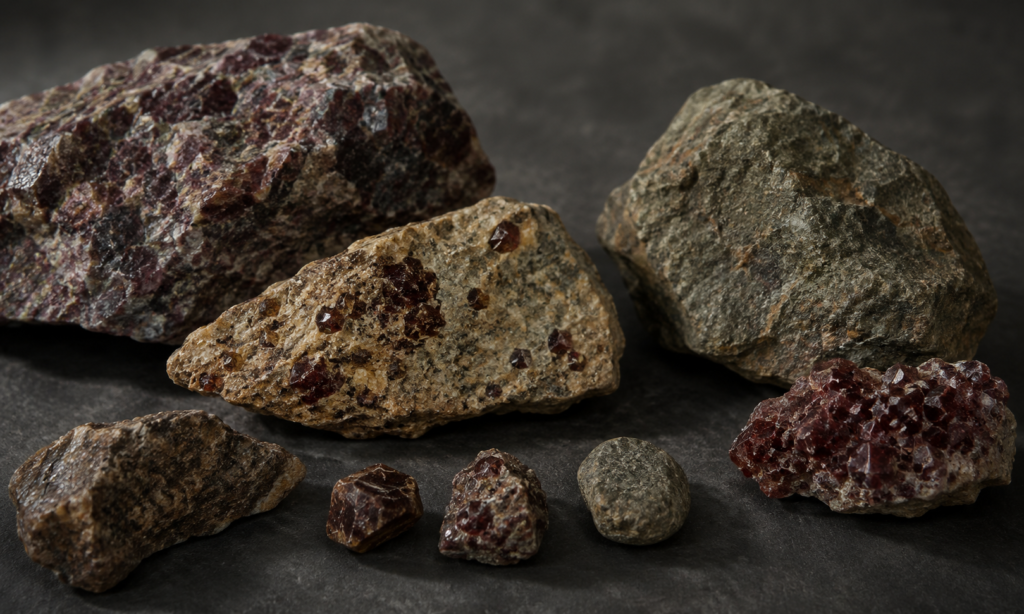
Garnet occurs in many geological environments and regions. Red garnets are widespread, while some varieties depend on more unusual conditions. Tsavorite, for example, requires particular rock chemistry and formation conditions. There is no single landscape that represents every member of the family.
There is no single landscape that tells the whole geological story of garnet.
Garnet Is Not Defined by One Level of Rarity
Asking whether garnet is rare is difficult without first asking which garnet. Some red garnets are widespread, while fine tsavorite or demantoid can be considerably less common, especially in larger sizes. Rarity belongs to the particular material, quality and size being discussed rather than to the entire family.
Rarity belongs to the particular garnet we are talking about—not to the family as a whole.
The Same Is True of Value
Garnet has no single value identity either. Size affects varieties differently. Large almandine is relatively available, while fine larger demantoid and tsavorite are much less common. Colour, clarity, cut, size, variety and individual character all influence how a particular garnet is understood in the market.
There is no single garnet market, just as there is no single garnet appearance.
How Durable Is Garnet?
Garnets generally fall around 6.5 to 7.5 on the Mohs scale, depending on species, and have been used in jewelry for centuries. Their exact properties vary across the family, so intended wear and setting still matter. Garnet is a jewelry gemstone family, not merely a group of collector minerals.
Why Garnet Is So Interesting for Jewelry
For a designer, the family offers many starting points: different colours, optical characters, sizes, cuts and moods. Designing with garnet begins less with a fixed idea of what “a garnet” should look like and more with understanding the particular garnet in front of us.
Designing with garnet begins with understanding which garnet is in front of us.
There Is No Single “Garnet Look”
Place almandine, rhodolite, spessartine, tsavorite and demantoid beside one another and someone unfamiliar with gemstones might never guess that they belong to the same mineral family. That visual distance between relatives is one of garnet’s most fascinating qualities.
The more garnets we see, the harder it becomes to describe garnet with a single colour, mood or personality.
Garnet Is a Family Worth Exploring
So what is garnet? It is not simply a red gemstone, but a family of closely related minerals capable of producing remarkably different gems. The deep reds that shaped its historical identity remain important, but they are only one chapter alongside orange, purple, green, yellow and even colour-changing material.
To discover garnet is not to discover one gemstone. It is to discover how much variety can exist within one mineral family.