
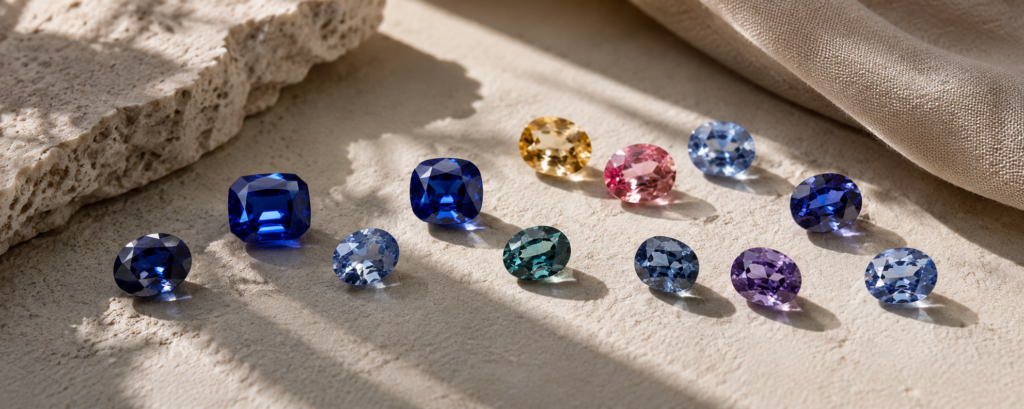
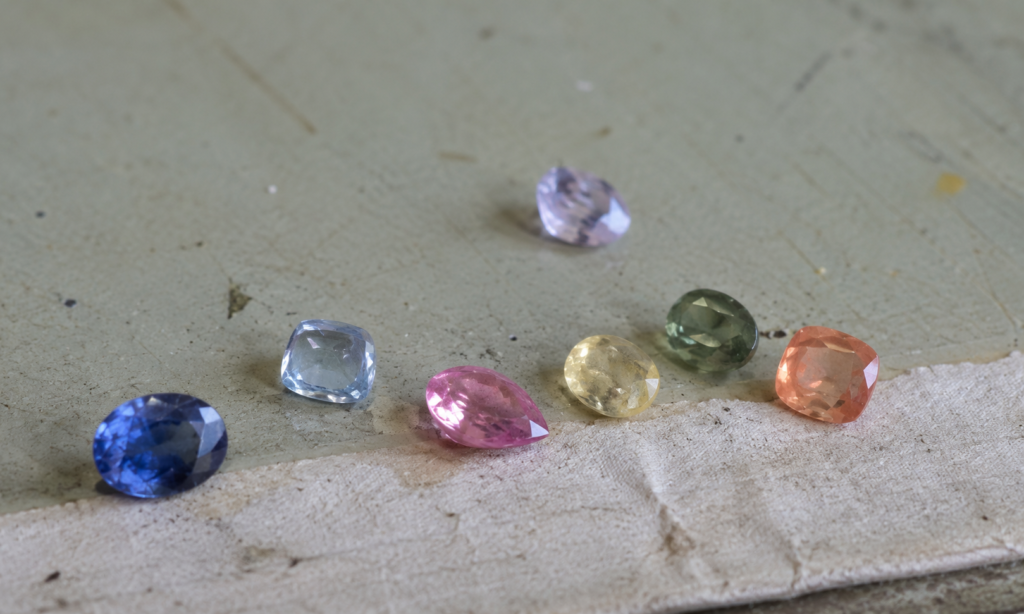
For many people, the word sapphire immediately brings to mind a deep blue gemstone. Blue is certainly sapphire’s best-known colour, but it is only one part of a much broader family. Sapphire can be pink, yellow, green, orange, purple, colourless, or show more than one colour within the same stone.
Understanding sapphire begins with separating the gemstone itself from the colour names, origins and trade descriptions that surround it. At its foundation, sapphire is a variety of the mineral corundum. From there, subtle differences in chemistry, crystal growth, cutting and treatment create an unusually wide range of appearances.
What Exactly Is Sapphire?
Sapphire belongs to the mineral species corundum, a crystalline form of aluminium oxide with the chemical formula Al₂O₃. In its pure state, corundum is colourless. Small amounts of other elements incorporated into the crystal structure can create the colours we associate with natural sapphire.
Iron and titanium are important contributors to blue colour in sapphire, while chromium can contribute to pink and, at higher influence, red. Red gem-quality corundum is given a different variety name: ruby. In gemological usage, corundum of other colours is described as sapphire.
| Property | Sapphire |
| Mineral | Corundum |
| Chemical composition | Al₂O₃ |
| Mohs hardness | 9 |
| Colour range | Colourless and many colours; red gem-quality corundum is ruby |
| Common use | Faceted gemstones, cabochons and jewelry |
Sapphire Is Not Only Blue
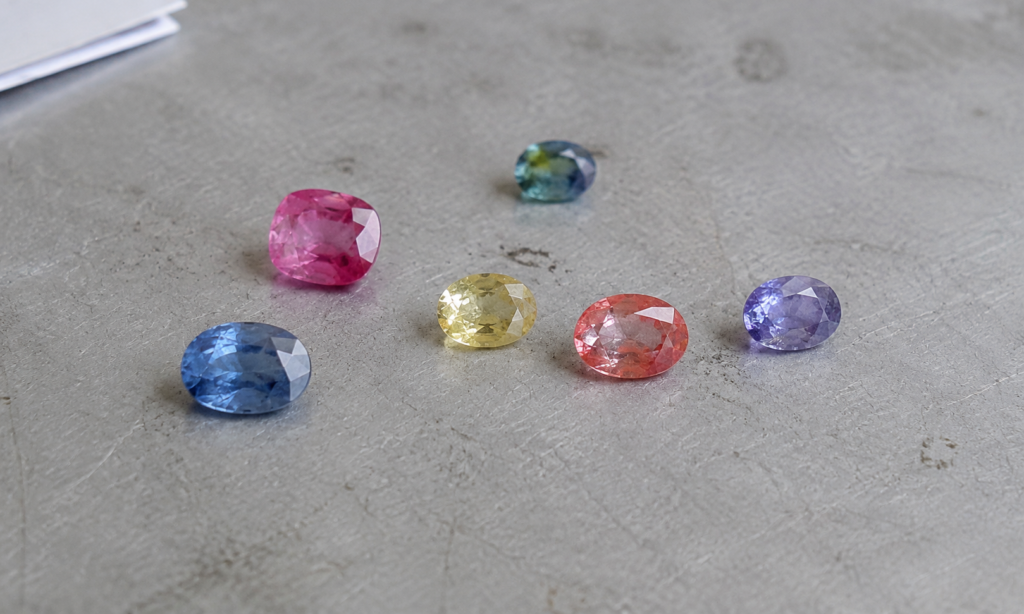
Blue sapphire has a long-established place in jewelry, but sapphire occurs across a remarkably broad colour range. Stones outside the blue range are often grouped under the trade term fancy sapphire. These can include pink, yellow, orange, green, purple and colourless sapphire, as well as intermediate hues.
Some sapphires also show more than one colour. Parti-coloured stones may contain visibly different colour zones, while colour-change sapphires can appear different under different light sources. Padparadscha is a special colour description used for a narrow range of pinkish orange to orangy pink sapphire, subject to laboratory and trade interpretation.
Colour names are useful, but they are only a starting point. Two sapphires described by the same general colour can look very different because hue, tone and saturation affect how bright, dark, vivid or subdued the stone appears.
Where Does Sapphire Come From?
Natural sapphire forms in particular geological environments and is mined in several parts of the world. Well-known sources include Sri Lanka, Madagascar, Myanmar and Australia, alongside deposits in East Africa and other regions.
Origin can matter in the gemstone market, particularly when a fine stone comes from a historically important source. But origin alone does not determine whether an individual sapphire is beautiful. A single mining region can produce a wide range of colours, clarity and overall quality, and sapphires from different origins can sometimes have similar face-up appearances.
When geographic origin is commercially important, it should be treated as a gemological question rather than assumed from appearance. A qualified independent laboratory may be able to provide an origin opinion when the stone contains sufficient diagnostic evidence.
What Makes One Sapphire Different From Another?
No single feature explains the appearance of every sapphire. Colour, clarity and cut interact with one another, while size, treatment, origin and rarity can also influence how a stone is understood and valued. For a first visual assessment, three areas are especially useful to separate.
Colour
Colour is one of the most influential quality factors in sapphire. It is not simply a question of whether a stone is blue, pink or yellow. The exact hue, how light or dark the stone appears, the strength of its saturation, colour zoning and how the colour behaves under different lighting can all change the overall impression.
Clarity
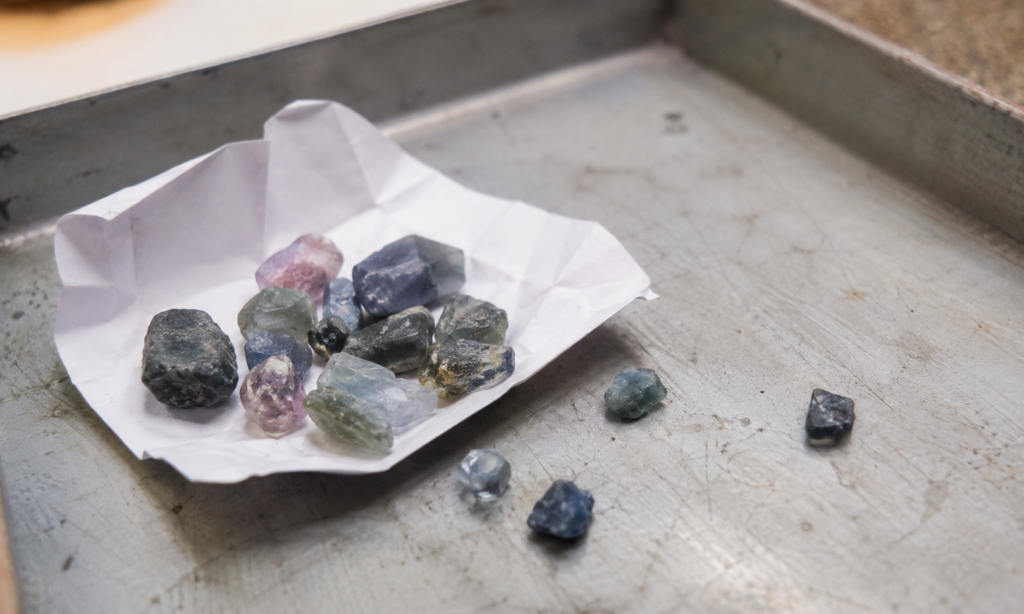
Natural sapphires commonly contain internal characteristics. These may include mineral crystals, fine needles, healed fissures or areas of colour zoning. Their importance depends on what they are, where they sit and how much they affect transparency, durability and the face-up appearance of the stone. A sapphire does not need to be internally flawless to be beautiful.
Cut
Cut is more than the outline shape. The orientation and proportions chosen by the cutter affect how light moves through the sapphire, how its colour is presented and whether areas of the stone appear lively, washed out or overly dark. Because sapphire rough can show colour zoning and directional colour, cutting decisions often involve balancing appearance with weight retention.
Heated and Unheated Sapphire
Heat treatment has a long history in the sapphire trade and is commonly used to improve or modify colour and, in some material, apparent clarity. A heated sapphire is still sapphire; the treatment describes what has been done to the material after it formed in nature.
An unheated sapphire is one in which a laboratory finds no evidence of heat treatment. For fine stones, confirmed absence of heat can add rarity and may affect value, but “unheated” is not a guarantee that a sapphire will automatically have better colour, clarity or cutting than a heated stone.
Treatment should therefore be understood as a separate piece of information, not used as a substitute for looking at the gemstone itself. Other sapphire treatments also exist, so when treatment status matters, an independent laboratory report can provide important context.
Why Sapphire Works So Well in Jewelry
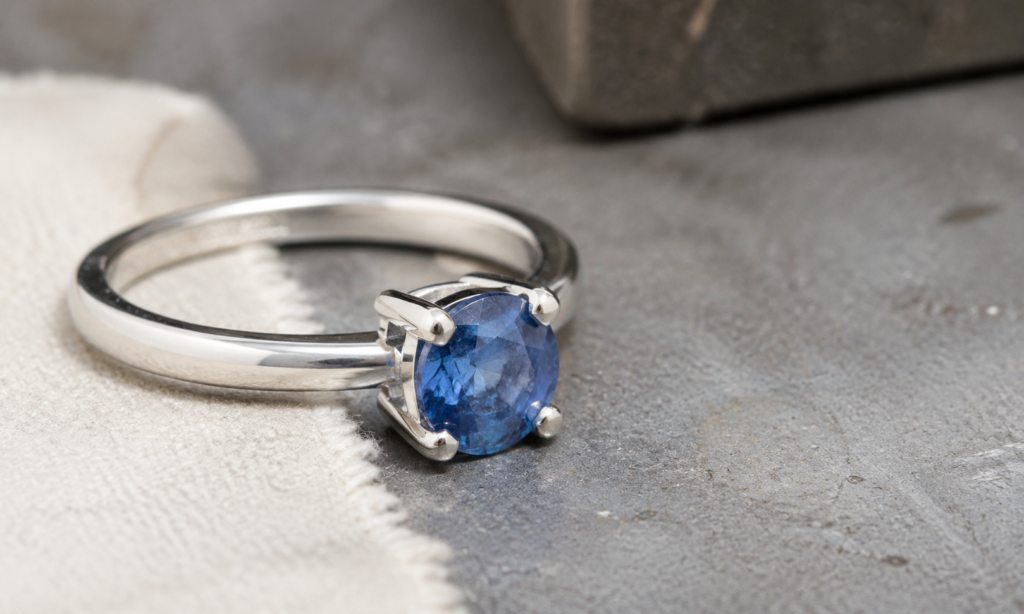
Sapphire combines colour variety with strong practical durability. Corundum ranks 9 on the Mohs scale of hardness, meaning it has high resistance to scratching compared with most other gem materials. It also has excellent toughness and no cleavage, making sapphire well suited to many forms of jewelry, including rings that may be worn frequently.
Hardness should not be confused with being indestructible. A sapphire can still chip or abrade if it receives a sufficiently hard impact, particularly around exposed edges or vulnerable points. Setting design, workmanship and normal care remain important.
How Should You Begin Looking at a Sapphire?
A useful way to approach sapphire is to look at the stone before relying too heavily on its labels. Start with its face-up appearance. Is the colour attractive to you? Does the stone remain lively, or does a large area become dark? Are inclusions distracting without magnification? Does the cut support the colour and brightness? Then consider the information that cannot be judged reliably by appearance alone, such as treatment and, when relevant, geographic origin.
Laboratory reports, trade colour names and origin descriptions can all add useful context, but they answer different questions. They do not replace the visual character of the individual gemstone.
A sapphire is better understood by looking at the stone first, and the label second.
This foundation makes the details easier to understand. From here, sapphire can be explored more closely through colour, clarity, cut, treatment and the particular characteristics of blue, royal blue, cornflower blue and padparadscha sapphire.