
Spinel spent centuries hiding in plain sight. Some of the most famous red stones in royal collections were once called rubies, only to be identified later as a different gemstone entirely.
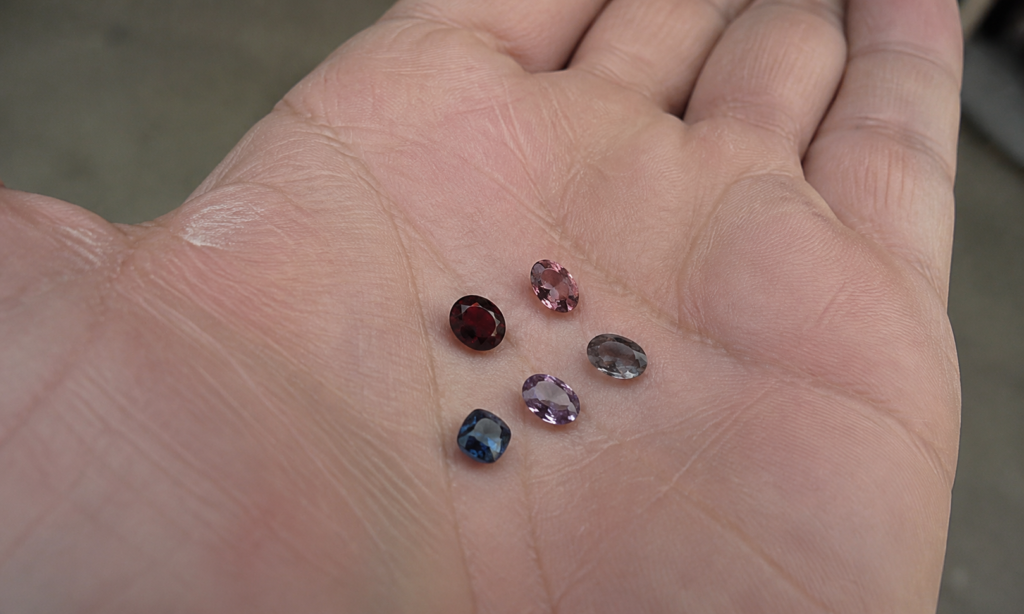
Today, spinel is appreciated on its own terms. It occurs in vivid red and pink, soft lavender, grey, violet, blue and other colours, and fine examples can be exceptionally transparent and lively. Its story is no longer about being mistaken for ruby; it is about being recognised as a gemstone with an identity of its own.
What Exactly Is Spinel?
Spinel is a mineral species in its own right. Gem-quality spinel is principally magnesium aluminium oxide, with the chemical formula MgAl₂O₄. It crystallises in the cubic system and is singly refractive, which contributes to the clean, bright appearance seen in many transparent stones.
Ruby and sapphire, by contrast, belong to the mineral species corundum and have the chemical formula Al₂O₃. The two gem families can overlap strongly in colour, but they are mineralogically different.
| Property | Spinel | Ruby / Sapphire |
|---|---|---|
| Mineral | Spinel | Corundum |
| Main chemistry | MgAl₂O₄ | Al₂O₃ |
| Crystal system | Cubic | Trigonal |
| Mohs hardness | 8 | 9 |
Why Was Spinel Mistaken for Ruby?
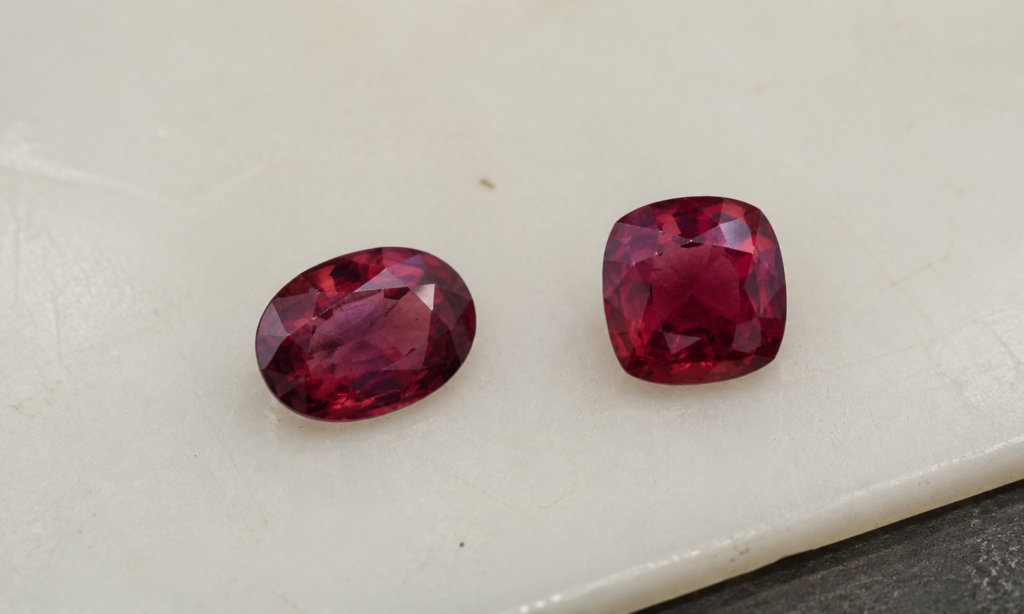
Before modern mineralogy and gemological testing, transparent red gemstones were often classified largely by appearance. Fine red spinel can resemble ruby closely, and both gemstones can occur in some of the same gem-producing regions.
As a result, important red spinels spent centuries under the name ruby. The stone known as the Black Prince’s Ruby in the British Imperial State Crown is actually a red spinel. The famous Timur Ruby is also spinel rather than corundum.
The eventual separation of spinel from ruby was an important moment in the development of mineralogy and gemology: two stones that can look remarkably similar were recognised as fundamentally different minerals.
Spinel Comes in Far More Than Red
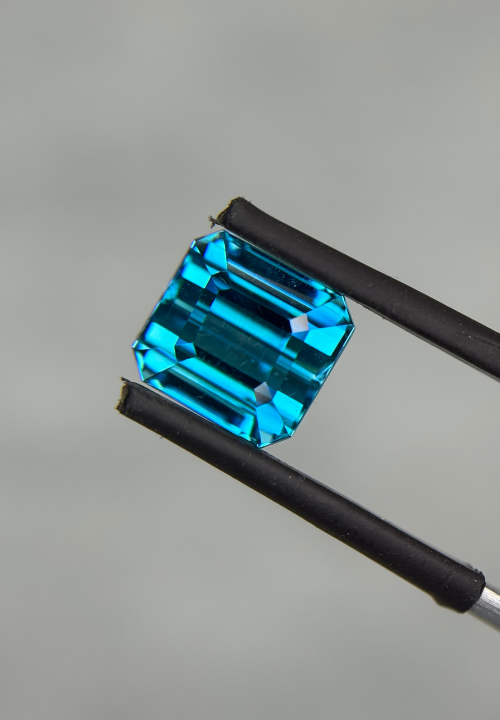
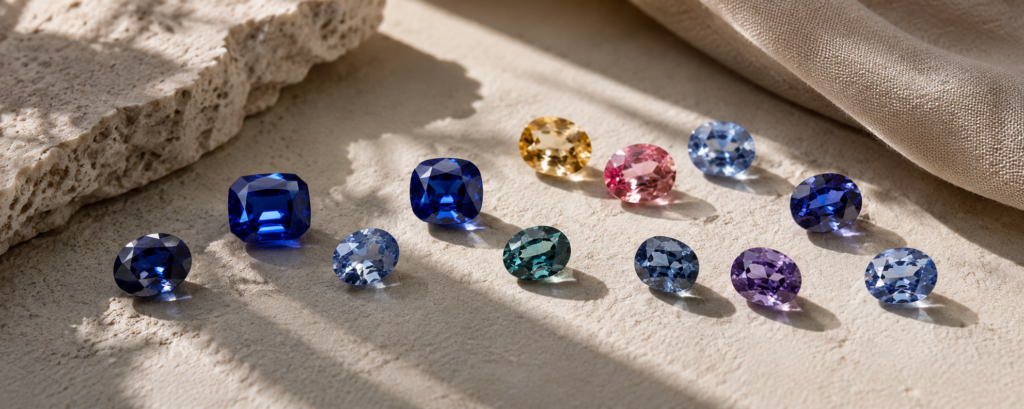
Red may have given spinel its most famous historical identity, but the mineral has a remarkably broad colour range. Natural spinel can occur in orange, red, pink, purple, violet, blue and bluish-green hues, as well as softer lavender and grey appearances.
Some stones are vivid and highly saturated. Others are deliberately quieter: grey, silver-lavender or smoky violet spinels have a very different character from intense red or electric blue material. These colours are not failed versions of red spinel; they are separate parts of the same mineral’s spectrum.
What Gives Spinel Its Colour?
Small amounts of trace elements influence colour in spinel. Chromium is responsible for many intense red and pink stones. Iron contributes to a range of violet, blue and darker colours, while cobalt can produce the highly saturated blue found in some rare spinels.
Because different trace elements and concentrations can interact, colour in spinel is better understood as a range than as a set of rigid formulas. Two red spinels can differ in warmth, saturation and brightness, just as two blue spinels can have completely different visual character.
How Durable Is Spinel?
Spinel ranks 8 on the Mohs scale and has good toughness, making it a durable gemstone for many forms of jewelry, including rings.
Hardness means resistance to scratching; it does not mean the stone is impossible to chip or abrade. Exposed facet edges can still be damaged by hard impacts, and normal care remains appropriate for frequently worn jewelry.
Does Natural Spinel Usually Receive Treatment?
One reason spinel has attracted increasing attention from collectors is that untreated natural material is common in the market. Compared with ruby and sapphire, where heat treatment is a familiar part of the trade, fine spinel is often encountered without routine appearance-enhancing treatment.
That does not mean spinel is never treated. GIA has documented colour-altering heat treatment, fracture filling and more specialised treatments, including cobalt and nickel diffusion in blue-to-green material. Treatment status should therefore be determined from appropriate gemological examination rather than assumed from the gemstone name.
Natural and Synthetic Spinel Are Different Things
Synthetic spinel has been manufactured for more than a century and is widely available in the gem market. Laboratory-grown spinel is not the same as natural spinel simply because the finished stone can look similar.
Synthetic material can be produced in many colours and has often been used to imitate other gemstones as well. This makes clear disclosure important. When natural origin matters, a gemological laboratory can distinguish natural spinel from synthetic material using microscopic and analytical evidence.
Where Does Spinel Come From?
Important natural spinel sources include Myanmar, Sri Lanka, Vietnam, Tanzania, Tajikistan and Madagascar, among others. Different deposits have become known for different parts of the colour range: vivid red and pink, cobalt-bearing blue, lavender and other distinctive material.
As with sapphire, origin can add context without dictating appearance. Two spinels from the same country can look very different, while stones from different origins can sometimes overlap visually.
Spinel Is No Longer Automatically the “Lesser-Value” Stone
Older descriptions of spinel often frame it mainly as a less expensive substitute for ruby or sapphire. That is increasingly incomplete.
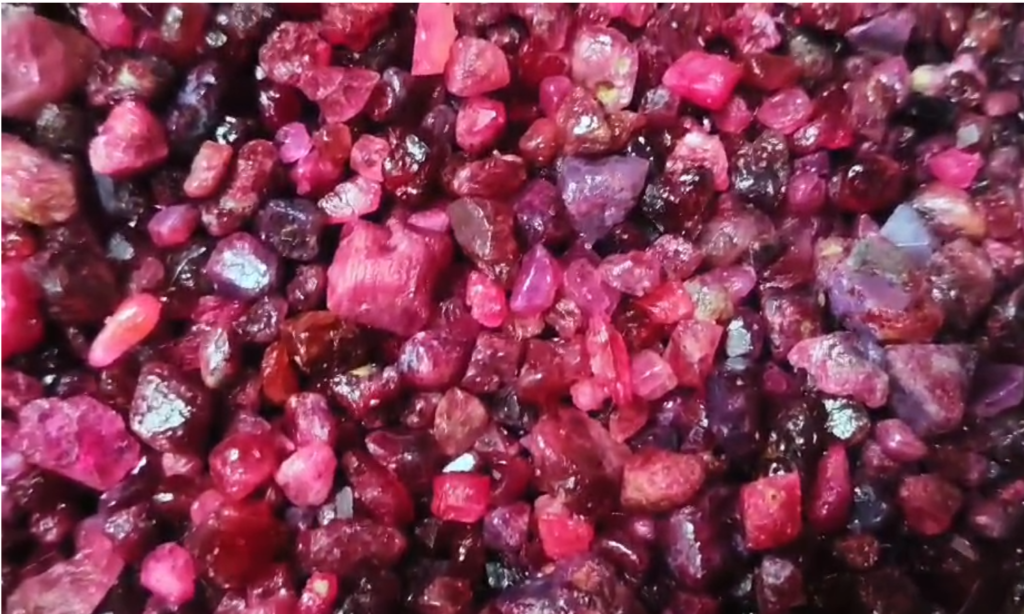
The modern spinel market has developed its own high-value categories. Exceptional red spinel, vivid pink material and rare cobalt-blue spinel can command very strong prices, particularly when colour, size, clarity and origin come together in a scarce stone. Public auction records and current high-end trade pricing show fine spinel reaching tens of thousands of US dollars per carat.
This does not mean that every spinel is worth as much as every sapphire, or that the two gem species follow identical markets. Exceptional sapphires can still reach much higher price levels. The more useful point is that spinel should no longer be understood as inherently the lower-value gemstone. At the fine end of the market, its value can overlap with—and in individual comparisons exceed—that of many sapphires.
Spinel has its own market, its own rarities and its own reasons for being valuable.
Why Has Spinel Become Better Known?
Modern gemology gave spinel a clear mineral identity. More recently, collectors and jewelry buyers have had greater access to exceptional material from sources such as Myanmar, Tanzania and Vietnam, while the limited supply of fine stones has become better understood.
Its appeal now comes from several directions at once: vivid natural colour, high transparency, a wide palette, durability suitable for jewelry and the fact that much natural spinel reaches the market without routine heat treatment.
GIA notes that demand for spinel has grown strongly and that, for some colours, demand exceeds supply. That shift helps explain why the gemstone is increasingly discussed as a collectible coloured stone in its own right rather than primarily through comparison with ruby.
Spinel Is Not “Almost Ruby”
A red spinel can resemble ruby. A blue spinel can occupy a colour space familiar from sapphire. Those similarities are part of spinel’s history, but they do not need to define its modern identity.
Someone may choose spinel because of its particular red, an electric cobalt blue, a muted grey or a soft lavender. None of those choices needs to be explained as settling for another gemstone.
Spinel does not need to imitate ruby or sapphire to be valuable as a gemstone.
The history of spinel begins with confusion. Its modern story is about recognition: recognition of a different mineral, a wider colour palette and a gemstone whose finest examples now occupy their own place in the coloured-stone market.