
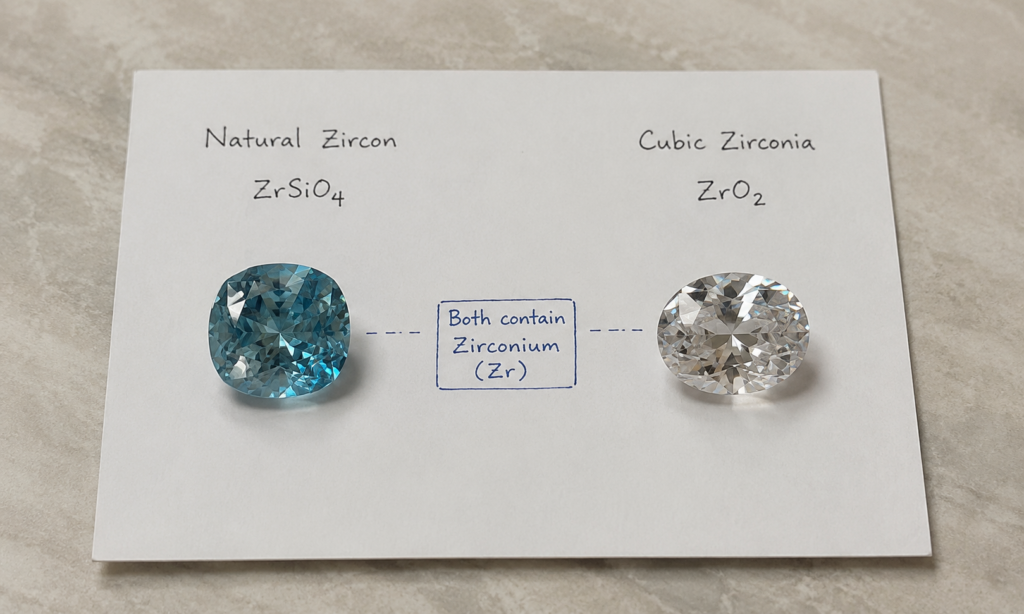
Zircon and cubic zirconia are often confused because their names sound similar, but they are fundamentally different materials. Zircon is a natural zirconium silicate mineral. Cubic zirconia is a manufactured zirconium dioxide-based material. Most importantly, cubic zirconia is not synthetic zircon.
Cubic zirconia is not man-made zircon. It is a different material altogether.
What Exactly Is Natural Zircon?
Natural zircon is zirconium silicate, with the chemical formula ZrSiO₄. It forms naturally in geological environments and occurs in rocks around the world. Some ancient zircon crystals from Western Australia have been dated to about 4.4 billion years, giving the mineral an extraordinary place in the study of early Earth.
Natural zircon begins in geology, not in a laboratory.
What Exactly Is Cubic Zirconia?
Cubic zirconia, usually shortened to CZ, is crystalline zirconium dioxide, ZrO₂, manufactured with stabilising ingredients that help maintain its cubic crystal structure. In jewelry it became especially familiar as a diamond simulant because colourless CZ can be transparent, brilliant and produced with considerable consistency.
That does not make cubic zirconia an inferior version of zircon. It simply means it is a different material with a different identity and purpose.
The difference is not real versus fake. The difference is one material versus another.
Why Do the Names Sound So Similar?
Both materials contain the element zirconium, which helps explain why their names sound related. Sharing one chemical element, however, does not make their chemical compositions or crystal structures the same.
Sharing zirconium does not make zircon and cubic zirconia the same gemstone.
Is Cubic Zirconia Synthetic Zircon?
No. In gemology, a synthetic gemstone is a laboratory-grown counterpart with essentially the same chemical composition, crystal structure and characteristic properties as its natural equivalent. Synthetic ruby, for example, is still corundum. Cubic zirconia does not share zircon’s composition or crystal structure, so it is not synthetic zircon.
“Synthetic” means a laboratory-grown counterpart. “Simulant” means something different that can resemble another gem.
Why Did Zircon Become Associated With Diamond in the First Place?
Long before cubic zirconia became familiar in jewelry, colourless natural zircon had already been used as a diamond alternative. Its high lustre, refractive index, brilliance and strong dispersion can create an appearance with considerable sparkle and spectral fire.
The later popularity of cubic zirconia as a diamond simulant, combined with the similarity of the names zircon and zirconia, made an already complicated story even easier to misunderstand.
Zircon’s resemblance to diamond is older than cubic zirconia itself.
They Can Both Sparkle—But They Do Not Behave the Same Way
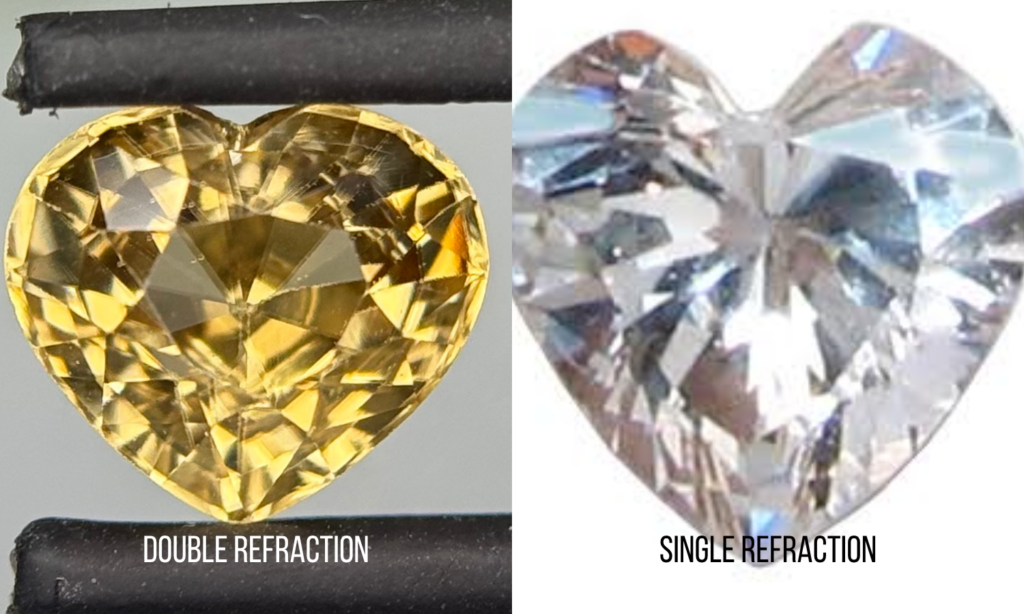
Both faceted zircon and cubic zirconia can return plenty of light, but their optical behaviour is not identical. Zircon is doubly refractive, so light can split into two rays as it travels through the crystal. Viewed through some faceted zircons, this can make facet junctions appear slightly doubled. Cubic zirconia, with its cubic crystal structure, is singly refractive and does not show the same doubling.
Both can return plenty of light. Zircon adds an optical signature of its own: doubling.
Fire Does Not Make Zircon Cubic Zirconia
Zircon naturally has relatively strong dispersion, the optical property that separates white light into spectral colours. Its rainbow flashes are therefore not evidence that the stone is artificial or that it must be cubic zirconia. Fire is part of zircon’s own optical character.
Zircon’s fire is not evidence that it is artificial. It is one of the natural mineral’s defining optical properties.
Natural Zircon Has Its Own Palette
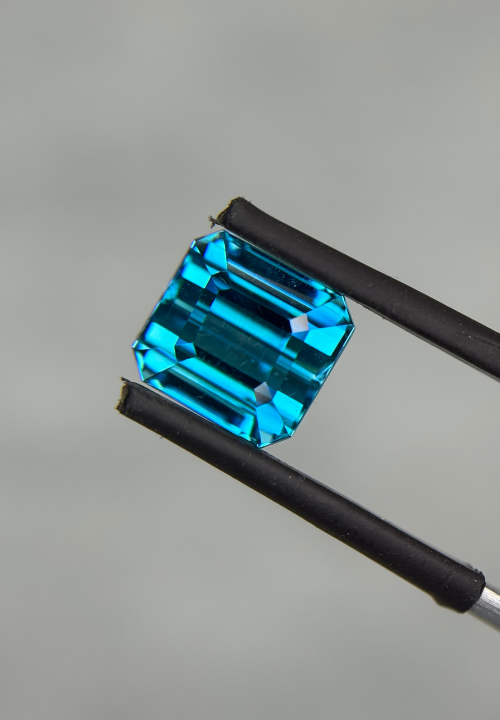
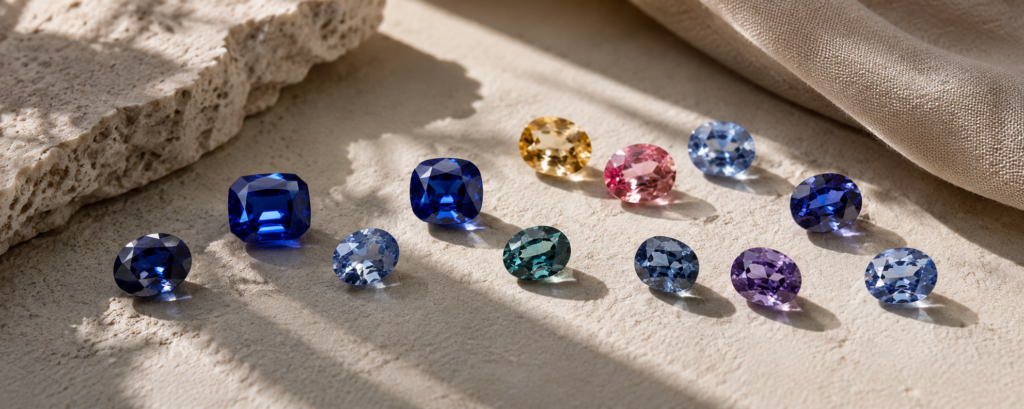
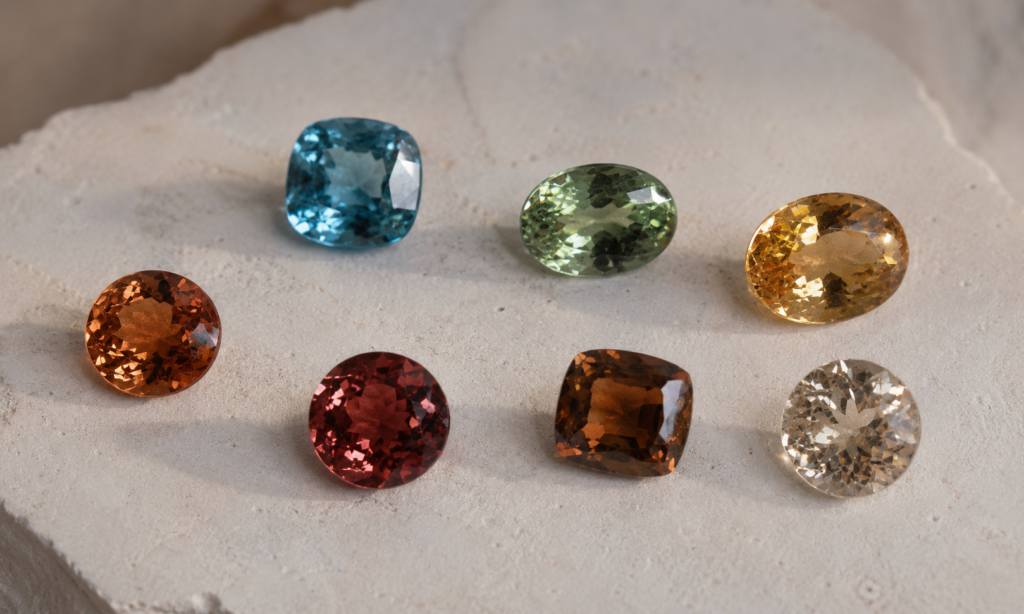
Natural zircon is much more than a colourless diamond look-alike. It occurs in blue, green, yellow, orange, red, reddish brown, brown and colourless appearances, along with shades between them. Once we begin looking at zircon as a coloured gemstone, defining it through diamond or cubic zirconia becomes increasingly unhelpful.
Once zircon becomes blue, green, golden or warm brown, the diamond comparison begins to miss the point entirely.
Natural Does Not Automatically Mean Untreated
A natural gemstone can still be treated. Heat treatment is especially common in blue zircon, and nearly all blue and near-colourless zircon in the market has been heated. A heated blue zircon remains natural zircon: the material formed in nature and was subsequently treated to modify its appearance.
A natural gemstone can be treated and still remain a natural gemstone.
Natural, Synthetic, Treated and Simulant Are Different Ideas
Natural describes material formed by geological processes. Synthetic describes a manufactured counterpart that essentially reproduces the material identity of a natural gem. Treated describes a gemstone that has undergone a process intended to alter appearance or another property. A simulant is a different material used because it can resemble another gem.
Under these definitions, heated blue zircon is natural and treated. Cubic zirconia used to resemble diamond is a manufactured simulant. These descriptions answer different questions and should not be treated as interchangeable labels.
Is Zircon Better Than Cubic Zirconia?
That comparison is less useful than understanding what each material actually is. Cubic zirconia is manufactured, consistent and widely available, and it has an established role as a diamond simulant. Natural zircon offers geological origin, natural variation, a broad colour range, strong fire and distinctive double refraction.
If someone specifically wants a natural gemstone, the distinction matters. It does not require turning the comparison into a hierarchy.
Understanding the difference is more useful than trying to declare a winner.
Can You Tell Zircon and CZ Apart Just by Looking?
An experienced observer may notice clues such as zircon’s facet doubling or characteristic optical appearance, but visual impressions should not be treated as absolute identification. Gemologists can separate materials using properties such as refractive behaviour, specific gravity and other appropriate gemological tests.
Appearance can suggest an answer. Gemological testing establishes one.
Why the Confusion Matters
Calling natural zircon cubic zirconia does more than mix up two similar names. It removes the geological history, colour diversity, double refraction, natural fire and treatment story that make zircon an individual gemstone. The confusion can leave people thinking zircon is merely another manufactured diamond imitation when its identity is much older and broader.
Confusing zircon with cubic zirconia does more than mix up two names. It erases the identity of a natural gemstone.
The Simplest Way to Remember the Difference
Zircon: natural zirconium silicate mineral, ZrSiO₄; geological origin; naturally occurs in many colours; strongly dispersive; doubly refractive; and may be heat-treated.
Cubic zirconia: manufactured zirconium dioxide-based material, ZrO₂; cubic crystal structure; commonly used as a diamond simulant; singly refractive; and not synthetic zircon.
Let Zircon Be Zircon
Learning that zircon is not cubic zirconia is only the first step. Once the confusion is removed, natural zircon no longer needs to be defined by another material—or even by its resemblance to diamond. It can be understood through its own colour, fire, doubling, geology and history.
The easiest way to understand zircon is to stop defining it by cubic zirconia. One is a manufactured material. The other is a natural gemstone with a story entirely its own.